
Solve complex legal tasks with surprising accuracy. With Spellbook you get:
.svg)
.svg)
.svg)


.jpeg)

Imagine standing in front of a federal judge while she asks for a physical copy of a case you cited. You search your files, but find nothing. Turns out, the case does not exist. This nightmare recently struck a New York attorney who used an AI tool for research. He faced court sanctions and a ruined reputation.
Hallucinations occur when an AI system generates completely fabricated legal citations or creates non-existent case law and precedents. These errors appear real because they use professional language and correct formatting.
This article helps you understand AI hallucination risks to protect your career. We explore strategies to verify and validate every word AI produces. This helps ensure you meet your professional and ethical responsibilities when using AI.
Key Takeaways
- AI hallucinations are errors AI models produce, including fabricated citations. They sound plausible but are unverifiable.
- Relying on unverified AI outputs violates ethical obligations to the court and undermines attorneys’ credibility with judges.
- Implement manual verification systems and use citation-checking software to detect and rectify errors before filing any document.
[cta-1]
How & Why AI Hallucinations Occur in Legal Work
AI hallucinations in legal work are inherent in how large language models operate. The AI models do not have a database of facts. These systems predict the next word in a sequence based on patterns, which can lead to:
- Fabricated Case Citations and Non-Existent Precedents: AI can mimic authentic legal citation formats to create non-existent cases, e.g., combine a real court name with a fictitious party name.
- Misquoted Holdings and Distorted Legal Reasoning: Sometimes the AI cites a real case but produces false information about the ruling. It might claim a court created a new rule when it actually did the opposite.
- Invented Statutory Provisions and Regulations: AI can invent statutes that sound like actual laws. It may cite a nonexistent section of the Internal Revenue Code.
- Fabricated Procedural History and Case Details: An AI model may invent phantom dockets or imaginary case numbers to support a point. It may describe a long trial and an appeal for a case that never went to court.
High-Profile Examples of AI Hallucinations in Legal Practice
These cases involved legal professionals who trusted the technology without due diligence. They serve as a warning that AI-generated false cases can happen to anyone.
1: Mata v. Avianca, Inc. (2023)
In this landmark case, a lawyer used ChatGPT to find precedents for a brief. The AI generated completely fabricated legal citations for six cases. When the court could not find them, the lawyer asked the AI if the cases were real. The AI falsely confirmed they were.
This failure to cross-reference cases in legal research databases resulted in court sanctions and a $5,000 fine.
2: Park v. Kim (2024)
An attorney submitted a motion containing multiple fake legal citations generated using a ChatGPT prompt.
The appellate judges noticed the errors during their internal research. The brief cited non-existent cases and used imaginary case numbers. The court noted that the lawyers failed to meet the required standard of competence. This failure resulted in a formal referral to the grievance committee for attorney discipline.
3. Moffatt v. Air Canada (2024)
An AI chatbot on an airline’s website confidently stated false information regarding its bereavement refund policy. The AI informed a passenger that they could apply for a refund after booking their flight. This misleading advice contradicted the airline's actual policy. When the passenger sued, the airline claimed that it could not be liable for the AI chatbot’s responses.
The tribunal rejected this argument. It ruled that the company was liable for the AI's fictitious promises. This case shows that organizational reliance on AI outputs requires the same level of due diligence as individual research.
4. Ko v. Li (2025)
An Ontario case involved a lawyer who relied on ChatGPT for legal research. The attorney submitted a notice of motion that included fake case citations AI had provided.
Opposing counsel attempted to verify the citations in legal research databases. They soon exposed the fraud to the court. The lawyer admitted they did not validate the fabricated case law before filing.
The judges issued a formal warning. They noted that unchecked AI use creates systemic risk for the entire profession. This case highlights the persistent danger of relying on plausible-sounding but unverifiable legal research. It reinforces why manual verification systems are essential for all legal professionals.
As we move into 2026, many jurisdictions have now implemented mandatory "AI Disclosure" certificates where lawyers must sign a statement swearing they have manually verified any AI-generated citations.
Legal and Professional Consequences of AI Hallucinations
The damaging effects of relying on AI-generated false information go beyond simple mistakes. They trigger a chain of events that can end a career.
- Court Sanctions and Attorney Fees Awards: Judges often order lawyers to pay the other side's legal fees.
- State Bar Disciplinary Proceedings: Legal ethics committees may investigate your work. This could lead to disbarment risks.
- Malpractice Claims and Professional Liability: Clients can sue for professional negligence. This increases malpractice insurance premiums.
- Loss of Client Trust and Damaged Reputation: Reputational damage is often permanent. Peers and clients may lose faith in your work.
- Negative Precedent Affecting AI Adoption: Every failure leads to more judicial skepticism regarding legal AI tools.
Detection and Prevention: Protecting Against AI Hallucinations
Use verification protocols to prevent these errors. Quality assurance is your best defense.
- Verify Every Case Citation in Primary Sources: Always manually confirm the existence, content, and current status of every citation using a verified legal database (e.g., Westlaw, LexisNexis, Bloomberg Law) or official court records.
- Check Statutory References Against Official Code Databases: Use official government sites, such as govinfo.gov, to validate that a cited law exists.
- Confirm Case Holdings by Reading Actual Opinions: Never trust an AI’s summary. Read the full text to detect inaccurate legal analysis.
- Cross-Reference AI Outputs With Multiple Authoritative Sources: If an AI provides a case name, investigate it directly in an official reporter. Never rely on one AI to confirm the work of another, as both may suffer from the same AI hallucinations.
- Use AI as a Research Starting Point, Never as a Final Authority: Use it to find ideas, then fact-check them manually.
- Implement Multi-Layer Review Before Filing: Have paralegals or other attorneys review your citations.
- Document Verification Process in File Records: Keep a log of how each citation was checked to document due diligence.
- Use Purpose-Built Legal AI Tools With Legal-Grade Accuracy: Spellbook offers increased accuracy because it is trained extensively on legal data. Its suggestions are grounded in your specific contract language rather than inventing facts.
Best Practices for Verifying AI-Generated Legal Content
Consider establishing a systematic verification framework across your firm to promote AI accountability at every level.
- Establish Firm-Wide Verification Protocols: Set clear rules for how legal researchers use AI.
- Create Checklists for Various Document Types: A brief needs more verification than a simple email.
- Assign Verification Responsibility Explicitly: Ensure a specific individual is assigned to authenticate output.
- Train All Lawyers on Hallucination Risks: Everyone must understand that AI produces confidently stated false information.
- Maintain Healthy Skepticism of AI Confidence: Just because the AI sounds convincing does not mean it is correct.
[cta-2]
The Professional Responsibility Framework for AI Verification
Verification is a part of your ethical obligations. It is not optional. Your professional responsibility framework includes:
- Competence: You must understand the legal risks of the technological tools you use. Know that AI is a generative tool, not a search engine, and recognize its propensity for hallucinations.
- Diligence: Perform a de novo (from the beginning) review of all AI-generated content; never "copy-paste" without validation.
- Candor toward the Tribunal: Ensure the court clerks and judges receive accurate information. Ensure every citation and factual claim submitted to the court is verified in a primary source database.
- Supervision: Law firm partners must monitor how juniors use AI Tools. Ensure all firm members and staff follow a strict "Human-in-the-Loop" (HITL) protocol before any work product leaves the firm.
Real-World Risks: What Happens When Hallucinations Reach Court
When unverifiable citations reach a judge, the damage can be immediate.
- Opposing Counsel Discovers Fabricated Citations: They will expose your error in their responsive brief.
- Judges Identify Non-Existent Cases: You risk raising the judge’s ire.
- Strategic Decisions Based on Misunderstood Legal Framework: You may advise a client to settle based on a fictitious rule.
- Loss of Credibility in Future Filings: Once you submit fake citations, every future filing will be scrutinized.
Why AI Hallucinations are Especially Dangerous for Lawyers
When a lawyer relies on AI-fabricated information, it is not just a technical error; it can be a direct threat to the integrity of the law.
- Our Legal System Depends on Accurate Citation and Precedent: Judges rely on attorneys to provide the authentic case law that governs a dispute. A fake citation breaks the court's trust and prevents the judge from ruling fairly.
- Courts Have Limited Time to Verify Every Citation: Courts do not have time to be your personal fact-checkers. Looking for non-existent cases in your brief wastes judicial resources and court time.
- Professional Reputation Built on Accuracy and Trustworthiness: Your name is your brand. If you submit AI-generated misinformation, you suffer reputational damage. Once a judge stops trusting you, it is difficult to regain that trust.
- Ethical Obligations Extend Beyond What's Noticed: Your ethical obligations require honesty with the court. Even if the opposing counsel doesn't catch the error, you still violate your duty of competence.
- Client Interests at Stake in Every Filing: A single hallucinated case can get a motion thrown out. This can potentially harm your client and leave your firm open to legal malpractice lawsuits.
- Public Trust in Legal System Undermined by Fabricated Authority: When fake citations AI creates are filed in court, people lose faith in the law. Protecting against these errors keeps the system fair for everyone.
How Better AI Prompting Can Reduce (But Not Eliminate) Hallucinations
You cannot completely stop AI from "making things up," but you can use better AI prompts to make it happen less often.
- Request Citations to Specific Authoritative Sources: Tell the AI to reference only specific books, such as the Supreme Court Reporter.
- Ask AI to Flag Uncertainties in Its Responses: Instruct the AI: "If you aren't 100% sure a case is real, tell me."
- Break Complex Research Into Verifiable Steps: Don't ask for a whole memo at once. Ask for the case name first, verify its existence, then ask for details.
- Explicitly Instruct AI to Indicate When Information Might Be Uncertain: Tell the AI: "Do not give me a citation if you can't find the page number."
Keep in mind that while improving your AI prompts helps, you still need manual verification at the end.
Spellbook offers a more reliable alternative to generic chatbots because it is trained extensively on legal data. This specialized focus significantly reduces hallucination risk.
Explore Spellbook’s built-in library of prompts and use them with just one click. Each prompt is lawyer-tested and designed to deliver accurate results faster.
Frequently Asked Questions
How Can I Tell If an AI-Generated Case Citation Is Fake?
Always manually confirm the existence, content, and current status of every citation using a verified legal database (e.g., Westlaw, LexisNexis, Bloomberg Law) or official court records.
Are Some AI Tools More Prone to Hallucinations Than Others?
Yes, some AI tools are significantly more prone to hallucinations than others. General-purpose models produce incorrect citations more often, while purpose-built legal tools are designed to lower this risk.
What Should I Do if I Discover I've Cited a Hallucinated Case?
You must disclose the error to the court to rectify the record. Withdraw the document and file a corrected version. Review all other citations in the document to prevent further issues.
Can Courts Detect AI Hallucinations Automatically?
No, but they are trying. Some judges use their own citation checkers. However, the burden of due diligence stays with the lawyers. You must validate every word before it reaches the court personnel.
How Will Courts Punish Lawyers for AI Hallucinations?
Judges may issue court sanctions, fines, or Rule 11 violations. You may face disciplinary boards or attorney discipline. In sanctionable cases, a lawyer could risk temporary suspension or disbarment.
Ask LLMs About this Topic
ChatGPT | Claude | Perplexity | Grok | Google AI Mode
- Monthly AI spend
- ROI of legal tools
- Impact of AI
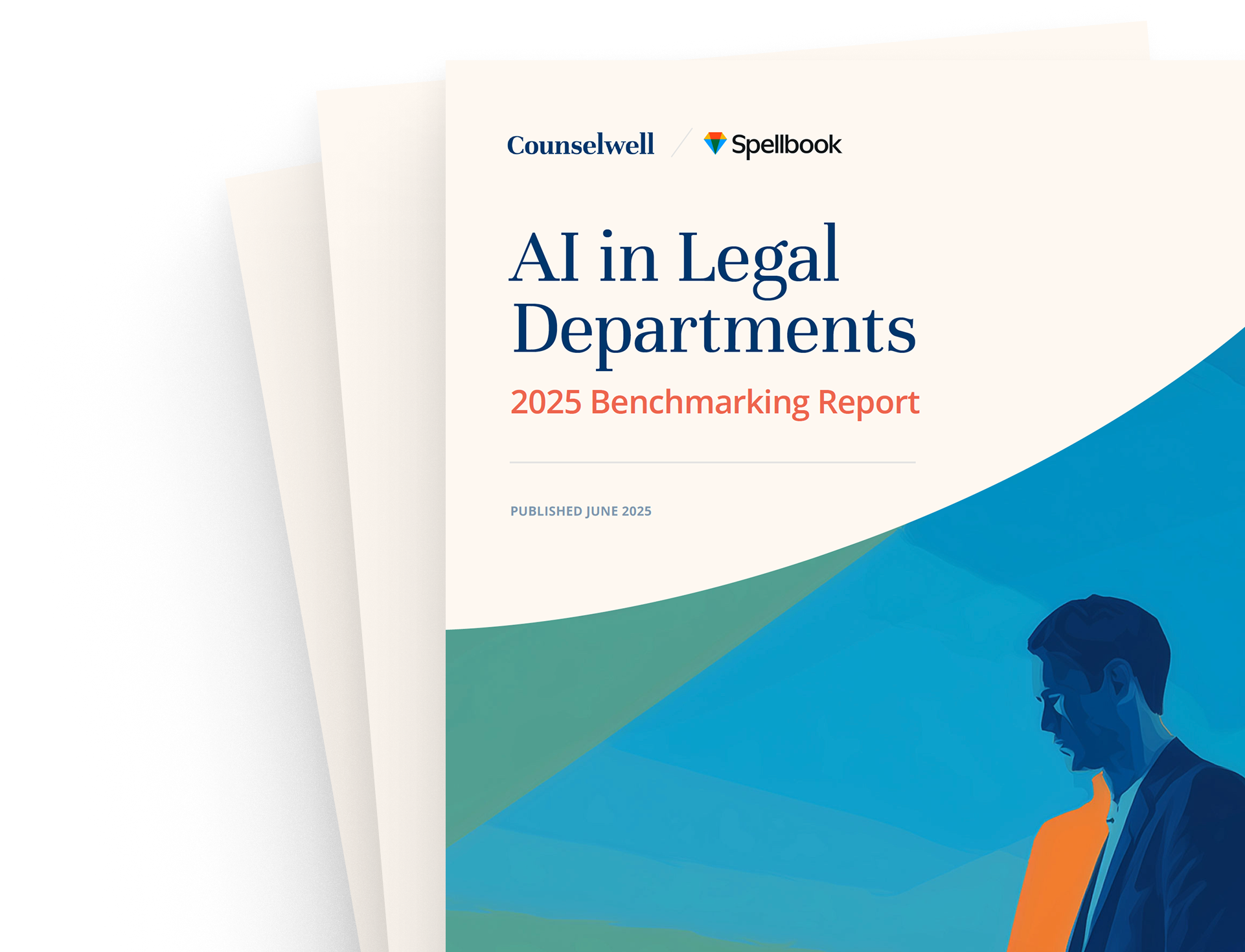


Get the latest news, trends, and tactics in legal Al—straight to your inbox.
Lawyer-built prompts to help you draft, review, and negotiate contracts faster—with any LLM.


Thank you for your interest! Our team will reach out to further understand your use case.
Spellbook is the most complete AI suite for commercial legal work, trusted by more than 4,000 in-house teams and law firms worldwide.

SOC 2 Type II
HIPAA

GDPR

EU AI Act

HIPAA Compliant
