
Callidus vs GC AI: Which Is The Top Pick in 2026?
.jpeg)


This Callidus vs GC AI review breaks down two popular legal AI tools designed to assist with contract workflows. Callidus (StrongSuit) offers a flexible, Word-native assistant with multi-model orchestration, while GC AI provides a unified workspace for in-house teams that combines contract review with research capabilities. We will compare their product features, pricing, and AI models to help you determine the right fit, especially if your priority is drafting and reviewing contracts with speed, precision, and real-time market data.
Key Takeaways
- Callidus (StrongSuit) is a flexible AI co-pilot that operates within Microsoft Word, using multiple AI models for contract review and drafting. GC AI offers a unified legal workspace that combines a web application for research with a separate Word add-in for contract review, focusing on in-house team collaboration.
- Both platforms assist with contract workflows and support custom playbooks. Their primary difference lies in their structure: Callidus provides a single, multi-functional assistant inside Word, whereas GC AI separates its research and review tools into a web app and an add-in to support shared team knowledge.
- For teams that need to negotiate with confidence, Spellbook is a leading alternative trusted by over 4,000 legal teams. It is the only AI platform that allows lawyers to compare contract terms against real-time market data, helping them draft and review agreements with greater speed and precision.
1. Callidus
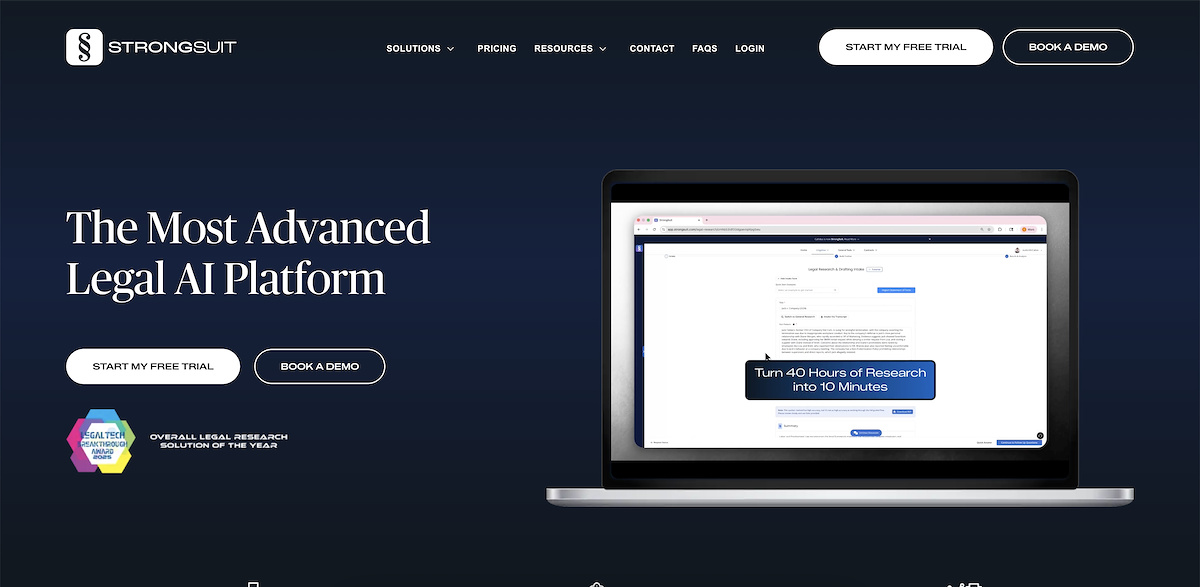
Callidus (StrongSuit) is a multi-functional AI assistant that operates as a Microsoft Word add-in, supporting contract review, drafting, and legal research. It is designed for teams that want a single tool for a broad range of legal tasks, from M&A to vendor agreements.
Unlike GC AI, which separates its functions into a web app and an add-in, Callidus consolidates its features into one interface. This generalist approach, combined with an ongoing rebrand, may be a consideration for teams seeking a more focused or established tool for their core contract workflows.
Callidus Features
Callidus organizes its capabilities into five main modules within its Microsoft Word add-in:
- Negotiate: Analyzes contracts against uploaded playbooks, suggests redlines, and explains terms in plain English.
- Draft: Generates new clauses that are contextually aware of the open document.
- Chat: Functions as a legal Q&A tool with answers supported by case law from CourtListener.
- Compare Contracts: Aligns a third-party agreement against an internal company template.
- Proofread: Provides basic checks for grammar and clarity.
Callidus Pricing
Callidus uses a flat-rate pricing model that is expected to change following its rebrand. The current structure includes:
- A single price of $3,000 per user, per year.
- Unlimited usage with no extra fees for features or support.
- Volume discounts for larger teams or multi-year agreements.
Key Considerations about Callidus
While Callidus offers a broad feature set, teams should be aware of several factors. The platform is currently undergoing a significant rebrand, which may lead to changes in its name, user interface, and pricing.
Its playbook functionality is also less developed than some alternatives. While users can upload their own standards, the tool does not yet offer the automatic fallback logic found in more mature systems.
This reflects its position as a newer entrant in the legal AI space, without the established brand recognition or deep market validation of other tools. For teams prioritizing data-driven negotiation, this is a key point in the Callidus vs GC AI comparison.
Platforms like Spellbook, for instance, are grounded in real-time market data, allowing lawyers to benchmark terms against thousands of similar agreements instead of relying solely on internal standards.
2. GC AI
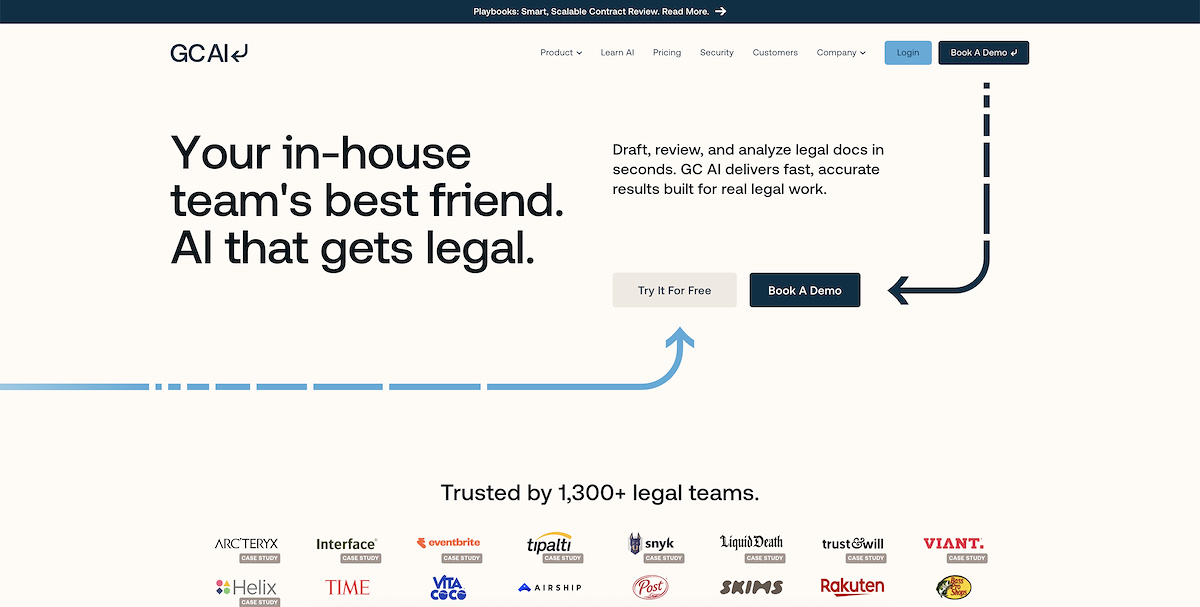
GC AI is a legal AI platform designed as a workspace for in-house teams, combining a web application for research with a separate Microsoft Word add-in for contract review. This structure is intended to support shared team knowledge and collaboration across different legal tasks.
Unlike Callidus, which consolidates its tools into a single Word interface, GC AI separates its core functions. This division requires users to switch between a web browser and their document, a key consideration for teams evaluating Callidus vs GC AI for workflow efficiency.
GC AI Features
GC AI’s capabilities are divided between its web application and a Microsoft Word add-in. Key features include:
- Web Application: A workspace for legal research, multi-document analysis, and managing shared knowledge bases with citation support.
- Word Add-in: For in-document contract review, redlining, and applying custom playbooks.
- Playbooks: Defines standard and fallback positions to guide contract review.
- Collaboration Tools: Supports shared prompts and knowledge bases to standardize team outputs.
GC AI Pricing
GC AI uses a tiered, per-seat pricing model based on an annual subscription. The pricing structure includes:
- Solo Tier: $5,000 per user, per year.
- Team Tier: $7,000 per user, per year, which adds features like SSO and shared collaboration tools.
- Volume discounts are available for teams of 10 or more users.
Key Considerations about GC AI
A primary consideration for GC AI is its bifurcated structure. Legal teams must switch between the web application for research and the Word add-in for review, which can disrupt workflow momentum for those who prefer a single, unified interface.
While the platform supports internal playbooks, it does not offer tools for benchmarking terms against external market data. This can be a drawback for teams that need to validate negotiation positions with real-time market data. For teams prioritizing data-driven negotiation, this is a key factor in the Callidus vs GC AI decision.
Finally, the pricing for team-specific features like SSO and shared prompts represents a significant investment, which may be a factor for smaller teams or those with tighter budgets.
3. Spellbook, The Smarter Alternative
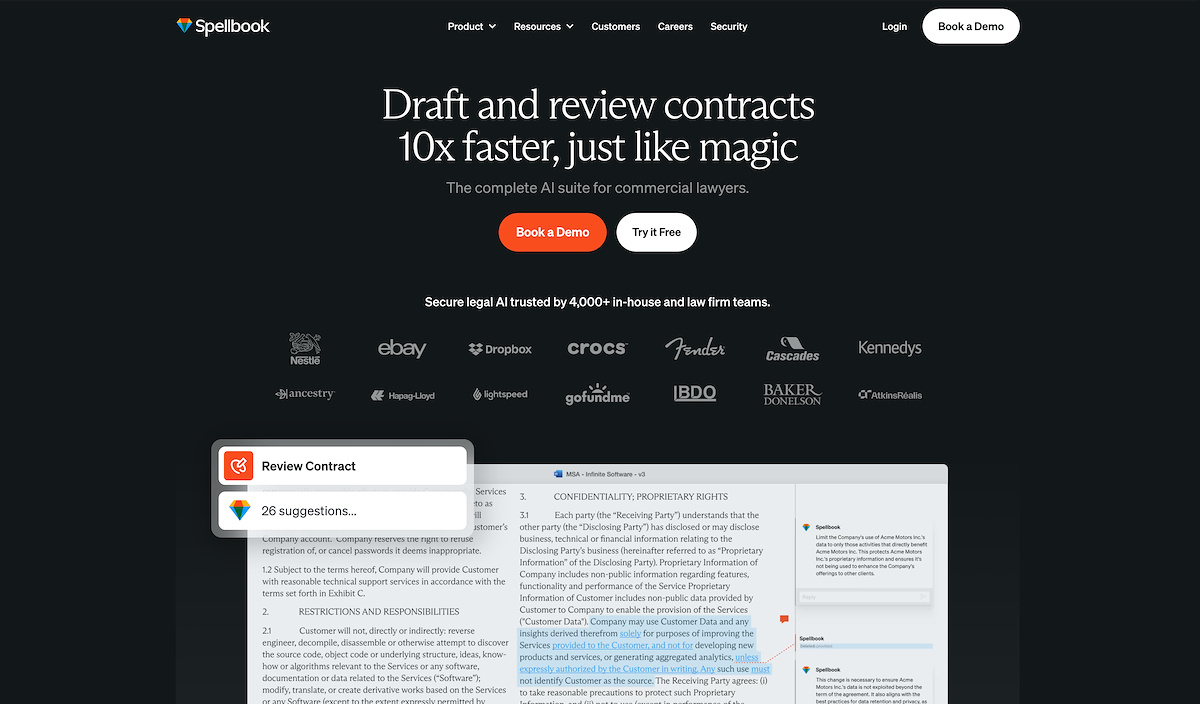
For teams evaluating Callidus vs GC AI, Spellbook presents a focused alternative as the most complete AI suite for contracts and commercial law. It integrates directly into Microsoft Word, where lawyers already work, eliminating context switching. Trusted by over 4,000 legal teams, it helps draft and review contracts with greater speed and precision.
Spellbook’s key differentiator is that it is the only contract AI grounded in real-time market data. The Review feature analyzes agreements against live benchmarks from thousands of similar contracts, providing data-driven answers to "What's market?" in any negotiation. This gives lawyers a distinct advantage not found in the other platforms.
Spellbook Features
- Review: Analyzes contracts instantly within Microsoft Word, providing AI-generated redlines and flagging potential risks. All suggestions appear as track changes under the lawyer’s name, maintaining full control and authorship over the final document.
- Draft: Generates new clauses or entire agreements from a simple instruction. It can also pull from a firm’s past contracts to find and adapt precedent language, automatically matching the style and defined terms of the open document.
- Ask: Functions as a Q&A tool directly within your contract. Lawyers can ask questions about specific obligations or terms and receive answers with citations pointing to the relevant language in the document.
- Compare to Market: Allows lawyers to benchmark contract terms against real-time data from thousands of similar agreements. This feature provides statistical evidence to answer "What's market?" for key deal points, a critical advantage in any negotiation.
- Associate: An AI agent that handles multi-document projects from a single prompt. It can perform tasks like preparing a full document package from a term sheet or reviewing a data room for due diligence, acting as a force multiplier for the legal team.
Spellbook Pricing
Spellbook uses a custom per-seat pricing model based on an annual subscription, with quotes tailored to your team’s size and specific needs.
- Volume discounts are available for larger teams.
- All core features, onboarding, and support are included.
You can test the full platform and all its features with a free trial.
Why Commercial Lawyers Love Spellbook
Unlike generalist AI assistants that split focus across multiple applications, Spellbook is built specifically for contract work and operates entirely within Microsoft Word.
While its capabilities are concentrated in Word, this provides a focused, uninterrupted environment for drafting and review.
Its primary advantage is the ability to benchmark terms against real-time market data, giving lawyers a data-driven edge in negotiations. This focus on practical, data-backed contract work is a key differentiator in the Callidus vs GC AI comparison and a reason it is trusted by thousands of legal teams.
[cta-1]
GC AI vs Callidus vs Spellbook: Key Differences
When evaluating Callidus vs GC AI, the core differences emerge in their workflow structure, data capabilities, and overall focus. Callidus operates as a unified, generalist assistant within Microsoft Word, while GC AI uses a bifurcated model, splitting its research and review tools between a web app and a Word add-in. This requires users to switch contexts, a key consideration for workflow efficiency.
Workflow and Data Integration
Spellbook offers a third approach as the most complete AI suite for contracts, operating entirely within Microsoft Word to eliminate context switching. While Callidus and GC AI rely on internal playbooks, Spellbook is the only platform grounded in real-time market data. Its Compare to Market feature provides a distinct advantage, allowing lawyers to benchmark terms against thousands of similar agreements and negotiate with data-driven confidence.
Focus and Ideal Use Case
The choice in the Callidus vs GC AI debate often comes down to team needs. Callidus is a flexible tool for a broad range of tasks. GC AI is built for in-house teams prioritizing shared knowledge. Spellbook, however, is built specifically for commercial law, helping over 4,000 legal teams draft and review contracts with greater speed and precision. Its focus on data-backed contract work, combined with its seamless Word integration and advanced security features like SOC 2 Type II compliance, makes it a powerful alternative for teams that need to negotiate with authority.
Which Option Is Right For Your Business?
For Teams Prioritizing Shared Knowledge
GC AI is a suitable choice if your primary goal is to build a shared knowledge base for your in-house team. Its structure, which separates research and review tools, is designed to support team-wide collaboration and standardized outputs.
For Lawyers Needing a Flexible Assistant
Callidus may be the right fit for legal professionals who need a single, versatile tool for a wide range of tasks. By consolidating all its features into one Word add-in, it provides a flexible assistant for those who value breadth of functionality over specialization.
For Teams Focused on Contract Drafting and Review
Spellbook is the strongest option for legal teams whose core work is commercial contracts. Its dedicated focus on contract workflows within Microsoft Word provides an uninterrupted environment for drafting and review, leading to greater speed and precision.
This specialization makes it a powerful choice for lawyers who need to negotiate effectively and efficiently.
The Bottom Line: Your choice depends on your team’s primary workflow. GC AI is built for internal collaboration, and Callidus offers generalist flexibility. Spellbook, however, is the ideal fit for legal teams that require a specialized, powerful tool for drafting and reviewing contracts with speed and accuracy.
Try Spellbook Free
While Callidus and GC AI rely on internal playbooks, Spellbook is the only platform that allows you to benchmark terms against real-time market data, giving you a data-driven edge in negotiations. Because it operates entirely within Microsoft Word, you can draft and review contracts with greater speed and precision. See how Spellbook can support your team by starting a free trial.
Frequently Asked Questions
What AI models do Callidus and GC AI use?
Both platforms use advanced large language models to power their features. They generally do not disclose the specific models, but they are comparable to technologies from providers like OpenAI and Anthropic.
The main difference in the GC AI vs Callidus AI approach is how they apply these models. Callidus highlights its multi-model orchestration, which selects the best model for a given task, while GC AI focuses on integrating its AI within a collaborative team workspace.
How do Callidus and GC AI handle data security and client confidentiality?
In any Callidus vs GC AI comparison, data security is a primary concern for legal professionals. Both platforms state they employ security measures like data encryption and access controls to protect sensitive information.
It is always important for legal teams to conduct their own due diligence on the specific security protocols and data handling policies of any vendor, as questions around AI privacy are common. Both platforms typically have policies that prevent client data from being used to train public AI models.
What is the implementation and training process like for these tools?
Both Callidus and GC AI are designed to integrate into existing legal workflows, primarily through Microsoft Word. Implementation for Callidus involves installing a single add-in, which may offer a more direct setup process.
GC AI's implementation involves both its Word add-in and its web application. This may require more extensive team training to ensure users are comfortable switching between the two environments for research and review tasks. Both providers typically offer onboarding and support to help with custom playbook configuration.
How does Spellbook provide a different advantage for contract negotiation compared to Callidus or GC AI?
The key difference is the source of data used for analysis. Callidus and GC AI primarily analyze contracts against a firm’s internal playbooks and precedent. This is helpful for maintaining consistency but limits the analysis to the firm's own historical data.
Spellbook is the only platform of the three that is grounded in real-time market data. Its Review feature allows lawyers to benchmark terms against thousands of similar, recent agreements. This provides objective, statistical answers to "What's market?" for clauses like indemnification or limitation of liability. This data-driven approach gives lawyers a significant advantage in negotiations, moving beyond internal standards to argue from a position of market knowledge.
[cta-2]
Our Research Methodology
This comparison is based on comprehensive research of publicly available information, including product websites, feature documentation, press releases, customer reviews, legal technology publications, and third-party analyses from sources like LawSites, Artificial Lawyer, and industry analysts.
Where pricing information is not publicly disclosed, we've included estimates based on available industry data and user reports. Information is current as of 2026 and may change as products evolve. We encourage readers to verify details directly with vendors and request demos to evaluate fit for their specific needs.
.png)
%20(1).png)

Thank you for your interest! Our team will reach out to further understand your use case.
Spellbook is the most complete AI suite for commercial legal work, trusted by more than 4,400 in-house teams and law firms worldwide.

SOC 2 Type II

HIPAA

GDPR
EU AI Act

HIPAA Compliant
