
Callidus vs Iqidis: Which Is the Right Choice in 2026?
.jpeg)


This 2026 review of Callidus vs Iqidis compares two distinct legal AI platforms, each with a different philosophy for supporting legal workflows. Callidus (StrongSuit) provides a flexible, Microsoft Word-native assistant for drafting and research, while Iqidis (Irys) is built as a centralized “legal operating system” to manage entire matters from a single web-based platform. To help you find the right fit, we’ll compare their core features, pricing, and AI architecture, providing the key details legal teams need when evaluating any AI tool.
Key Takeaways
Callidus (StrongSuit) is a flexible AI assistant that operates within Microsoft Word, while Iqidis (Irys) is a centralized, web-based “legal operating system” for managing entire matters.
The primary difference in the Callidus vs Iqidis matchup is their core approach: Callidus enhances existing Word-based workflows, whereas Iqidis provides an all-in-one platform to manage legal work from a separate interface.
For teams seeking a proven tool, Spellbook is a legal AI trusted by over 4,000 in-house and law firm teams to draft and review contracts with greater speed and precision. It operates natively in Microsoft Word and is the only contract AI grounded in real-time market data.
1. Callidus
Callidus is a multi-functional AI assistant that integrates directly into Microsoft Word to support both transactional and litigation workflows. It offers a broad set of features, including contract review, redlining, clause drafting, and legal research. Unlike the centralized "legal operating system" model of Iqidis, Callidus focuses on enhancing existing Word-based processes. While flexible, it is positioned as a generalist tool and has yet to establish a strong brand or clear product-market fit in the legal AI space.
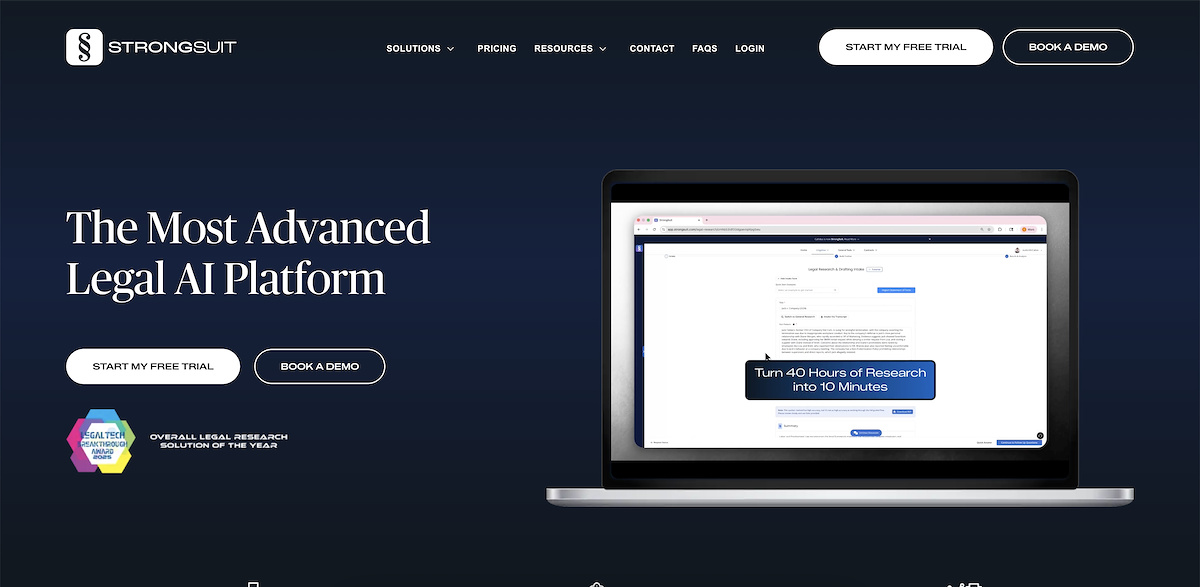
Callidus Features
Callidus provides a suite of tools within its Microsoft Word add-in, organized across several tabs to support different stages of the contract workflow.
Negotiate: Analyzes contracts against playbooks and a specified negotiation stance.
Draft: Generates new clauses with awareness of the document’s context.
Chat & Research: Answers legal questions with supporting case law through a partnership with CourtListener.
Compare Contracts: Aligns third-party documents with internal templates.
Callidus Pricing
Callidus uses a flat-rate pricing model that is straightforward compared to some competitors.
Annual License: $3,000 per user, per year.
All-Inclusive: Includes unlimited usage, onboarding, and support with no extra fees.
Discounts: Available for larger teams and multi-year agreements.
The company has indicated that prices may increase following its planned 2026 rebrand.
Key Considerations about Callidus
While Callidus offers a broad feature set, legal teams should be aware of several factors. The platform is currently undergoing a full rebrand and user experience redesign, which introduces uncertainty around its future interface and functionality.
Its playbook capabilities are also less developed than more mature tools. The system can use uploaded playbooks for review but lacks the sophisticated, automatic fallback logic found in other platforms. This may require more manual intervention from lawyers.
Finally, Callidus is still establishing its brand and product-market fit. For teams prioritizing a proven tool with a clear focus, its positioning as a generalist legal AI makes it a less certain choice in the Callidus vs Iqidis evaluation. It is crucial to be cautious of AI tools that can produce fake citations, even with research integrations.
2. Iqidis
Iqidis (Irys) is positioned as a “legal operating system,” a centralized web platform designed to manage entire matters from a single interface. In contrast to the Word-native approach of Callidus, Iqidis requires legal teams to work within its separate, web-based environment for document review and analysis. This system is intended for teams handling complex, multi-document projects. However, its platform-centric model introduces significant workflow changes, a key factor for teams evaluating the Callidus vs Iqidis matchup.
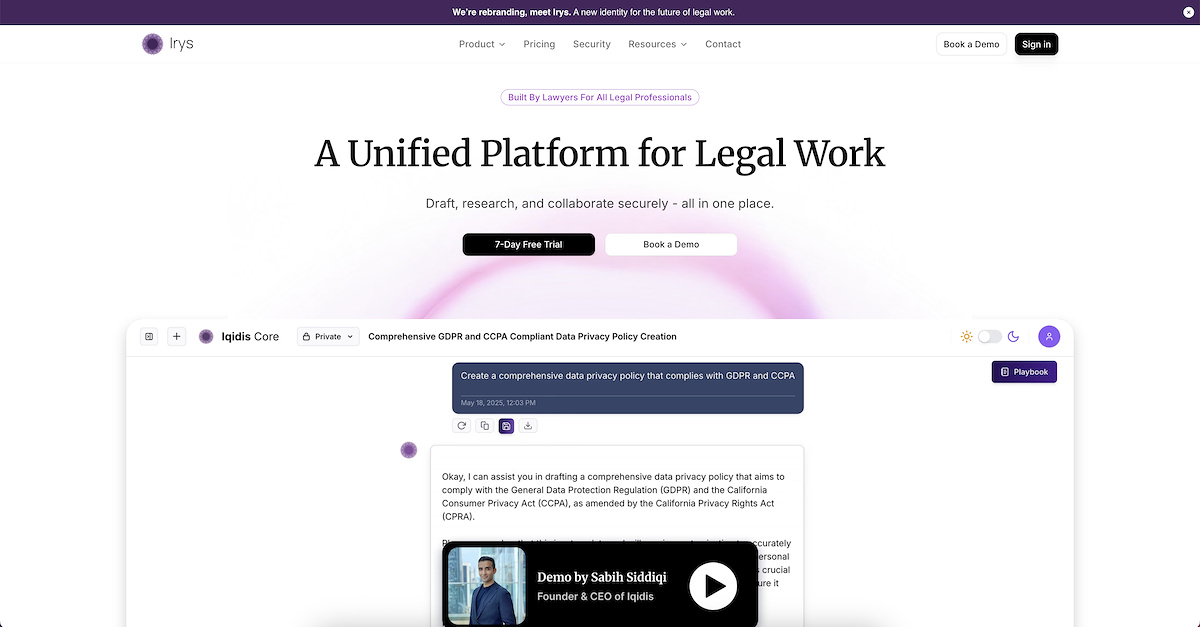
Iqidis Features
Iqidis is built as a central web platform to manage legal work. Its features are organized around this "legal operating system" model.
Project Folders: Organizes all documents, notes, and analysis for a specific project in one place.
Multi-Document Analysis: Allows users to ask questions and extract information across a large set of documents simultaneously.
AI Assistant: A chat-based tool for drafting, summarizing, and reviewing documents within the web platform.
Collaboration Tools: Designed to allow internal teams and external parties to work together within a project.
Iqidis Pricing
Iqidis uses an enterprise seat-based model, with pricing at the higher end of the market.
Enterprise License: Ranges from $329 to $399 per user, per month.
Billing: Contracts are billed on a semi-annual or annual basis.
Price Increases: The company has indicated that prices are expected to rise.
Key Considerations about Iqidis
While Iqidis aims to be an all-in-one system, its platform-centric model is a key factor in the Callidus vs Iqidis evaluation. It requires legal teams to leave their existing tools and adopt a new web-based workflow.
Crucially, a Microsoft Word add-in is not yet available, meaning all work must be done within the Irys platform. This can be a significant hurdle for teams that operate primarily in Word.
As a newer platform, Iqidis is still building its brand and feature set. Teams should also confirm its security and compliance standards, such as HIPAA compliance, to ensure it meets enterprise requirements.
3. Spellbook, The Smarter Alternative
For teams evaluating Callidus vs Iqidis, Spellbook presents a focused alternative as the most complete AI suite for contracts and commercial law. It integrates directly into Microsoft Word, where lawyers already work. This helps legal teams draft and review contracts with significantly greater speed and precision, eliminating disruptive context switching.
Unlike other tools, Spellbook is the only contract AI grounded in real-time market data. Its Review feature gives lawyers data-driven answers to "What's market?" by analyzing agreements against thousands of live benchmarks. With over 4,000 legal teams using the platform, it provides a proven, reliable tool for complex contract work.
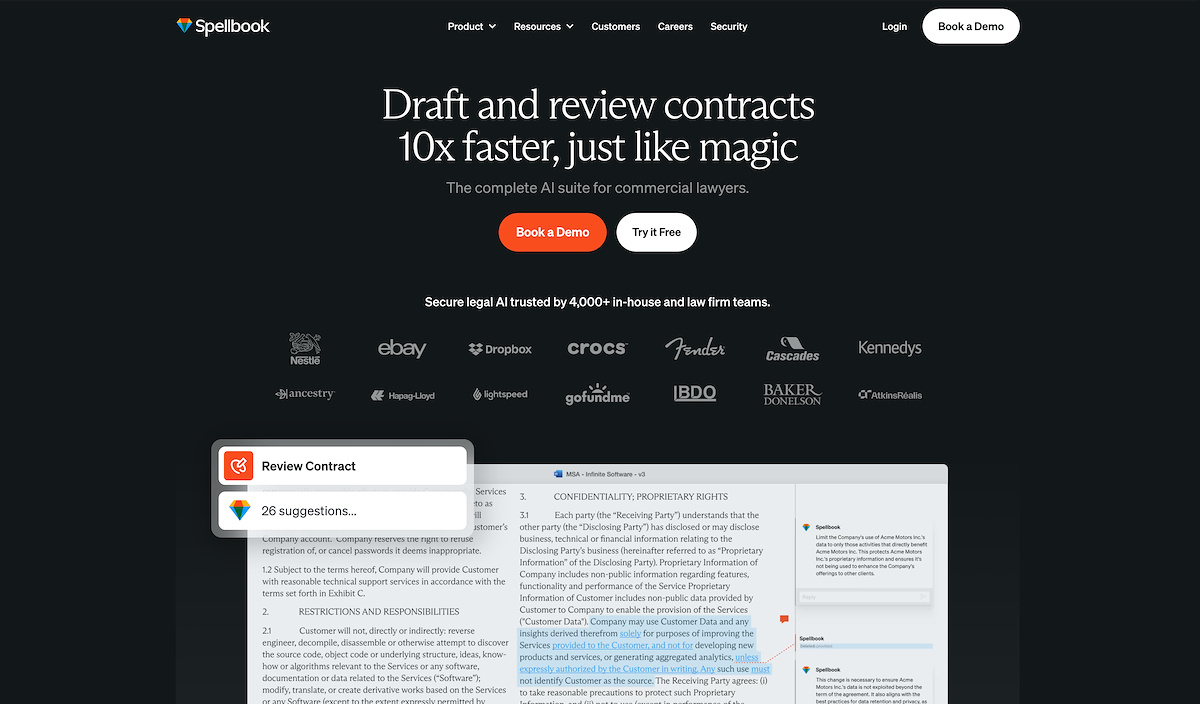
Spellbook Features
Review: This feature provides an instant, document-wide analysis that identifies risks and suggests redlines directly in Microsoft Word. Unlike tools that require working in a separate platform, all edits appear as track changes, keeping the lawyer in full control of the final work product.
Draft: Spellbook generates new clauses or entire agreements with full awareness of the document’s context. It can also draw from a firm’s own historical contracts, ensuring that generated language aligns with established precedents and standards.
Ask: This chat-based tool allows lawyers to ask specific questions about the contract they are working on, such as its obligations or renewal terms. The system provides answers with citations to the relevant language in the document, supporting quick verification.
Compare to Market: A key differentiator in the Callidus vs Iqidis evaluation, this feature allows lawyers to benchmark contract terms against real-time data from thousands of similar agreements. It provides data-driven answers to "What's market?" giving teams objective support for their negotiation positions.
Associate: An AI agent that can execute complex, multi-document projects from a single instruction. It can cross-reference files, update terms across multiple documents, and prepare entire document packages, handling work that would typically be assigned to a junior associate.
Spellbook Pricing
Spellbook offers custom pricing on a per-seat, annual basis, with quotes tailored to your team’s size and needs. Volume discounts are available for larger teams.
All plans include the full feature suite, onboarding, and support.
To see how Spellbook can accelerate your contract workflows with greater precision, start your free 7-day trial today.
Why Commercial Lawyers Love Spellbook
Unlike generalist legal AI or closed platforms, Spellbook is built specifically for commercial law and integrates directly into Microsoft Word. This focus allows it to deliver highly refined features for contract drafting and review, grounded in real-world market data.
While the platform is dedicated to the Microsoft Word environment, this deep integration is precisely what allows lawyers to work with greater speed and precision, without the disruption of switching applications.
Its adoption by over 4,000 legal teams underscores its reliability and effectiveness, making it a proven choice for those weighing the Callidus vs Iqidis decision.
[cta-1]
Iqidis vs Callidus vs Spellbook: Key Differences
The core difference in the Callidus vs Iqidis vs Spellbook comparison is their philosophy. The Callidus vs Iqidis choice is between a flexible Word add-in and a centralized web platform. Spellbook offers a third path, combining a Word-native workflow with deep specialization in commercial contracts.
1. Callidus: The Flexible Generalist
Callidus is a multi-functional AI assistant inside Microsoft Word, offering flexibility across a wide range of legal tasks. However, it is a generalist tool currently undergoing a rebrand, which creates uncertainty. Its playbook features are also less developed than more mature platforms.
2. Iqidis: The Centralized System
Iqidis is a web-based “legal operating system” for managing projects from a central platform. While useful for multi-document analysis, it requires legal teams to abandon their Word-based workflows. The lack of a Microsoft Word add-in is a significant adoption barrier.
3. Spellbook: The Specialized Contract Suite
Spellbook is the most complete AI suite for commercial law, integrating directly into Microsoft Word to help lawyers work with greater speed and precision. Trusted by over 4,000 legal teams, it offers a proven alternative to the uncertainty of the Callidus vs Iqidis choice.
Its key differentiator is its use of real-time market data. The Review feature analyzes agreements against live benchmarks, giving lawyers data-driven answers for negotiations. This focus on contract-specific data, from standard payment terms to complex clauses, provides insight that generalist tools cannot match. The platform's architecture also grounds its outputs in market data and firm precedents, a critical factor for lawyers using AI responsibly.
Which Option Is Right For Your Business?
For Corporate Teams Focused on Contracts
Spellbook is the ideal choice. Its direct integration into Microsoft Word works with existing contract workflows without disruption. The platform’s specialization in commercial law means its suggestions are more relevant and precise than a generalist tool.
For Law Firms Prioritizing Workflow Integration
Spellbook is the strongest option. Because it operates natively in Word, it minimizes training and context switching. For firms weighing the Callidus vs Iqidis decision, Spellbook offers a proven, stable platform purpose-built for the core tasks of commercial lawyers.
For Teams Managing Large, Multi-Document Projects
Iqidis may be a better fit for this specific use case. Its structure as a centralized web platform is designed to organize and analyze large volumes of documents for a single project, such as in discovery or due diligence.
The Bottom Line
Your choice depends on your primary workflow. For most commercial lawyers working in Microsoft Word, Spellbook provides a focused, proven, and deeply integrated tool for contract work. Iqidis serves a niche need for project management in a separate system, while Callidus remains a less-defined generalist tool. For teams focused on contract drafting and review, Spellbook is the most direct path to working with greater speed and precision.
Try Spellbook Free
Spellbook stands apart from the generalist approach of Callidus and the separate platform of Iqidis by offering a specialized suite for commercial contracts inside Microsoft Word. You can experience how it improves both the speed and accuracy of your contract work by starting a free trial.
Frequently Asked Questions
What AI models do Callidus and Iqidis use, and how do they handle data security?
Callidus uses a combination of large language models and integrates with third-party services like CourtListener for its legal research capabilities. While this provides access to case law, it also means data handling policies depend on multiple providers.
Iqidis does not publicly disclose the specific AI models it uses. For any legal AI tool, it is critical to verify its data privacy and security protocols. Teams should ask for documentation on how their confidential information is stored, processed, and protected, as the question of whether AI is private is a major concern for the legal industry.
Which tool is better for litigation support versus transactional work?
Callidus aims to support both areas. Its "Chat & Research" feature is designed for litigation tasks like finding case law, while its drafting and negotiation tools are for transactional work. However, its generalist approach means its features may not be as deep as specialized tools for either category.
Iqidis is built for managing large, multi-document projects, which aligns well with litigation discovery or complex due diligence. Its strength is in analyzing entire data rooms, not in the fine-tuning of a single agreement's confidentiality clause. It is less suited for day-to-day transactional drafting.
How does Spellbook compare to Callidus and Iqidis for commercial contract work?
Spellbook offers a focused alternative to both. While Callidus also works in Microsoft Word, Spellbook is built specifically for commercial law, providing more refined and relevant suggestions for contract drafting and review. This specialization means it can assist with a high degree of precision on complex terms, from indemnification to liability clauses.
Unlike Iqidis, Spellbook does not require you to leave your existing workflow. It integrates directly into Word, improving speed and accuracy without the disruption of a separate platform. Its unique ability to benchmark terms against real-time market data gives lawyers objective support in negotiations, a feature not found in either Callidus or Iqidis.
[cta-2]
Our Research Methodology
This comparison is based on comprehensive research of publicly available information, including product websites, feature documentation, press releases, customer reviews, legal technology publications, and third-party analyses from sources like LawSites, Artificial Lawyer, and industry analysts.
Where pricing information is not publicly disclosed, we've included estimates based on available industry data and user reports. Information is current as of 2026 and may change as products evolve. We encourage readers to verify details directly with vendors and request demos to evaluate fit for their specific needs.
.png)
%20(1).png)

Thank you for your interest! Our team will reach out to further understand your use case.
Spellbook is the most complete AI suite for commercial legal work, trusted by more than 4,400 in-house teams and law firms worldwide.

SOC 2 Type II

HIPAA

GDPR
EU AI Act

HIPAA Compliant
