
Gavel vs GC AI: Which Is the Right Choice for 2026?
.jpeg)


This 2026 review of Gavel vs GC AI compares two distinct approaches to legal AI. Gavel is a platform focused on systematizing document creation through structured automation, while GC AI offers a unified workspace for in-house teams that combines contract review with research and analysis. To help you find the right fit, we will break down their core features, pricing models, and technical architecture.
Key Takeaways
Gavel is a document automation platform that systematizes document creation, while GC AI is a unified workspace for in-house teams that combines contract review with research and analysis.
Gavel's strength is in document automation through structured, rule-based workflows. In contrast, GC AI provides a collaborative workspace that integrates contract review with legal research and analysis tools.
While both tools offer specific solutions, Spellbook operates directly within Microsoft Word, where lawyers already work. It is trusted by over 4,000 legal teams to draft and review contracts faster and with greater precision, using real-time market data to support negotiations.
1. Gavel
Gavel is a document automation platform designed to systematize the creation of legal documents. Its primary function is to generate new documents through structured, rule-based workflows, often using questionnaires to gather information.
This makes it a good fit for practices with high-volume, repeatable work like estate planning or real estate. Unlike GC AI, which offers a broader workspace for contract review and analysis, Gavel is more narrowly focused on document production and knowledge management.
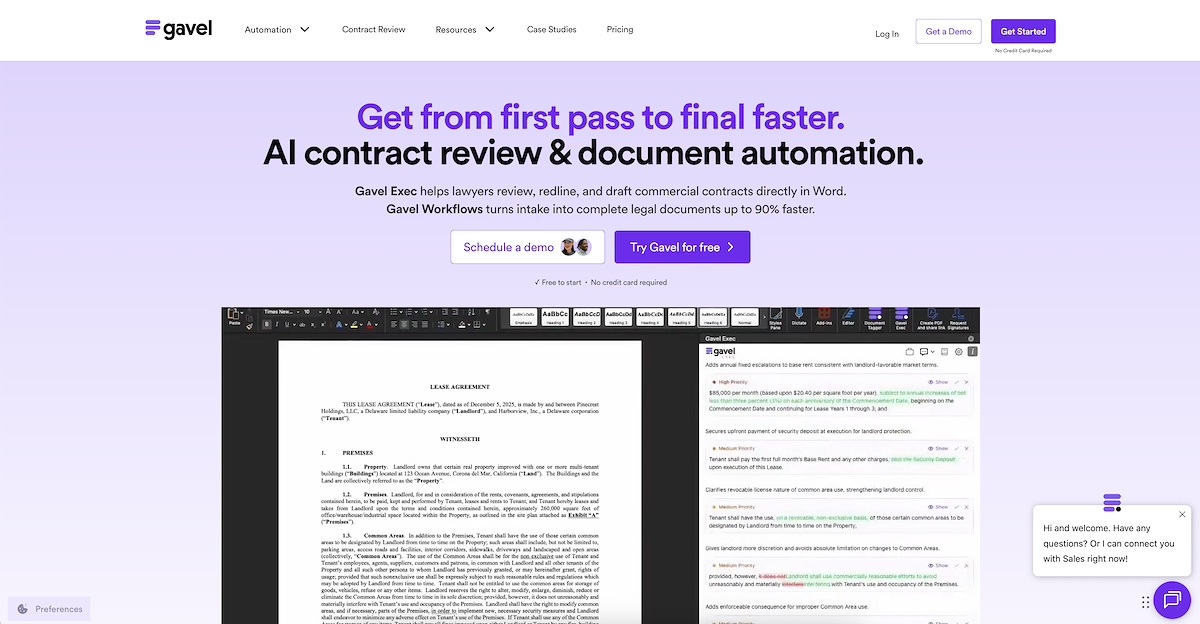
Gavel Features
Gavel’s platform is built to systematize document creation through a combination of structured inputs and AI assistance. Its capabilities include:
Document generation using questionnaires and rule-based logic.
A Word add-in for drafting, redlining, and summarizing.
Playbooks to apply standard rules across documents.
“Projects” that act as shared knowledge bases for templates and clauses.
An open API for integrations with other systems like CRMs.
Gavel Pricing
Gavel’s pricing is structured on a per-user basis and is positioned in the lower to mid-range of the market.
Starts at approximately $160 per user per month.
Monthly billing is standard, with no long-term contracts required.
Volume discounts are available for teams with 10 or more users.
Key Considerations about Gavel
Gavel's strength is in systematizing the creation of new documents from structured inputs. It is less optimized for reviewing third-party paper or handling high-stakes negotiations where external data is needed.
For teams that need data-driven answers on market standards during a negotiation, Gavel's focus on internal knowledge and rule-based generation may be a limitation. The platform is also geared more toward smaller teams than large enterprises requiring advanced governance controls. This makes the Gavel vs GC AI decision dependent on whether your primary need is document production or collaborative review.
2. GC AI
GC AI is positioned as a unified workspace for in-house legal teams, combining a web application for research and analysis with a Microsoft Word add-in for contract review. It is designed to support daily in-house counsel tasks, from legal research with citations to playbook-driven redlining. Unlike Gavel, which focuses on systematizing document creation, GC AI provides a broader environment for reviewing third-party paper and managing shared knowledge. This makes the Gavel vs GC AI choice a matter of production versus analysis.
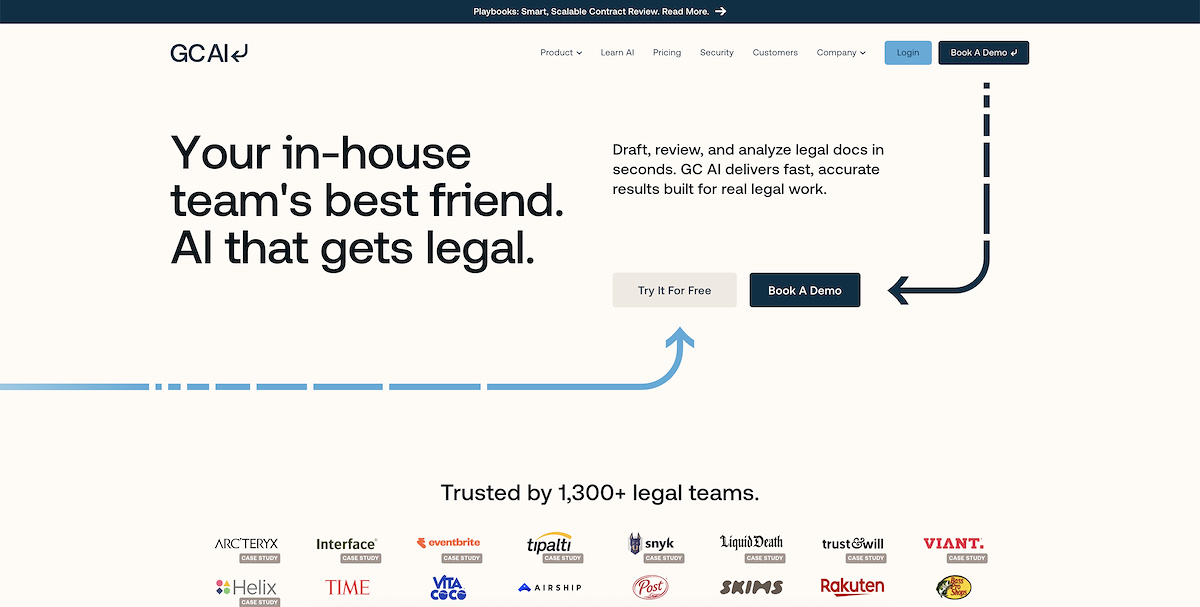
GC AI Features
A web application for legal research and analysis with citations.
A Microsoft Word add-in for contract review and redlining.
Playbooks to standardize review against internal policies.
Shared knowledge bases and prompts to support team collaboration.
Multi-document review for analyzing groups of files at once.
GC AI Pricing
Solo plan starts at $5,000 per user per year.
Team plan is priced at $7,000 per user per year.
The team plan includes SSO and shared collaboration features.
Volume discounts are available for teams with 10 or more users.
Key Considerations about GC AI
GC AI’s unified workspace model requires users to switch between a web application for research and a Word add-in for drafting. This can create a disjointed experience for teams that prefer to work entirely within their document editor.
The platform’s pricing is also at the higher end of the market, representing a significant investment. While its playbooks help enforce internal standards, they are not grounded in external market data. This is a notable limitation for teams that need to validate negotiation positions against current market standards, making the Gavel vs GC AI choice difficult for data-focused teams.
3. Spellbook, The Smarter Alternative
Spellbook is a complete AI suite for contracts that integrates directly into Microsoft Word, where lawyers already work. This eliminates context switching, helping legal teams draft and review contracts 10x faster and with greater precision. It offers a compelling alternative for those considering Gavel vs GC AI.
Spellbook is also the only contract AI grounded in real-time market data. Its Review feature analyzes agreements against live benchmarks from thousands of similar contracts, providing data-driven answers to "What's market?". Over 4,000 legal teams trust Spellbook to streamline contract workflows.
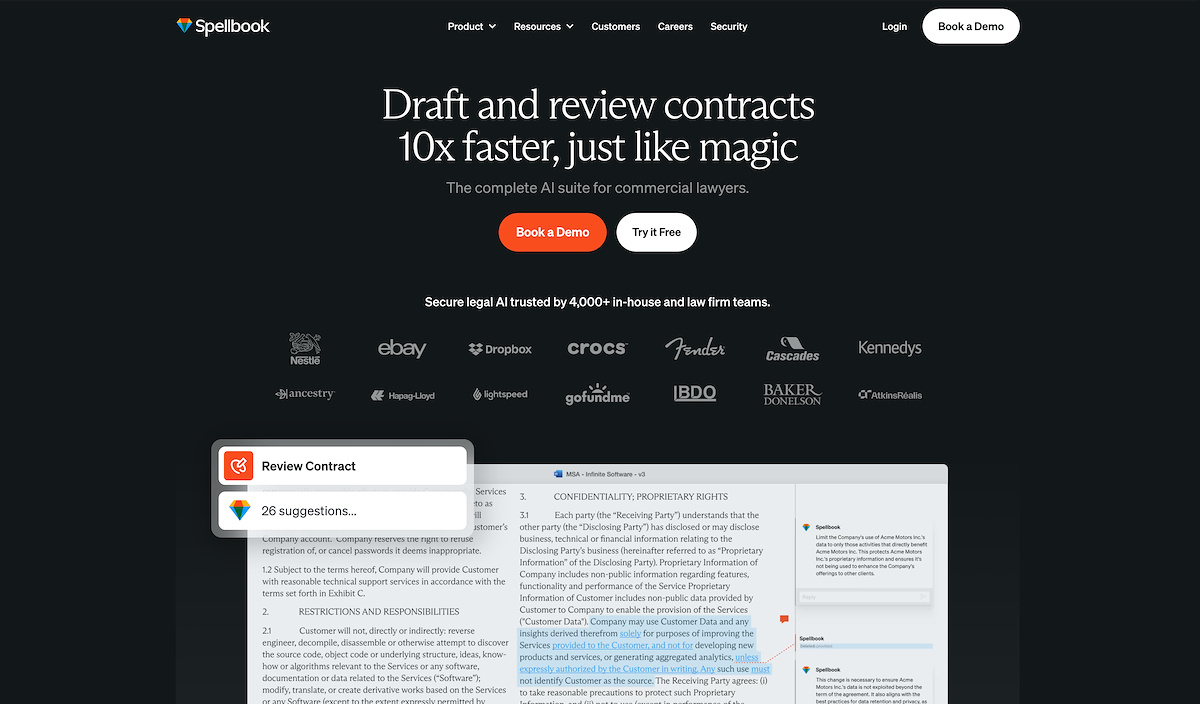
Spellbook Features
Review: Instantly analyzes entire contracts to identify risks and suggest redlines directly within Microsoft Word. All edits appear as track changes, keeping the lawyer in full control of the final document.
Draft: Generates new clauses or entire agreements from simple instructions. It can also draw from a firm’s own precedent library, automatically adapting language to fit the context of the current document.
Ask: Functions as a Q&A tool for the open contract. Lawyers can ask specific questions about obligations or terms and receive answers with citations to the relevant language in the document.
Compare to Market: Analyzes contract terms against real-time data from thousands of similar agreements. This feature provides data-driven benchmarks to support negotiation positions, answering the question of "What's market?" with statistical evidence.
Associate: An AI agent that handles complex, multi-document projects from a single prompt. It can manage tasks like due diligence review or updating terms across multiple files at once.
Spellbook Pricing
Spellbook offers custom pricing on a per-seat, annual basis. Quotes are tailored to your team’s size and specific needs, with volume discounts available.
All core features are included in the standard plan.
Onboarding, training, and ongoing support are also included.
See how Spellbook can improve your workflow by starting a free 7-day trial today.
Why Commercial Lawyers Love Spellbook
Unlike platforms that separate document generation from review, Spellbook operates entirely within Microsoft Word, where lawyers already manage their contracts. While this means its capabilities are centered in Word rather than a web app, this deep integration eliminates context switching and keeps the focus on the document itself.
Crucially, Spellbook is the only tool among the three that grounds its suggestions in real-time market data, giving lawyers data-driven confidence in their negotiations. This combination of a unified workflow and external benchmarks helps teams work with greater speed and precision, making it a strong choice for those weighing Gavel vs GC AI.
[cta-1]
GC AI vs Gavel vs Spellbook: Key Differences
When choosing between Gavel vs GC AI, legal teams are deciding between two different operational models. Gavel focuses on systematizing document production, while GC AI provides a hybrid workspace for review and research. Spellbook offers a third approach that resolves key limitations in the Gavel vs GC AI debate by integrating advanced AI capabilities directly into the familiar Microsoft Word environment.
1. Gavel: The Document Automation Platform
Core Function: Gavel excels at generating new documents from structured inputs like questionnaires. It is built to automate high-volume, repeatable document creation.
Workflow: The process is rule-based, turning a firm’s internal knowledge into a document production system.
Limitations: It is less suited for reviewing third-party contracts or negotiations that require external market data to validate positions.
2. GC AI: The Unified In-House Workspace
Core Function: GC AI combines contract review with legal research tools, aiming to be a central hub for in-house teams.
Workflow: It uses a web application for research and a separate Microsoft Word add-in for redlining, which can lead to context switching.
Limitations: While it supports playbook-driven review, it lacks grounding in real-time market data, limiting its use in data-driven negotiations.
3. Spellbook: The Complete AI Suite for Contracts
Core Function: Spellbook is a complete AI suite that helps legal teams draft and review contracts with greater speed and precision, trusted by over 4,000 legal teams.
Workflow: It operates entirely within Microsoft Word, eliminating context switching. It handles everything from drafting clauses to managing complex projects with its AI agent, and meets key compliance standards like SOC 2 Type II.
Key Differentiator: Unlike Gavel or GC AI, Spellbook is the only one of the three grounded in real-time market data, giving lawyers statistical benchmarks to answer "What's market?" during negotiations.
Ultimately, the Gavel vs GC AI decision comes down to whether a team prioritizes document generation (Gavel) or a separate research workspace (GC AI). Spellbook presents a compelling alternative by providing a fully integrated Word experience that supports both drafting and review, enhanced with unique, data-driven negotiation tools.
Which Option Is Right For Your Business?
For Teams Focused on Document Production
Gavel is the best fit for practices that generate a high volume of standardized documents. Its strength lies in automating repeatable work through structured questionnaires and rule-based workflows.
For In-House Teams Prioritizing Internal Playbooks
GC AI is designed for in-house teams that need a central hub for research and enforcing internal policies. It is a good choice for managing team knowledge and applying consistent standards across reviews.
For Lawyers Handling Negotiations and Third-Party Paper
Spellbook is the ideal choice for lawyers who draft, review, and negotiate a wide range of commercial agreements. It operates entirely within Microsoft Word, avoiding workflow disruptions. Crucially, it provides external market data to support negotiation positions, helping lawyers confidently handle complex terms like indemnification clauses.
The Bottom Line
The choice between Gavel vs GC AI often comes down to a specific need. Gavel is for document production, while GC AI is for internal process management. Spellbook presents a more flexible alternative, integrating directly into the existing legal workflow to support both drafting and data-driven negotiation with speed and precision.
Try Spellbook Free
Spellbook stands apart by operating entirely within Microsoft Word, combining advanced drafting and review tools with real-time market data for negotiations. Experience the difference for yourself and see how it can improve your team's speed and precision by starting a free 7-day trial today.
Frequently Asked Questions
How do Gavel and GC AI integrate with other legal tech software?
Gavel provides an open API, which allows it to connect with other systems like client relationship management (CRM) or practice management software. This makes it adaptable for firms looking to build an interconnected tech stack.
GC AI, on the other hand, operates more as a self-contained workspace. Its integrations are less of a focus compared to its goal of providing a unified environment for research and review.
What are the data security considerations for these platforms?
Data security is a primary concern when adopting any new legal technology. Both Gavel and GC AI are cloud-based platforms, so it is important to review their specific data handling policies and security certifications.
Legal teams should confirm how their confidential client information is stored, processed, and protected. Understanding a platform's compliance with standards like HIPAA and SOC 2 is a critical step in the evaluation process.
How does Spellbook's in-Word experience compare to Gavel and GC AI's add-ins?
While both Gavel and GC AI offer Microsoft Word add-ins, their core workflows often require users to operate outside of the document. Gavel relies on external questionnaires for document generation, and GC AI uses a separate web application for its research and analysis features.
Spellbook is different because its entire suite of tools is built to function directly within Word. From drafting a new confidentiality clause to analyzing a contract against market data, every action happens in the document editor. This fully integrated approach eliminates context switching, allowing lawyers to maintain their focus and work with greater speed and precision. It's a key distinction in the Gavel vs GC AI comparison.
[cta-2]
Our Research Methodology
This comparison is based on comprehensive research of publicly available information, including product websites, feature documentation, press releases, customer reviews, legal technology publications, and third-party analyses from sources like LawSites, Artificial Lawyer, and industry analysts.
Where pricing information is not publicly disclosed, we've included estimates based on available industry data and user reports. Information is current as of 2026 and may change as products evolve. We encourage readers to verify details directly with vendors and request demos to evaluate fit for their specific needs.
.png)
%20(1).png)


Thank you for your interest! Our team will reach out to further understand your use case.
Spellbook is the most complete AI suite for commercial legal work, trusted by more than 4,400 in-house teams and law firms worldwide.

SOC 2 Type II

HIPAA

GDPR

EU AI Act

HIPAA Compliant
