
GC AI vs CoCounsel: Which Is the Top Pick in 2026?
.jpeg)


Choosing between GC AI vs CoCounsel means evaluating two distinct approaches to legal AI. GC AI offers a unified workspace for in-house teams with a focus on collaboration, while CoCounsel integrates Thomson Reuters' vast legal content library for research-backed analysis. To help you decide, this review breaks down their product features, pricing, and AI architecture to help you find the right fit for your contract workflows.
Key Takeaways
GC AI is a collaborative legal workspace for in-house teams, while CoCounsel is a Thomson Reuters platform that integrates with Westlaw and Practical Law for research-backed analysis.
Their primary difference lies in their knowledge source: GC AI is built for team collaboration using shared internal knowledge, while CoCounsel grounds its analysis in Thomson Reuters' proprietary legal content library.
Spellbook is a legal AI trusted by over 4,000 legal teams to draft and review contracts 10x faster and with greater precision, using real-time market data to support every negotiation.
1. GC AI
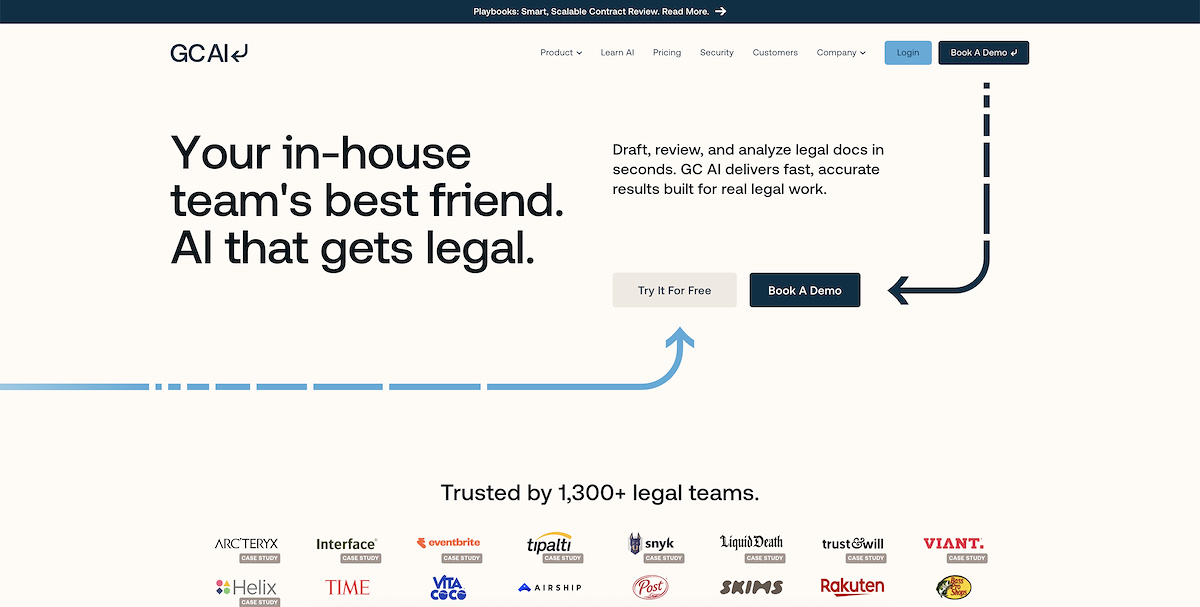
GC AI is a legal AI platform designed as a workspace for in-house legal teams. It provides a web application for research and analysis and a separate Microsoft Word add-in for contract review and redlining.
The platform is built around team collaboration, using shared prompts and internal knowledge bases to standardize work. This focus on internal knowledge differs from CoCounsel, which grounds its analysis in Thomson Reuters' proprietary legal content. GC AI is best suited for teams that want to create and share reusable workflows for common legal tasks.
GC AI Features
GC AI’s platform is split into two main parts: a web application and a Microsoft Word add-in. Its features are built to support internal team collaboration and standardize work.
A web app for legal research and multi-document analysis with citation support.
A Word add-in for contract review, redlining, and playbook execution.
Shared prompts, chats, and knowledge bases to create reusable team workflows.
Playbooks built from internal precedents to check contracts against company standards.
GC AI Pricing
GC AI uses a two-tiered, per-seat pricing model. All pricing is on an annual basis, with discounts available for larger teams.
Solo Plan: $5,000 per user, per year.
Team Plan: $7,000 per user, per year, which adds SSO and collaboration tools.
Volume discounts may be offered for teams with 10 or more users.
Key Considerations about GC AI
When evaluating GC AI vs CoCounsel, teams should note that GC AI’s workflow is divided between a web app and a Word add-in. This separation can create a disjointed user experience, forcing lawyers to switch between interfaces for research and drafting.
The platform’s primary focus is on grounding its analysis in a team’s shared internal knowledge. While useful for applying company standards, this approach means the AI’s insights are limited to your organization’s historical data. It lacks the ability to benchmark terms against external, real-time market data, which can be a significant disadvantage in negotiations.
Finally, the pricing is at the higher end of the market, which may be a barrier for some teams.
2. CoCounsel
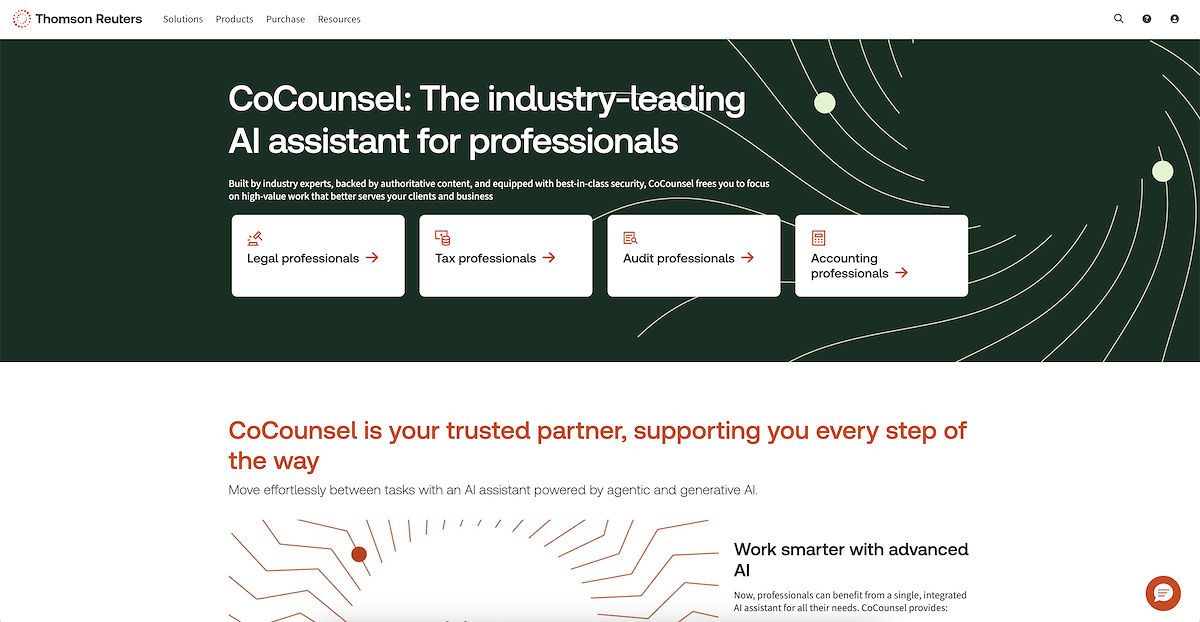
CoCounsel is a legal AI platform from Thomson Reuters that offers AI-assisted workflows for tasks like drafting and contract analysis. Its main feature is the optional integration with Thomson Reuters’ proprietary content libraries, including Westlaw and Practical Law. This makes it a choice for legal teams who prioritize analysis that is grounded in established legal research databases. While GC AI is built around a team’s internal knowledge, CoCounsel’s primary value comes from its connection to this external, curated content, which can influence both workflow and cost.
CoCounsel Features
CoCounsel's features are split between a web portal and a Word add-in, with optional integrations for legal research.
A Word add-in for drafting and redlining.
A web portal for multi-document analysis and storage.
Playbooks to check contracts against internal standards.
Prompt libraries for common legal tasks.
Optional integration with Westlaw and Practical Law.
Shared folders for team collaboration.
CoCounsel Pricing
CoCounsel uses a tiered, per-seat pricing model that varies based on features and team size. Pricing is at the higher end of the market.
Starts at $6,000 per user, per year for the core product.
Price increases significantly with Westlaw or Practical Law integrations.
Volume discounts are available for larger teams.
Key Considerations about CoCounsel
The primary value of CoCounsel is its integration with Thomson Reuters' proprietary content, but this comes at a significant cost. Teams not subscribing to Westlaw or Practical Law may find the price high for a tool that relies on user-provided knowledge.
Like GC AI, CoCounsel’s workflow is split between a web application and a Word add-in, which can disrupt the drafting process by forcing users to switch between interfaces.
Furthermore, its analysis is grounded in curated legal databases, not real-time market data. This limits its usefulness in negotiations where knowing current market standards is critical. This is a key point in the GC AI vs CoCounsel debate.
3. Spellbook, The Smarter Alternative
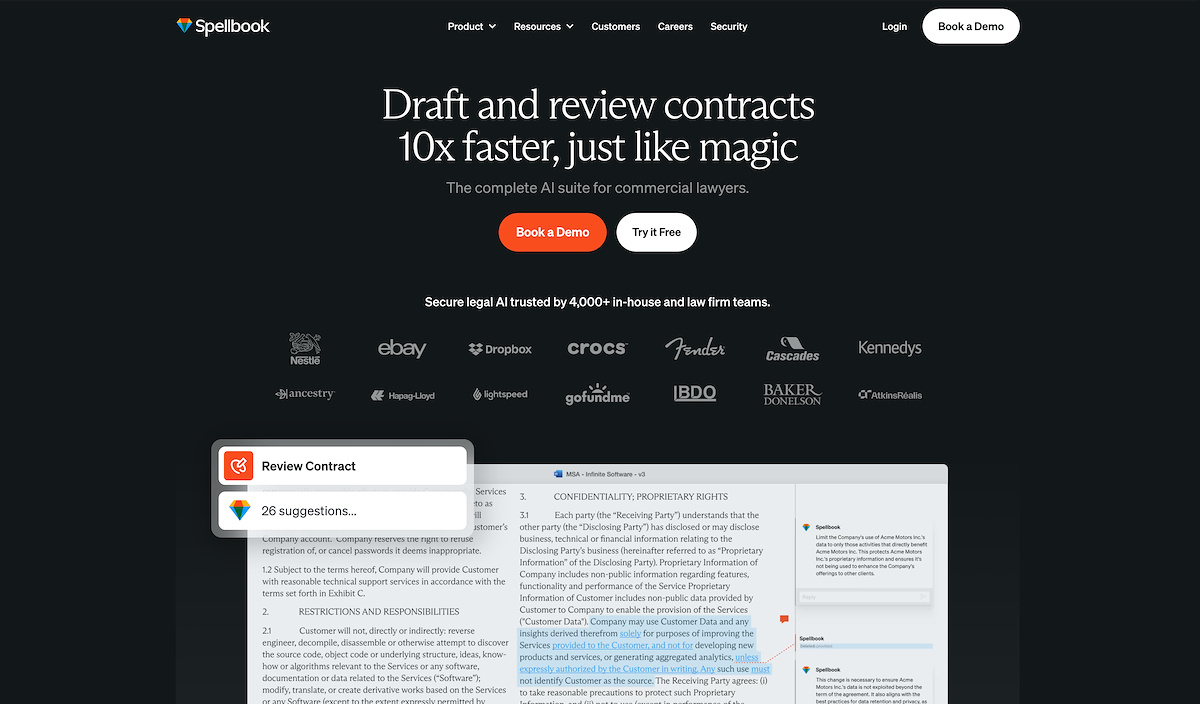
While the GC AI vs CoCounsel discussion highlights two different approaches, Spellbook offers a smarter alternative. It is the most complete AI suite built for contracts and commercial law, integrating directly into Microsoft Word to help legal teams draft and review contracts with greater speed and precision without context switching.
Spellbook is also the only contract AI grounded in real-time market data. Its Review feature analyzes agreements against live benchmarks from thousands of similar contracts, giving lawyers data-driven answers to "What's market?" in any negotiation. Today, more than 4,000 legal teams, including those at Dropbox and Crocs, trust Spellbook to improve their contract workflows.
Spellbook Features
Spellbook's features are built to improve both the speed and precision of contract work. They operate within a single Microsoft Word add-in, which avoids the context switching required by the separate web and Word applications of GC AI and CoCounsel.
Review: Instantly analyzes contracts to identify risks and suggest redlines directly in Microsoft Word as track changes. It can also apply custom playbooks to ensure every agreement meets your organization's standards.
Draft: Generates new clauses or entire agreements from a simple instruction. It can also draw from a library of standard provisions or learn from your team's past contracts to find and adapt precedent language that matches the current document's context and style.
Ask: A chat-based tool that lets you ask specific questions about the contract you're working on. It provides answers with citations to the relevant sections, helping you quickly find information without leaving your document.
Compare to Market: Analyzes contract terms against real-time data from thousands of similar agreements. Unlike tools that rely on internal data or static legal databases, this feature gives you live benchmarks to support your negotiation position with data-driven answers to "What's market?"
Associate: An AI agent that handles complex, multi-document projects from a single prompt. It can perform tasks like cross-referencing a set of documents, updating terms across multiple files, or preparing a full document package, functioning much like a junior associate.
Furthermore, Spellbook is designed for enterprise security, with SOC 2 Type II certification and support for teams working with sensitive data, including those needing HIPAA compliance.
Spellbook Pricing
Spellbook uses a custom per-seat pricing model based on team size and needs. All plans are provided on an annual basis and include:
All core features, including Review, Draft, Ask, and Associate.
Onboarding, training, and ongoing support.
Volume discounts for teams of 10 or more.
Get started with a free 7-day trial to see how Spellbook can improve your contract workflows.
Why Commercial Lawyers Love Spellbook
Unlike legal AI tools that split workflows between different applications, Spellbook operates entirely within Microsoft Word.
While its functionality is focused in Word, this unified approach eliminates the context switching common in other platforms. Its key advantage is grounding analysis in real-time market data, offering live benchmarks that internal knowledge or static databases cannot match.
This provides lawyers with data-driven support in negotiations, helping them work faster and with greater precision. It's a critical factor to consider in the GC AI vs CoCounsel debate for teams who prioritize negotiation outcomes.
[cta-1]
CoCounsel vs GC AI vs Spellbook: Key Differences
The choice in the GC AI vs CoCounsel vs Spellbook debate comes down to a few key differences in workflow, data sources, and core purpose. Understanding these distinctions is critical for any legal team evaluating these tools.
1. Workflow and Integration
Both GC AI and CoCounsel split their platforms between a web application and a Microsoft Word add-in. This often requires lawyers to switch between interfaces for research and drafting. Spellbook, however, operates entirely within Microsoft Word, eliminating context switching and allowing teams to work directly in their primary drafting environment.
2. Knowledge Source
The platforms are grounded in different types of knowledge.
- GC AI relies on a team’s internal precedents and shared knowledge bases.
- CoCounsel integrates with Thomson Reuters’ proprietary, static legal databases like Westlaw and Practical Law.
- Spellbook is the only contract AI grounded in real-time market data. It analyzes terms against live benchmarks from thousands of similar agreements, providing data-driven answers to "What's market?" during negotiations.
3. Core Functionality
While all three offer contract analysis, their focus varies. GC AI is designed for internal team collaboration. CoCounsel is built for research-backed analysis. Spellbook is the most complete AI suite for commercial law, offering tools for drafting and review alongside advanced features like Associate, an AI agent that handles complex, multi-document tasks. Spellbook also supports enterprise security with SOC 2 Type II certification and HIPAA compliance.
Which Option Is Right For Your Business?
The right tool depends entirely on your team’s primary goals and existing workflows. Here is a breakdown based on common legal team profiles.
For Teams Prioritizing Legal Research Integration
CoCounsel is the logical choice if your workflow is heavily dependent on Thomson Reuters' content libraries. Its main advantage is the direct integration with Westlaw and Practical Law, making it suitable for teams that ground their work in extensive legal research databases.
For Teams Building an Internal Knowledge Hub
GC AI is designed for teams that want to standardize work around their own internal precedents. If your main goal is to create a shared, reusable library of prompts and company-approved language, GC AI’s focus on internal knowledge management makes it a strong contender.
For Commercial Teams Focused on Negotiation and Efficiency
Spellbook is the best fit for most commercial law teams. Its single-interface design within Microsoft Word eliminates context switching, and its analysis is grounded in real-time market data to support negotiations. This makes it ideal for teams who need to work quickly and precisely on contracts.
The Bottom Line
Ultimately, the GC AI vs CoCounsel debate highlights different priorities. GC AI is for internal standardization, and CoCounsel is for research-heavy tasks. Spellbook offers a more direct path to efficient contract drafting and review, providing the tools most commercial lawyers need directly where they work. For teams exploring AI for lawyers, Spellbook presents a powerful and practical starting point.
Try Spellbook Free
While the GC AI vs CoCounsel debate centers on internal knowledge versus static databases, Spellbook offers a different approach. It operates entirely within Microsoft Word and uses real-time market data, giving your team data-driven support in every negotiation. See how Spellbook can improve your contract speed and precision by starting a free 7-day trial.
Frequently Asked Questions
How do GC AI and CoCounsel handle data security and client confidentiality?
Both GC AI and CoCounsel are built for the legal industry and state they offer enterprise-grade security for client data. They typically use secure, private cloud instances to process information and have policies that prevent customer data from being used to train public AI models.
However, it is critical for legal teams to conduct their own due diligence on data handling. You should always confirm a vendor’s specific security certifications, data residency policies, and how they ensure the privacy of AI-processed information before committing to a platform.
What AI models do GC AI and CoCounsel use?
Most modern legal AI tools, including GC AI and CoCounsel, do not build their own large language models (LLMs) from scratch. Instead, they typically leverage foundational models from major developers like OpenAI or Anthropic.
The platforms then build proprietary technology on top of these models. This allows them to fine-tune performance for specific legal tasks and connect the AI to different knowledge sources, such as a firm's internal documents or a third-party database. The choice of the underlying model is less important than how the platform applies it to legal work, a key consideration for any lawyer using AI.
How is Spellbook different from both GC AI and CoCounsel?
Spellbook differs from both GC AI and CoCounsel in two fundamental ways: its workflow and its knowledge source. First, Spellbook operates entirely within a single Microsoft Word add-in. This unified interface prevents the context switching required by GC AI and CoCounsel, which separate their features between a web app and a Word add-in. This allows lawyers to draft, review, and analyze without leaving their document.
Second, Spellbook’s analysis is grounded in live market data, not a company's internal precedents (like GC AI) or static legal databases (like CoCounsel). It benchmarks clauses against thousands of recently executed agreements to provide data-driven answers on what is "market" for terms like indemnification. This gives commercial teams a distinct advantage in negotiations by supporting their positions with current, real-world data.
[cta-2]
Our Research Methodology
This comparison is based on comprehensive research of publicly available information, including product websites, feature documentation, press releases, customer reviews, legal technology publications, and third-party analyses from sources like LawSites, Artificial Lawyer, and industry analysts.
Where pricing information is not publicly disclosed, we've included estimates based on available industry data and user reports. Information is current as of 2026 and may change as products evolve. We encourage readers to verify details directly with vendors and request demos to evaluate fit for their specific needs.
.png)
%20(1).png)


Thank you for your interest! Our team will reach out to further understand your use case.
Spellbook is the most complete AI suite for commercial legal work, trusted by more than 4,400 in-house teams and law firms worldwide.

SOC 2 Type II

HIPAA

GDPR

EU AI Act

HIPAA Compliant
