
Hebbia vs. Harvey: Which Is the Top Pick in 2026?
.jpeg)


When comparing Hebbia vs Harvey, legal teams are choosing between two powerful AI platforms for complex analytical work. Hebbia is an analytical engine for extracting insights from massive document sets, while Harvey is a collaborative platform for legal reasoning and diligence. This guide breaks down their features, pricing, and core technology to help you determine the right fit for your team's specific workflow.
Key Takeaways
- Hebbia is an analytical engine for extracting insights from large document sets, while Harvey is a collaborative platform for legal reasoning and diligence.
- Hebbia focuses on large-scale document analysis in a spreadsheet-style interface, making it ideal for data extraction. In contrast, Harvey provides a collaborative platform with configurable workflows for legal operations and diligence.
- Spellbook offers a third alternative, trusted by over 4,000 legal teams to draft and review contracts with more speed and precision, directly within Microsoft Word.
1. Hebbia
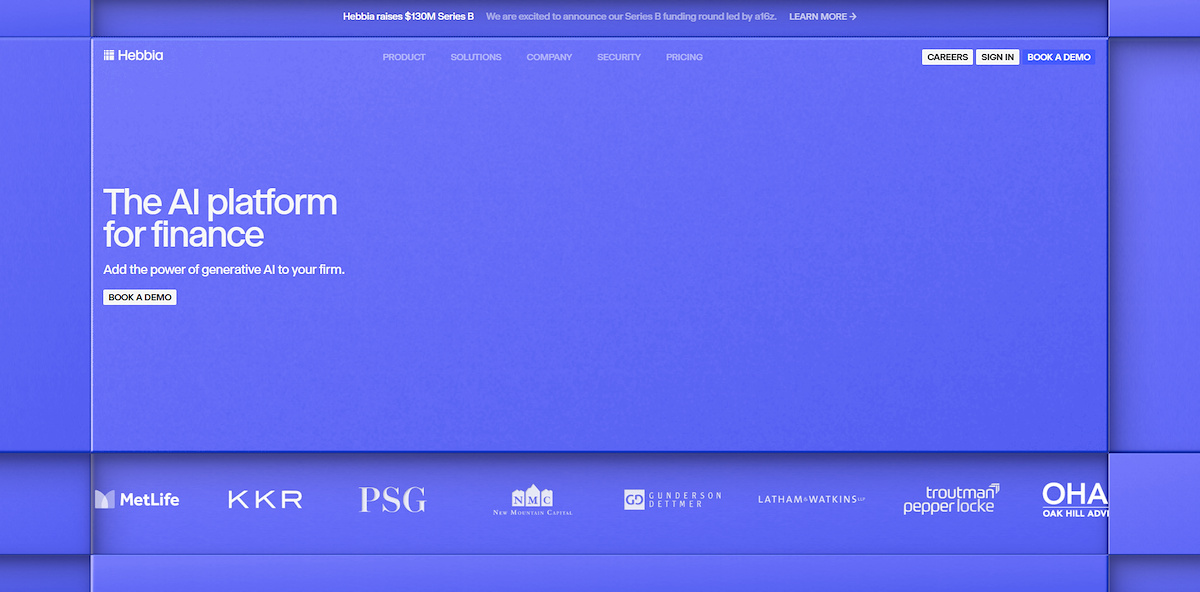
Hebbia is an AI platform designed for analyzing large volumes of complex documents. Its core product, Matrix, uses a spreadsheet-like interface to help finance and legal professionals perform document-intensive work. Key use cases include M&A diligence and credit agreement analysis. Unlike Harvey, which focuses on collaborative legal reasoning, Hebbia is primarily an analytical engine for extracting and synthesizing information. This makes it a specialized tool for data extraction rather than a broader legal drafting or review assistant.
Hebbia Features
Hebbia's core product is Matrix, an analytical environment for working with large document sets. It is not a general-purpose legal assistant but a specialized tool for data-intensive tasks.
- Matrix Interface: A spreadsheet-style grid where documents are rows and analysis prompts are columns.
- Large-Scale Analysis: Designed to extract, compare, and synthesize information across thousands of documents at once.
- Primary Use Cases: M&A diligence, credit agreement analysis, and portfolio review.
- Drafting Capabilities: Recently acquired FlashDocs to add document-to-draft generation.
Hebbia Pricing
Hebbia does not publish its pricing. Costs are determined through direct sales engagement and are aimed at enterprise customers. Based on industry reports, pricing is structured in two main tiers.
- Lite Tier: Approximately $3,000 to $3,500 per user, per year.
- Professional Tier: Approximately $10,000 per user, per year.
- Custom Quotes: Official pricing requires a direct quote from the Hebbia sales team.
Key Considerations about Hebbia
When evaluating Hebbia vs Harvey, it's important to understand Hebbia's specific focus. It is an analytical engine for large-scale data extraction, not a comprehensive contract drafting and negotiation tool.
The platform operates within its own spreadsheet-like interface and is not designed for the iterative drafting and review process inside Microsoft Word. It lacks native redlining, playbook enforcement, and clause-level suggestions that are central to many legal workflows.
Its primary focus on finance and massive document sets may make it overly specialized for teams whose main work involves routine contract review. The high, enterprise-focused price point also makes it inaccessible for smaller firms.
2. Harvey
Harvey is a legal AI platform designed for complex transactional workflows and large-scale document analysis. It primarily serves large law firms and in-house legal teams, focusing on collaborative review and structured diligence through its own environment. Unlike Hebbia's focus on pure data extraction, Harvey is positioned as a system for legal operations and reasoning. However, its architecture as a broad platform means it is less specialized for the day-to-day drafting and redlining tasks that happen directly within Microsoft Word.
Harvey Features
Harvey is structured as a legal operations platform with three main components. It is designed for large-scale analysis and collaborative, structured workflows rather than individual drafting speed.
- Vault: A central repository for analyzing up to 100,000 documents at once using a spreadsheet-style interface for data extraction.
- Workflows: Configurable, multi-step templates for standardizing legal processes like diligence or compliance checks across teams.
- Collaboration: Features shared workspaces, permission controls, and human verification loops for team-based review.
- Word Add-in: Provides capabilities for in-document editing, though the platform’s core functions operate in its separate environment.
Harvey Pricing
Harvey uses an enterprise subscription model with pricing negotiated directly. It is positioned at the higher end of the market and is aimed at large law firms and corporate legal departments.
- Annual Subscription: Pricing is quoted on a per-seat, annual basis.
- Indicative Cost: Starts around $40,000 per year for a team of 10 users.
- Custom Quotes: Official pricing requires a direct sales engagement and is based on team size and contract terms.
Key Considerations about Harvey
When considering Hebbia vs Harvey, it's important to note that Harvey is built as a broad legal operations platform, not a specialized tool for rapid contract drafting. Its power lies in large-scale, collaborative diligence within its own environment, which requires users to work outside of Microsoft Word for most core tasks.
The platform’s flexibility comes with significant setup and management overhead to configure its workflows. This makes it less suitable for teams seeking a simple, ready-to-use solution for day-to-day contract review. Its high price point also makes it a substantial investment for teams that do not need its full range of enterprise-grade legal operations features.
3. Spellbook, The Smarter Alternative
While Hebbia and Harvey offer powerful platforms, Spellbook presents a more focused alternative as the most complete AI suite for contracts and commercial law. It integrates directly into Microsoft Word, helping over 4,000 legal teams at companies like Dropbox and Crocs draft and review contracts with more speed and precision, without context switching.
Spellbook is also the only contract AI grounded in real-time market data. Its Review feature analyzes agreements against thousands of similar contracts, providing data-driven answers to "What's market?" This gives lawyers a distinct advantage in negotiations that other platforms do not offer.
Spellbook Features
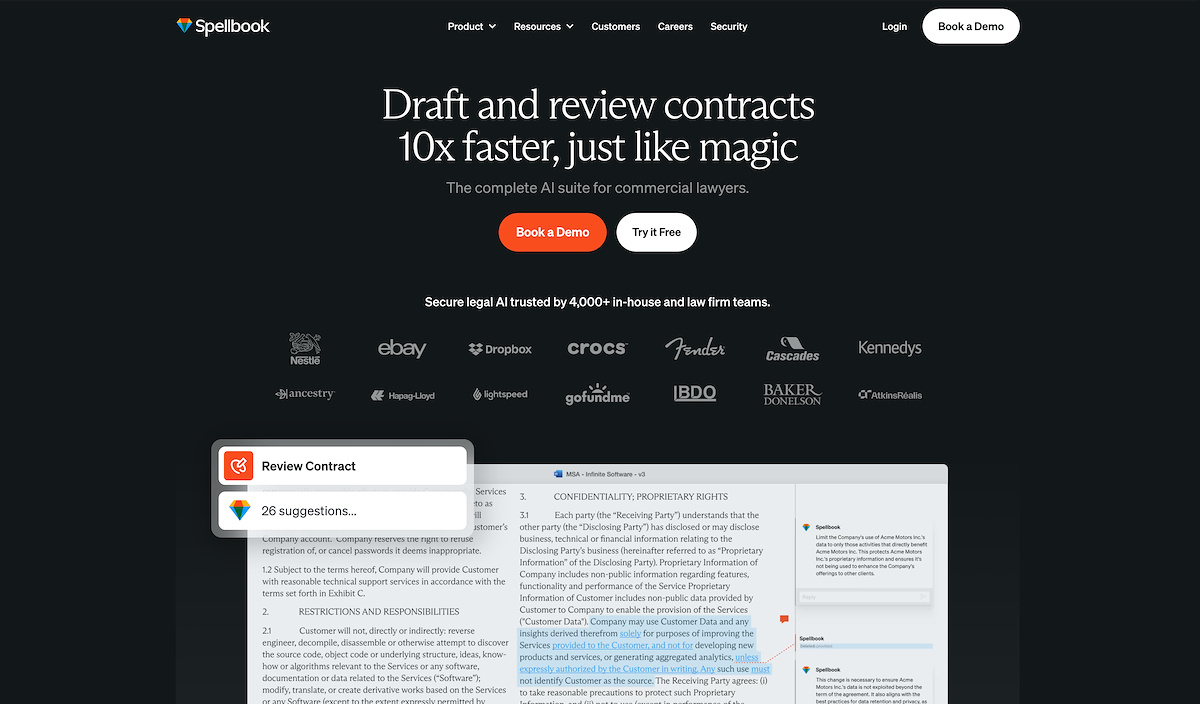
- Review: Instantly analyzes entire contracts to flag risks and suggest AI-generated redlines. All edits appear as standard track changes in Microsoft Word, preserving the lawyer's voice and control.
- Draft: Generates new clauses or entire agreements from simple instructions. It can also find and adapt language from a firm’s own historical contracts, ensuring that new drafts are grounded in successful precedents.
- Ask: A contract-specific Q&A tool that functions directly within Word. Lawyers can ask questions about obligations, dates, or specific terms and get instant answers with citations to the relevant contract language.
- Compare to Market: Provides data-driven answers to "What's market?" by comparing contract terms against real-time data from thousands of similar agreements. This feature allows lawyers to check if a term like a limitation of liability is standard with a single click, a capability not offered by Hebbia or Harvey.
- Associate: An AI agent that can execute multi-document, multi-step projects from a single prompt. It can cross-reference documents, update terms across multiple files, and prepare entire document packages, handling complex work that goes beyond single-document review.
Spellbook Pricing
Spellbook offers custom pricing with a simple, per-seat annual subscription model. Pricing is determined by team size, and all plans include every feature, plus onboarding and support. Volume discounts are available for larger teams.
Get started with a free trial to see how Spellbook works for your team.
Why Commercial Lawyers Love Spellbook
Unlike standalone analytical platforms, Spellbook is built for the practical, day-to-day work of commercial lawyers. It operates entirely within Microsoft Word, eliminating the need to switch contexts or learn a new interface.
While its functionality is centered in Word, this focus allows for a deeply integrated experience for drafting, reviewing, and negotiating contracts. Its ability to provide real-time market data for clauses gives lawyers a negotiating advantage unavailable in other tools.
This practical approach is why it's the preferred choice for teams focused on speed and precision in their contract workflows, making it a strong contender in the Hebbia vs Harvey evaluation.
[cta-1]
Harvey vs Hebbia vs Spellbook: Key Differences
The core differences in the Hebbia vs Harvey comparison center on workflow, primary function, and unique intelligence. While Hebbia and Harvey are powerful analytical platforms, Spellbook is built as a complete AI suite for the practical work of commercial law.
1. Where You Work: Interface and Integration
- Hebbia: A standalone analytical engine with a spreadsheet-like interface (Matrix) for data extraction.
- Harvey: A separate, collaborative platform for managing large-scale legal operations and diligence projects.
- Spellbook: A Microsoft Word add-in that works where lawyers already do, eliminating context switching for drafting and review.
2. What You Do: Primary Function
- Hebbia is for extracting and synthesizing information across thousands of documents, ideal for finance-heavy M&A diligence.
- Harvey is for standardizing complex, multi-step legal processes across large teams in a structured environment.
- Spellbook is for the day-to-day contract lifecycle: drafting clauses, reviewing agreements with speed and precision, and negotiating terms.
3. How You Negotiate: Unique Intelligence
- In the Hebbia vs Harvey matchup, both platforms ground their analysis primarily in the documents you provide.
- Spellbook is the only contract AI grounded in real-time market data. Its Compare to Market feature provides data-driven answers to "What's market?" for any clause, offering a distinct advantage in negotiations that other platforms lack.
Which Option Is Right For Your Business?
For Large-Scale Diligence Teams
Harvey is a strong choice for teams managing complex, multi-step projects like M&A diligence. Its platform is built to standardize legal processes across large teams and handle massive document sets within a structured, collaborative environment.
For In-House Commercial Teams
Spellbook is the best fit. It works directly within Microsoft Word, allowing teams to increase speed and precision without changing their existing workflow. Its focus on practical drafting and review is ideal for day-to-day contract work, like managing indemnification clauses.
For Small Firms and Solo Practitioners
Spellbook is the clear winner. It provides powerful AI assistance without the enterprise-level price tag or complex setup of the other platforms. The direct Word integration means lawyers can get started quickly and improve their contract work immediately.
The Bottom Line
Your choice in the Hebbia vs Harvey debate depends on your primary need. For massive data extraction, consider Hebbia. For large-scale legal operations, Harvey is built for the task. For most commercial lawyers who need to draft and review contracts faster and more accurately within Word, Spellbook is the smarter alternative.
Try Spellbook Free
While Hebbia and Harvey are built for large-scale analysis in separate platforms, Spellbook works directly within Microsoft Word to help you draft and review contracts with greater speed and precision.
See how Spellbook can fit into your existing workflow by starting a free trial today.
Frequently Asked Questions
How do Hebbia and Harvey handle data security and what AI models do they use?
Both platforms are built for enterprise use and prioritize data security, typically stating that client data is not used to train their core AI models. They use a combination of leading large language models (LLMs), but their value comes from how this technology is fine-tuned for legal work.
It is always critical to review the specific security protocols of any AI tool. Understanding the privacy implications of the underlying technology, for instance if ChatGPT is private, is an important part of the evaluation process. This helps avoid risks like those faced by a lawyer fined for using AI that produced fake citations.
How much training is required to use Hebbia or Harvey?
Both Hebbia and Harvey are powerful platforms that require user onboarding. Harvey, with its configurable workflows for standardizing legal processes, generally involves a more significant setup and training period to get a team fully operational.
Hebbia's Matrix interface, while intuitive for those familiar with spreadsheets, also requires training to use its analytical functions effectively. The implementation time is a key factor for teams looking for a tool that can be adopted quickly without disrupting existing workflows.
How does Spellbook compare to Hebbia and Harvey for daily contract work?
Spellbook is designed specifically for the day-to-day tasks of commercial lawyers, operating directly within Microsoft Word. While Hebbia and Harvey are separate platforms for large-scale analysis, Spellbook focuses on improving the speed and precision of drafting and reviewing individual agreements.
For instance, a lawyer can generate a new non-competition clause or review an entire contract without leaving their document. This workflow integration eliminates the context switching required by Hebbia and Harvey, making it a more practical tool for lawyers whose primary role involves contract negotiation and management.
[cta-2]
Our Research Methodology
This comparison is based on comprehensive research of publicly available information, including product websites, feature documentation, press releases, customer reviews, legal technology publications, and third-party analyses from sources like LawSites, Artificial Lawyer, and industry analysts.
Where pricing information is not publicly disclosed, we've included estimates based on available industry data and user reports. Information is current as of 2026 and may change as products evolve. We encourage readers to verify details directly with vendors and request demos to evaluate fit for their specific needs.
.png)
%20(1).png)

Thank you for your interest! Our team will reach out to further understand your use case.
Spellbook is the most complete AI suite for commercial legal work, trusted by more than 4,400 in-house teams and law firms worldwide.

SOC 2 Type II

HIPAA

GDPR
EU AI Act

HIPAA Compliant
