
LexisNexis vs Gavel: Which Is The Top Pick in 2026?
.jpeg)


This 2026 review of LexisNexis vs Gavel explores two distinct approaches to legal AI for transactional work. LexisNexis integrates AI with its vast legal research library, while Gavel focuses on turning document creation into a structured, automated process. We will compare their features, pricing, and underlying technology to help you find the right fit for your practice.
Key Takeaways
- LexisNexis is a legal research platform with an integrated AI assistant, while Gavel is a document automation tool that turns document creation into a structured process.
- The main difference is their foundation: LexisNexis grounds its AI in its proprietary legal research library for citation-backed answers, whereas Gavel uses rule-based logic and structured questionnaires to automate document production.
- Spellbook offers a more complete approach for commercial law, operating directly in Microsoft Word to help legal teams draft and review contracts with more speed and precision. Trusted by over 4,000 legal teams, it is the only AI grounded in real-time market data for data-driven negotiations.
1. LexisNexis
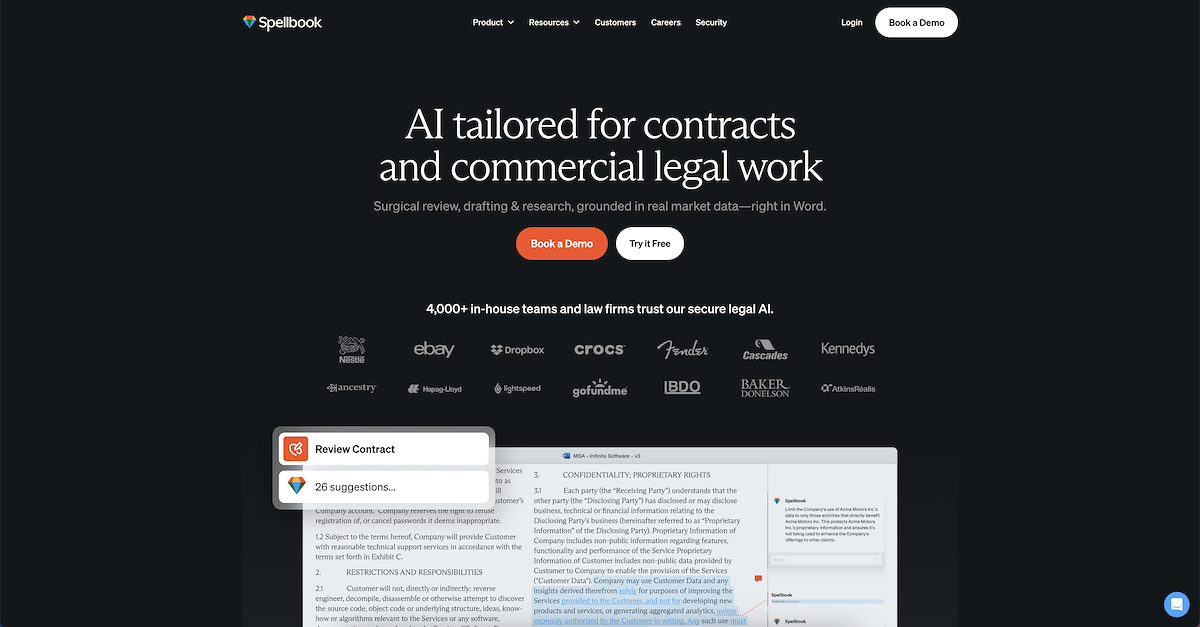
LexisNexis embeds an AI assistant within its extensive legal research ecosystem. It is designed for legal teams that prioritize citation-backed answers grounded in a proprietary library of case law and authoritative content. Unlike Gavel, which focuses on systematizing document creation, LexisNexis offers a broader environment for research and drafting. However, its contract-specific tools are part of this larger platform, with key functions like detailed redlining requiring a separate Word plug-in and playbook features still under development.
LexisNexis Features
- AI-powered legal Q&A, drafting, and summarization.
- Answers grounded in Lexis’s proprietary legal library.
- Document upload and analysis with structured comparison.
- M&A benchmarking against SEC filings and Practical Guidance.
- Diligence tools for third-party risk screening.
LexisNexis Pricing
- Seat-based annual subscriptions with volume discounts.
- Promotional pricing and multi-year discounts are available.
- The Create+ Word plug-in for redlining is a separate add-on.
- Training and ongoing support are included in the contract.
Key Considerations about LexisNexis
LexisNexis is not a standalone contract AI tool but an AI layer on its research platform. This integration is a strength for teams already invested in the Lexis ecosystem but can be a drawback for others.
Key contract functions are fragmented. For example, detailed redlining requires a separate Word plug-in, and playbook features are still in development. This is a critical point of comparison in the LexisNexis vs Gavel evaluation, as workflow integration is often a deciding factor.
The platform is less specialized for high-volume contract standardization inside Word. Teams that need a tool focused purely on transactional efficiency and data-driven negotiation may find it less suitable than more focused alternatives.
2. Gavel
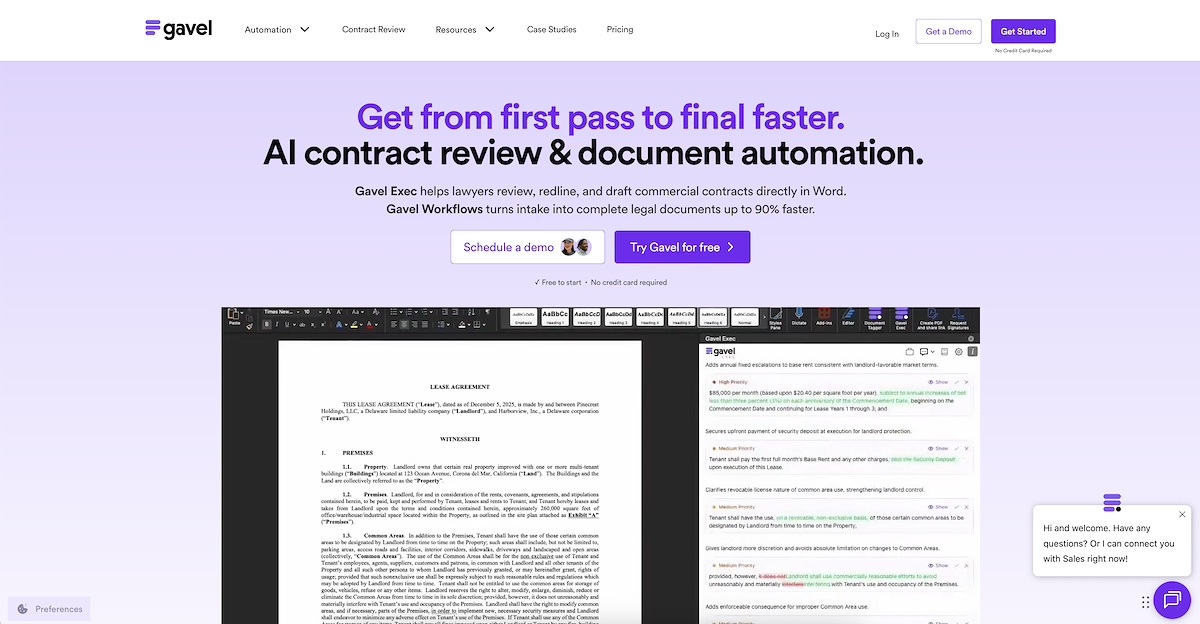
Gavel approaches legal AI from a different angle, focusing on document automation rather than research. It turns document creation into a structured, repeatable process using rule-based logic and guided questionnaires. This makes it a fit for teams in high-volume transactional areas like real estate or estate planning. In the LexisNexis vs Gavel comparison, Gavel is less of a contract review tool and more of a document production system, emphasizing control over initial drafting instead of deep analysis of third-party paper.
Gavel Features
- Word add-in for AI-assisted drafting, redlining, and summarizing.
- Playbooks that apply rule-based logic for consistent document review.
- “Projects” that function as shared knowledge bases for templates and clauses.
- A web application for generating documents from structured questionnaires.
- An open API for integration with CRMs and other business systems.
Gavel Pricing
- A per-user subscription model, billed monthly.
- Starts at approximately $160 per user per month.
- Volume discounts are available for teams of 10 or more.
- Does not require long-term contracts by default.
Key Considerations about Gavel
Gavel is primarily a document production system. It excels at creating standardized documents from scratch using structured inputs and rule-based logic, making it a strong choice for high-volume, repeatable work.
This focus on initial drafting means it is less equipped for deep analysis of third-party contracts or complex negotiations. Teams that spend significant time reviewing and redlining external paper may find its capabilities limited compared to more review-focused tools.
The platform’s value is highest when legal work can be converted into a repeatable process. It lacks the data-driven negotiation tools needed to benchmark terms against market standards, a key factor in the LexisNexis vs Gavel evaluation for modern transactional teams.
3. Spellbook, The Smarter Alternative
While LexisNexis and Gavel offer distinct tools for legal work, Spellbook provides a more complete AI suite built specifically for contracts and commercial law. It integrates directly into Microsoft Word, where lawyers already work, helping over 4,000 legal teams draft and review contracts with greater speed and precision without context switching.
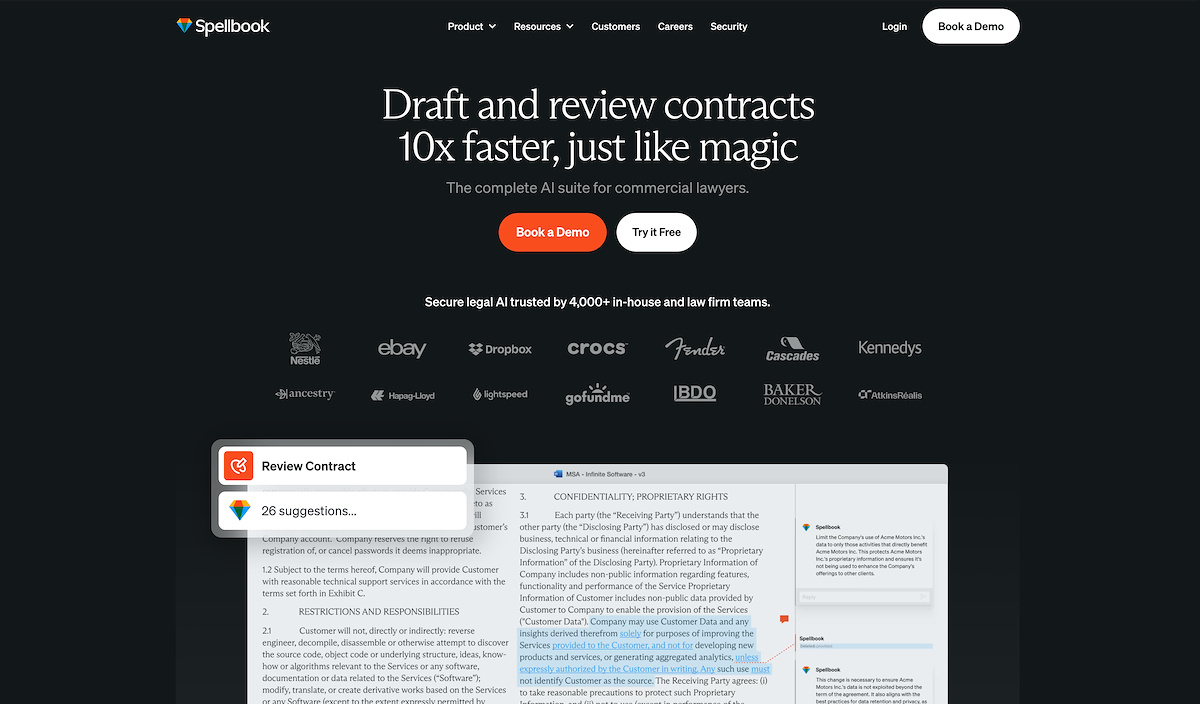
Spellbook is also the only contract AI grounded in real-time market data. Its Review feature analyzes agreements against live benchmarks from thousands of similar contracts, giving lawyers data-driven answers to "What's market?" in any negotiation and streamlining legal busywork.
Spellbook Features
- Review: Instantly analyzes entire contracts to flag risks, suggest redlines, and identify missing clauses. Edits appear as standard track changes in Word, keeping the lawyer in full control of the final work product.
- Draft: Generates new clauses or entire agreements based on simple instructions. It can also draw from a firm’s own historical contracts, adapting precedent to fit the context of the current document.
- Ask: A contract-specific Q&A tool that lets lawyers ask questions about an open agreement and receive answers with direct citations to the relevant language in the document.
- Compare to Market: Benchmarks contract terms against real-time data from thousands of similar agreements. This feature provides data-driven answers to "What's market?" for stronger negotiation positions.
- Associate: An AI agent that handles multi-document, multi-step projects from a single prompt. It can perform tasks like reviewing a data room for due diligence or preparing a full document package from a term sheet.
Spellbook Pricing
Spellbook uses a custom per-seat pricing model based on your team's size and requirements.
- Subscriptions are on an annual, per-user basis.
- Volume discounts are available for teams of 10 or more.
- All core features, onboarding, and ongoing support are included.
Get started with a free trial to see how Spellbook can fit into your workflow.
Why Commercial Lawyers Love Spellbook
Unlike legal research platforms or document production systems, Spellbook is built specifically for the day-to-day workflow of commercial lawyers. While it operates exclusively within Microsoft Word, this focus ensures lawyers can draft, review, and negotiate without switching applications.
It combines the tools needed for transactional work into a single interface. Crucially, its ability to benchmark terms against real-time market data provides a data-driven edge in negotiations that is often a deciding factor in the LexisNexis vs Gavel debate. This practical approach helps teams work faster and with greater precision, directly within their existing documents.
[cta-1]
Gavel vs LexisNexis vs Spellbook: Key Differences
The LexisNexis vs Gavel comparison highlights two fundamentally different approaches to legal AI. LexisNexis embeds AI within its massive research library, while Gavel systematizes document creation. Spellbook presents a third, more integrated alternative, offering a complete AI suite built specifically for the commercial contract lifecycle.
1. LexisNexis: Research-First AI
- LexisNexis grounds its AI in a proprietary library of case law and authoritative content, making it a strong choice for teams that prioritize citation-backed research.
- Its AI assistant helps with drafting and summarization within the Lexis ecosystem.
- However, its contract-specific tools are not fully integrated; for example, detailed redlining requires a separate Word plug-in, and playbook features are still in development.
2. Gavel: Document Automation Engine
- Gavel focuses on document production, using rule-based logic and guided questionnaires to automate the creation of standardized documents.
- It excels in high-volume transactional areas where consistency in initial drafting is key.
- Its focus is less on the deep analysis of third-party paper and more on controlling the output of a firm's own templates.
3. Spellbook: The Integrated Contract Workflow
- Spellbook is the most complete AI suite for commercial law, operating entirely within Microsoft Word to help legal teams draft and review contracts with greater speed and precision.
- It is the only platform grounded in real-time market data. Its Review feature analyzes agreements against live benchmarks from thousands of similar contracts.
- This provides lawyers with data-driven answers to "What's market?" in any negotiation. Trusted by over 4,000 legal teams, Spellbook combines drafting, review, and data-driven negotiation tools into a single, unified workflow without context switching.
Which Option Is Right For Your Business?
For the Research-Heavy Practice
LexisNexis is the logical choice if your team's primary function is legal research. Its strength lies in grounding AI-assisted drafting and analysis in its extensive proprietary library.
This makes it ideal for work that requires constant and direct citation to case law and other authoritative sources.
For High-Volume Document Assembly
Gavel is built for practices that need to generate a high volume of standardized documents from templates. It excels at turning document creation into a repeatable, questionnaire-based process.
This is particularly effective for areas like estate planning or real estate where initial drafting consistency is the main goal.
For the Commercial Contract Workflow
Spellbook is the best fit for most in-house and commercial law teams. It operates entirely within Microsoft Word, eliminating the need to switch between applications for drafting and review.
It provides the tools for the entire contract lifecycle, from drafting new language to analyzing third-party paper with speed and precision. This integrated approach is better suited for the dynamic nature of commercial negotiations.
The Bottom Line
Your choice in the LexisNexis vs Gavel debate depends on your core need. LexisNexis is for research, and Gavel is for document production.
However, for legal teams focused on drafting and negotiating commercial agreements, an integrated tool like Spellbook offers a more practical and efficient path. It brings drafting, review, and data-backed negotiation support directly into your existing workflow.
Try Spellbook Free
The choice in the LexisNexis vs Gavel discussion often comes down to your primary need: research or document production. Spellbook offers a third path, purpose-built for the entire commercial contract workflow inside Microsoft Word. Start a free trial to see how its integrated drafting, review, and data-backed negotiation tools can work for your practice.
Frequently Asked Questions
How do LexisNexis and Gavel handle integration with Microsoft Word?
Both platforms offer a Microsoft Word add-in, but they serve different functions. Gavel's add-in is central to its purpose, allowing you to build documents using rule-based logic and templates directly within Word.
LexisNexis also provides a Word plug-in, but it acts as an extension of its larger research platform. Some key functions, like detailed redlining, are handled through a separate add-on, which can make the workflow feel less unified.
Which tool is better for analyzing and redlining third-party contracts?
Neither LexisNexis nor Gavel is primarily designed for the deep analysis of third-party contracts. Gavel's strength is in producing your own standardized documents, not reviewing external ones.
LexisNexis offers some document analysis capabilities, but its focus remains on grounding information in its legal research library. It is less specialized for the fast-paced review and redlining common in commercial negotiations.
How does Spellbook fit into the LexisNexis vs Gavel debate?
Spellbook offers an integrated alternative built specifically for the commercial contract workflow. While LexisNexis is a research tool and Gavel is a document production engine, Spellbook combines AI-powered drafting, review, and negotiation support into a single interface inside Microsoft Word.
It helps teams work with both their own templates and third-party paper with equal precision. Unlike the other two, Spellbook provides data-driven negotiation insights by benchmarking terms against market standards, a key differentiator for transactional lawyers. This approach is part of a growing trend of using specialized AI for lawyers to manage specific tasks.
[cta-2]
Our Research Methodology
This comparison is based on comprehensive research of publicly available information, including product websites, feature documentation, press releases, customer reviews, legal technology publications, and third-party analyses from sources like LawSites, Artificial Lawyer, and industry analysts.
Where pricing information is not publicly disclosed, we've included estimates based on available industry data and user reports. Information is current as of 2026 and may change as products evolve. We encourage readers to verify details directly with vendors and request demos to evaluate fit for their specific needs.
.png)
%20(1).png)

Thank you for your interest! Our team will reach out to further understand your use case.
Spellbook is the most complete AI suite for commercial legal work, trusted by more than 4,400 in-house teams and law firms worldwide.

SOC 2 Type II

HIPAA

GDPR

EU AI Act

HIPAA Compliant
