
Westlaw vs LexisNexis: Which Is The Top Pick in 2026?
.jpeg)


The Westlaw vs LexisNexis decision is a critical one for legal teams choosing a foundational research tool. Westlaw is Thomson Reuters' flagship legal information system, while LexisNexis offers a competing ecosystem of proprietary content and AI tools. To help you decide, this guide breaks down their key features, pricing, and AI architecture so you can determine which platform best supports your team's specific workflows.
Key Takeaways
- Westlaw and LexisNexis are foundational legal research platforms that provide access to vast databases of case law, statutes, and secondary sources, augmented with AI-powered tools for analysis and drafting.
- Both platforms ground their AI outputs in proprietary legal content to ensure accuracy and provide citation-backed answers. The primary difference in the Westlaw vs LexisNexis debate lies in their specific content ecosystems and AI features; Westlaw leverages its Key Number System and agentic Deep Research, while LexisNexis integrates its Practical Guidance and M&A benchmarking tools.
- While Westlaw and LexisNexis are powerful research tools, Spellbook is an AI suite built specifically for the transactional workflows of commercial lawyers. It operates directly in Microsoft Word and is trusted by over 4,000 legal teams to draft and review contracts up to 10x faster, negotiate with data-driven confidence using real-time market benchmarks, and automate multi-document tasks with its AI agent, Spellbook Associate.
1. Westlaw
Westlaw is Thomson Reuters' long-standing legal research platform, built around a massive database of case law, statutes, and secondary sources. It is primarily used by law firms and corporate legal departments for deep legal research, particularly for litigation and regulatory analysis. While Westlaw has integrated AI capabilities like its Deep Research feature, its core function remains research. Like its main competitor, LexisNexis, it is a foundational information system, but its focus on research makes it a powerful yet often complex tool for teams centered on transactional contract work.
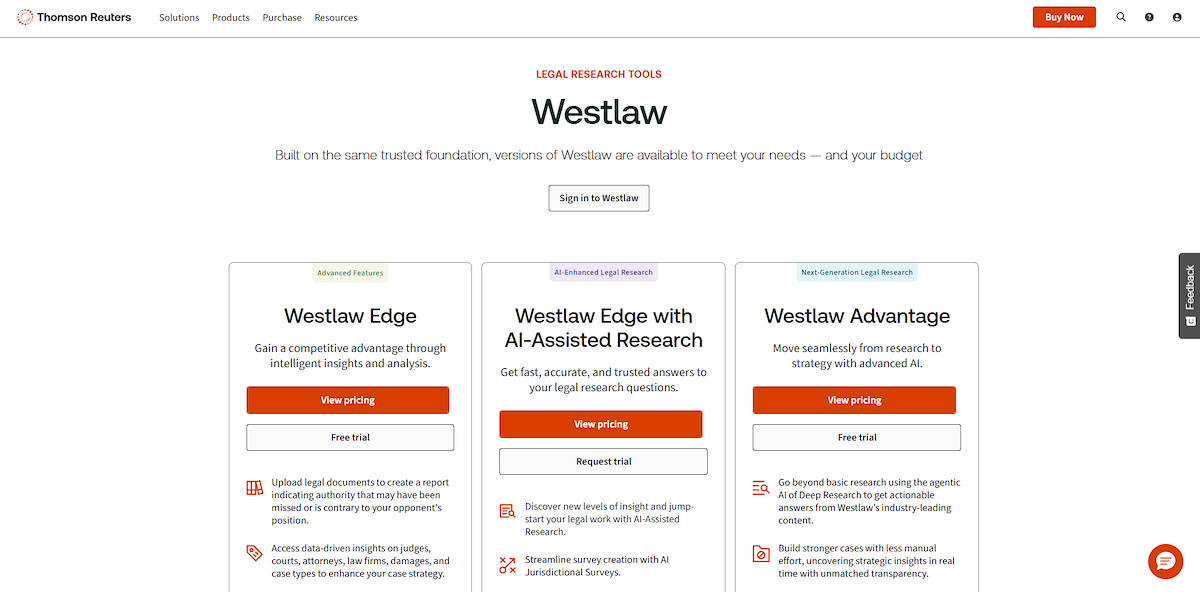
Westlaw Features
Westlaw offers several AI-powered features built on top of its extensive legal database. These tools are primarily designed to assist with deep research and litigation-focused analysis.
- Deep Research: An AI agent that creates and executes multi-step research plans to answer complex legal questions.
- Litigation Document Analyzer: A tool for reviewing legal documents like briefs to find misrepresentations of law and suggest counterarguments.
- KeyCite: A long-standing citation analysis tool used to verify if a case is still considered good law.
- CoCounsel Integration: Provides access to an AI assistant for tasks like summarizing documents and preparing case timelines.
Westlaw Pricing
Westlaw's pricing is known for being complex and is often custom-negotiated, especially for its more advanced tiers. This can make budgeting a challenge for legal teams.
- Tiered Plans: Offers multiple tiers, including Westlaw Classic, Edge, Precision, and Advantage.
- Custom Quotes: Pricing for the higher tiers (Precision and Advantage) is not public and requires direct negotiation.
- High Costs: Upgrading between tiers can result in significant cost increases, with some reports indicating jumps of 30% or more.
Key Considerations about Westlaw
While Westlaw is a powerful platform, its focus on deep research and litigation may not align with the needs of all legal teams, particularly those centered on transactional work.
The platform is not designed as a contract drafting or redlining tool. It lacks the Word-native playbook enforcement and negotiation features that are critical for high-volume commercial contract workflows.
Furthermore, the cost can be substantial. Westlaw is significantly more expensive than specialized contract AI tools, and its opaque pricing for premium tiers makes it difficult to evaluate its cost-effectiveness without a lengthy sales process. For teams focused on contract execution, the platform's complexity and expense may outweigh its research benefits.
2. LexisNexis
LexisNexis is a major legal information system that, like Westlaw, is built around a large database of proprietary content and AI tools. The platform is designed for legal teams that need an integrated environment for research, drafting, and analysis, with specific tools for M&A benchmarking. While the Westlaw vs LexisNexis comparison shows many similarities, LexisNexis is less focused on a single workflow. For example, its contract redlining functions require a separate Word plug-in, which can create a disjointed experience for teams focused on transactional work.
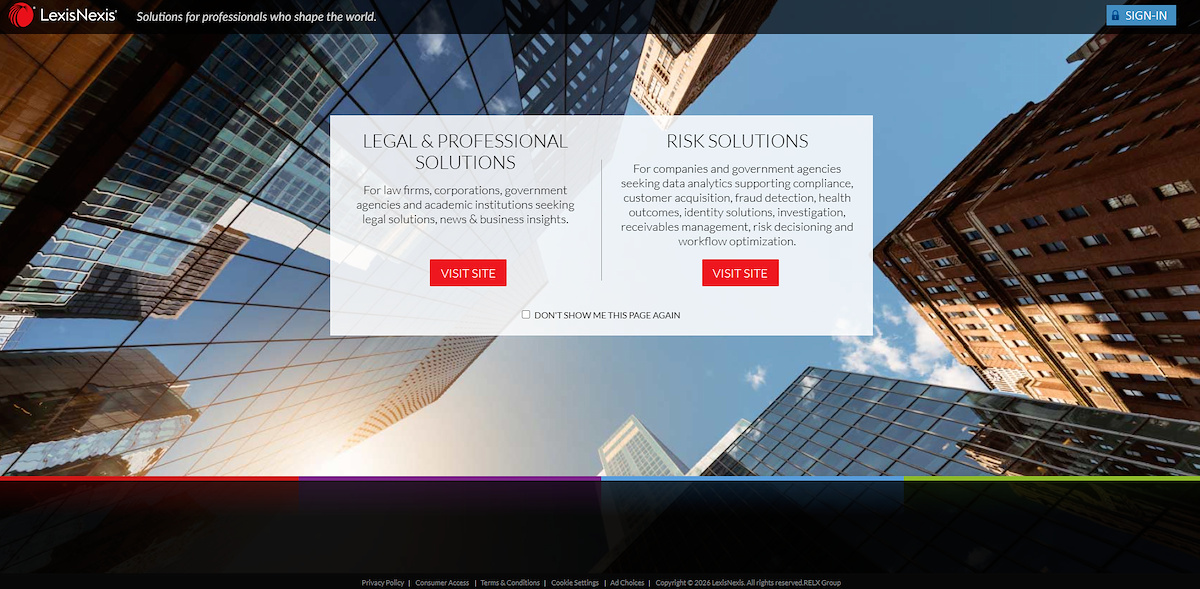
LexisNexis Features
LexisNexis provides a suite of AI-powered tools built upon its extensive legal content library. These features are designed to support research, drafting, and analysis within its ecosystem.
- AI Assistant: Offers generative AI for legal Q&A, drafting, and summarization, with answers grounded in Lexis's proprietary content.
- Document Analysis: Allows users to upload and query documents for specific information or get high-level summaries.
- M&A Benchmarking: Compares uploaded agreements against a database of SEC-filed contracts and attorney-curated clauses.
- Word Plug-in: Contract redlining is handled through a separate add-on, Lexis Create+, not the main platform.
LexisNexis Pricing
LexisNexis uses a seat-based subscription model, and pricing is often customized based on team size and feature set.
- Custom Quotes: Pricing is determined per user, with discounts available for larger teams and multi-year contracts.
- Promotional Offers: Often includes introductory promotions, such as a discounted first year.
- Add-on Costs: The Word plug-in for redlining is typically priced as a separate add-on, increasing the total cost.
Key Considerations about LexisNexis
While LexisNexis is a capable research platform, its design may not be ideal for teams focused on high-volume transactional work. The platform's value is centered on its integrated research-to-drafting workflow, which may be more than what a commercial team needs.
A significant drawback is that core contract redlining functions are not native to the main platform. They require a separate Word plug-in, which can create a fragmented and less efficient workflow compared to fully integrated, Word-native tools.
Furthermore, its playbook functionality is not a mature, core feature. For teams that need to enforce standardized review logic consistently, this is a notable gap. The Westlaw vs LexisNexis debate often comes down to these specific workflow differences.
3. Spellbook, The Smarter Alternative
While the Westlaw vs LexisNexis debate centers on research platforms, Spellbook is the most complete AI suite built specifically for contracts and commercial law. It integrates directly into Microsoft Word, where lawyers already work, helping legal teams draft and review contracts up to 10x faster and with greater precision.
Spellbook is also the only contract AI grounded in real-time market data. Its Review feature analyzes contracts against live benchmarks from thousands of similar agreements, giving lawyers data-driven answers to "What's market?" in every negotiation. Today, more than 4,000 legal teams—including those at Dropbox, Fender, and Crocs—trust Spellbook to streamline contract workflows.
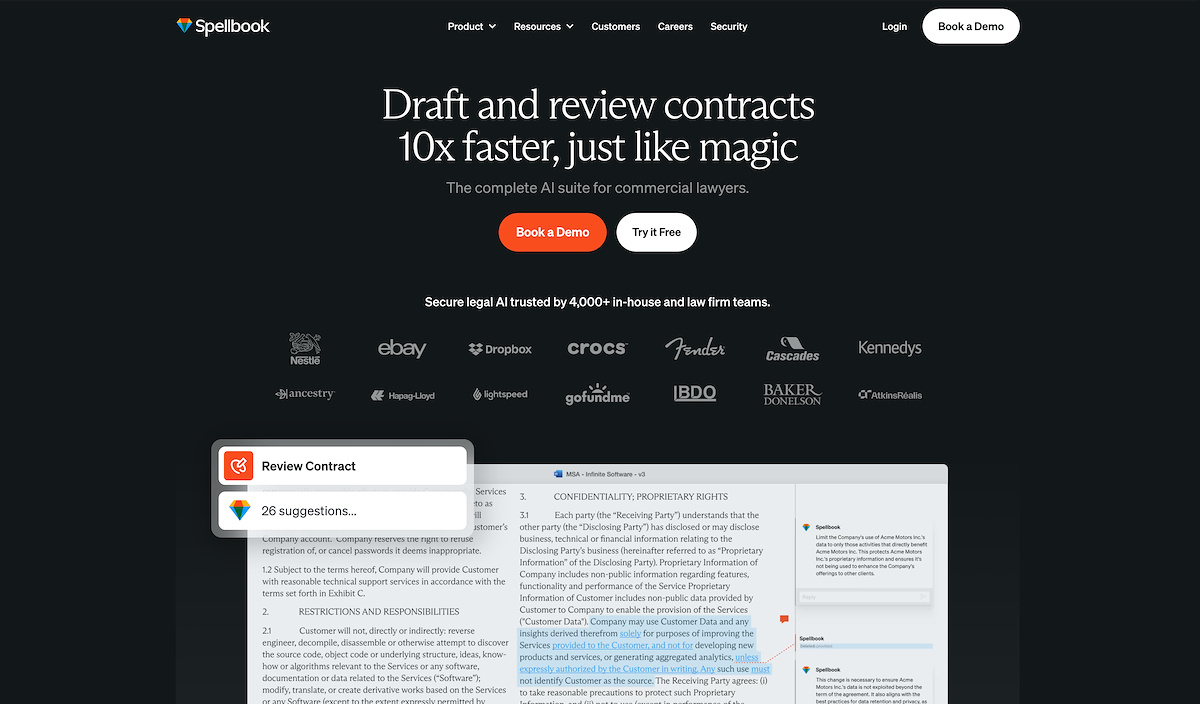
Spellbook Features
- Review: Instantly analyzes entire contracts to identify risks and suggest redlines directly in Microsoft Word. All edits appear as track changes, maintaining the lawyer's control and professional presentation.
- Draft: Generates new clauses or entire agreements from a simple instruction. It can also find and adapt language from a firm's own historical contracts, ensuring that new drafts are consistent with the firm's precedent and the specific context of the document.
- Ask: A document-specific Q&A tool that lets lawyers get quick, cited answers about the contract they are working on. This allows for rapid clarification of obligations and terms without leaving Microsoft Word.
- Compare to Market: Provides data-driven answers to the question "What's market?" by analyzing contract terms against thousands of similar, recent agreements. This feature gives lawyers statistical evidence to support their negotiation positions.
- Associate: An AI agent that handles complex, multi-document tasks from a single instruction. It can perform due diligence, update terms across multiple files, or prepare entire document packages, acting as a force multiplier for busy legal teams.
Spellbook Pricing
Spellbook uses a custom, per-seat pricing model based on team size and specific needs. This ensures a plan tailored to your organization.
- Subscriptions are annual and priced per user, with volume discounts available.
- All core features, including onboarding and support, are included in the standard price.
Explore the full platform and its features by starting a free trial.
Why Commercial Lawyers Love Spellbook
Unlike broad legal research platforms, Spellbook is designed exclusively for the transactional workflows of commercial lawyers. Its strength lies in its native Microsoft Word integration, which allows legal teams to review and redline agreements without switching contexts. While the platform is centered on the Word environment, this focus ensures a highly refined and efficient experience for contract-heavy work. For teams whose primary challenge is contract velocity and precision, not litigation research, Spellbook offers a more direct path to accelerating their work.
[cta-1]
LexisNexis vs Westlaw vs Spellbook: Key Differences
The choice in the Westlaw vs LexisNexis vs Spellbook debate depends entirely on a legal team's primary workflow. While all three platforms use AI, they are built for fundamentally different tasks. The core Westlaw vs LexisNexis decision is a choice between two powerful legal research ecosystems. Spellbook, however, is a specialized tool built for the speed and precision required in transactional contract work.
1. Core Purpose and Use Case
- Westlaw and LexisNexis: These are foundational legal information systems. Their main purpose is to provide access to vast databases of case law, statutes, and secondary sources for deep legal research, primarily supporting litigators and regulatory attorneys.
- Spellbook: This is a dedicated AI suite for commercial law. Its purpose is to accelerate contract drafting and review. It is built for transactional lawyers who need to manage high volumes of agreements efficiently.
2. Workflow and Integration
- Westlaw and LexisNexis: Both operate as standalone platforms. While they offer integrations, key functions like contract redlining often require separate Word plug-ins, which can fragment the user's workflow.
- Spellbook: Integrates directly and completely into Microsoft Word. This native environment means lawyers can draft, review, and redline agreements without context switching, keeping their focus within their primary document.
3. AI Grounding and Intelligence
- Westlaw and LexisNexis: Their AI is grounded in their extensive, proprietary libraries of historical legal content. This ensures answers are backed by established legal authority.
- Spellbook: It is the only platform grounded in real-time market data. Its Review feature analyzes terms against thousands of similar, recent agreements. This gives lawyers data-driven answers to "What's market?" during negotiations, a key differentiator in the Westlaw vs LexisNexis comparison for transactional teams.
Which Option Is Right For Your Business?
Choosing the right platform comes down to your team's primary function. The best tool is the one that directly supports your most frequent and critical tasks.
For In-House Commercial Teams
Recommendation: Spellbook
Your team manages a high volume of contracts and needs to work quickly and accurately. Spellbook is built for this specific purpose.
- Workflow Focus: It operates entirely within Microsoft Word, avoiding the need to switch between applications for drafting and review.
- Specialization: The platform is designed for transactional work, providing features that directly accelerate contract negotiation and analysis.
For Boutique Law Firms
Recommendation: Spellbook
For smaller firms focused on commercial law, efficiency and cost-effectiveness are key. Spellbook provides a focused toolset without the high overhead of a massive research database.
- Cost-Effectiveness: It offers a more targeted and affordable option compared to broad legal research systems.
- Ease of Use: Its direct integration into existing software makes it simple to adopt, improving team productivity without a steep learning curve.
For Litigation and Research-Heavy Roles
Recommendation: Westlaw or LexisNexis
If your work is centered on litigation, regulatory analysis, or deep academic research, a foundational information system is necessary. The Westlaw vs LexisNexis choice depends on your specific content needs and user interface preference.
- Core Function: These platforms provide essential access to extensive libraries of case law, statutes, and secondary sources.
- Research-Oriented Tools: Their features are built to support complex legal arguments and citation verification, which are central to litigation.
The Bottom Line
The decision between Westlaw, LexisNexis, and Spellbook is a question of specialization. For teams whose main job is legal research, Westlaw and LexisNexis are the standard. For legal teams focused on drafting and negotiating contracts, including common clauses like indemnification, Spellbook offers a more direct, efficient, and purpose-built tool.
Try Spellbook Free
While Westlaw and LexisNexis are built for legal research, Spellbook is designed for the specific workflow of transactional law, helping you draft and review contracts with greater speed and precision directly in Microsoft Word. See how Spellbook can support your team by starting a free trial.
Frequently Asked Questions
How do Westlaw and LexisNexis prevent AI "hallucinations" and ensure data privacy?
Both platforms address AI accuracy by using a "walled garden" approach. Their AI models are trained on and generate answers from their own proprietary, vetted legal databases, not the open internet. This method significantly reduces the risk of the fabricated cases or "hallucinations" that are a known issue with general-purpose AI tools.
For data privacy, both Westlaw and LexisNexis process any documents you upload for analysis within their secure, closed systems. This is a critical distinction from public AI chatbots where user data may be used for future model training. This security is essential for legal professionals, especially given recent incidents where a lawyer was fined for using AI that produced fake citations.
Which platform is better for specific practice areas?
The better platform often depends on the specific focus of your practice. A detailed LexisNexis vs Westlaw comparison shows that Westlaw, with its long-standing Key Number System, is traditionally seen as exceptionally strong for deep case law research, making it a favorite among litigators.
LexisNexis, on the other hand, has built out strong resources for transactional work, including its Practical Guidance content and M&A deal analytics. However, for teams whose work is almost entirely focused on contract drafting and review, neither platform offers the dedicated, workflow-specific tools that a specialized AI contract platform provides.
Can Spellbook replace my Westlaw or LexisNexis subscription?
Spellbook is not a direct replacement for Westlaw or LexisNexis because it is designed for a different core task. Westlaw and LexisNexis are legal information systems built for research. Spellbook is an AI suite built for transactional work that integrates directly into Microsoft Word.
If your team's primary function is litigation or deep legal research, you will still need a foundational platform like Westlaw or LexisNexis. However, for commercial and in-house teams focused on drafting, reviewing, and negotiating agreements, Spellbook provides the specific tools to accelerate that workflow with both speed and precision. It complements a research tool by handling the transactional side of legal work more efficiently, such as analyzing a confidentiality clause without ever leaving your document.
[cta-2]
Our Research Methodology
This comparison is based on comprehensive research of publicly available information, including product websites, feature documentation, press releases, customer reviews, legal technology publications, and third-party analyses from sources like LawSites, Artificial Lawyer, and industry analysts.
Where pricing information is not publicly disclosed, we've included estimates based on available industry data and user reports. Information is current as of 2026 and may change as products evolve. We encourage readers to verify details directly with vendors and request demos to evaluate fit for their specific needs.
.png)
%20(1).png)


Thank you for your interest! Our team will reach out to further understand your use case.
Spellbook is the most complete AI suite for commercial legal work, trusted by more than 4,400 in-house teams and law firms worldwide.

SOC 2 Type II

HIPAA

GDPR
EU AI Act

HIPAA Compliant
