
Callidus vs Gavel: Which Is The Top Pick in 2026?
.jpeg)


The Callidus vs Gavel debate pits a flexible AI assistant against a structured document automation platform, each offering a different approach to legal work. Callidus (StrongSuit) provides a versatile co-pilot inside Microsoft Word for drafting and research, while Gavel is built to turn repeatable tasks into systematic, questionnaire-driven workflows. To help you decide, we will compare their core features, pricing, and AI architecture to clarify which tool best fits your team's needs.
Key Takeaways
- Callidus (StrongSuit) is a versatile AI co-pilot that works within Microsoft Word to assist with drafting and research, while Gavel is a document automation platform designed to turn repeatable legal tasks into structured, questionnaire-based workflows.
- The main difference in the Callidus vs Gavel debate is their approach: Callidus offers a flexible AI assistant for a wide range of in-document tasks, whereas Gavel focuses on systematizing document creation through rule-based logic and structured inputs.
- Spellbook offers a more complete AI suite for contracts, trusted by over 4,000 legal teams to draft and review agreements up to 10x faster. Unlike either tool, Spellbook is the only contract AI grounded in real-time market data, allowing lawyers to instantly benchmark clauses against thousands of similar agreements.
1. Callidus
Callidus is a flexible AI co-pilot that works inside Microsoft Word to support a broad range of legal tasks, from contract review and redlining to clause drafting and legal research. It is positioned as a generalist tool for teams that want a single platform for multiple functions. Unlike Gavel’s focus on structured document automation, Callidus provides a more open-ended assistant for various in-document needs. However, the platform has not yet established a strong product-market fit or brand recognition within the legal AI space.
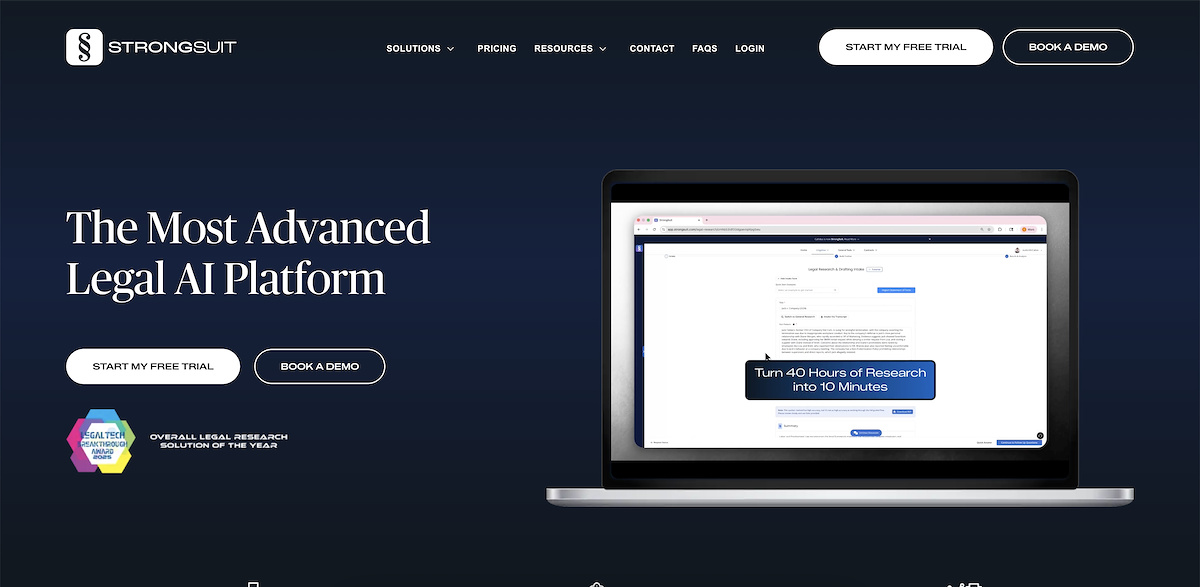
Callidus Features
Callidus provides a suite of tools within a Microsoft Word add-in, organized across several tabs.
- Negotiate: Analyzes contracts against uploaded playbooks and suggests redlines with categorized risk levels.
- Draft: Generates new clauses with contextual awareness of the document.
- Chat: An AI assistant for summaries, legal Q&A, and drafting emails.
- Legal Research: Offers citation-backed answers through an exclusive partnership with CourtListener.
- Compare Contracts: Aligns third-party documents against a firm’s internal templates.
Callidus Pricing
Callidus uses a straightforward, all-inclusive pricing model.
- Flat Rate: $3,000 per user per year.
- All-Inclusive: The single price includes all features, onboarding, and support.
- Discounts: Available for larger teams or multi-year agreements.
- Price Changes: The company has indicated that prices are likely to increase following its rebrand.
Key Considerations about Callidus
While Callidus offers a broad set of features, it has not yet established strong brand recognition or product-market fit. Its playbook capabilities are less developed than those of more specialized platforms, lacking the deep, automatic fallback logic that many legal teams require for standardized review.
The platform is also undergoing a significant rebrand, which can create uncertainty for new customers. In the Callidus vs Gavel debate, it is important to note that Callidus provides generalist functionality but less depth in specific contract automation workflows compared to more focused alternatives.
2. Gavel
Gavel is a document automation platform that turns repeatable legal work into structured, questionnaire-driven workflows. It is primarily used in practices with high volumes of standardized documents, such as estate planning, family law, and real estate. Unlike the flexible AI assistance offered by Callidus, Gavel focuses on systematizing document creation through rule-based logic. This makes it more of a document production system than a dynamic tool for reviewing and negotiating third-party paper.
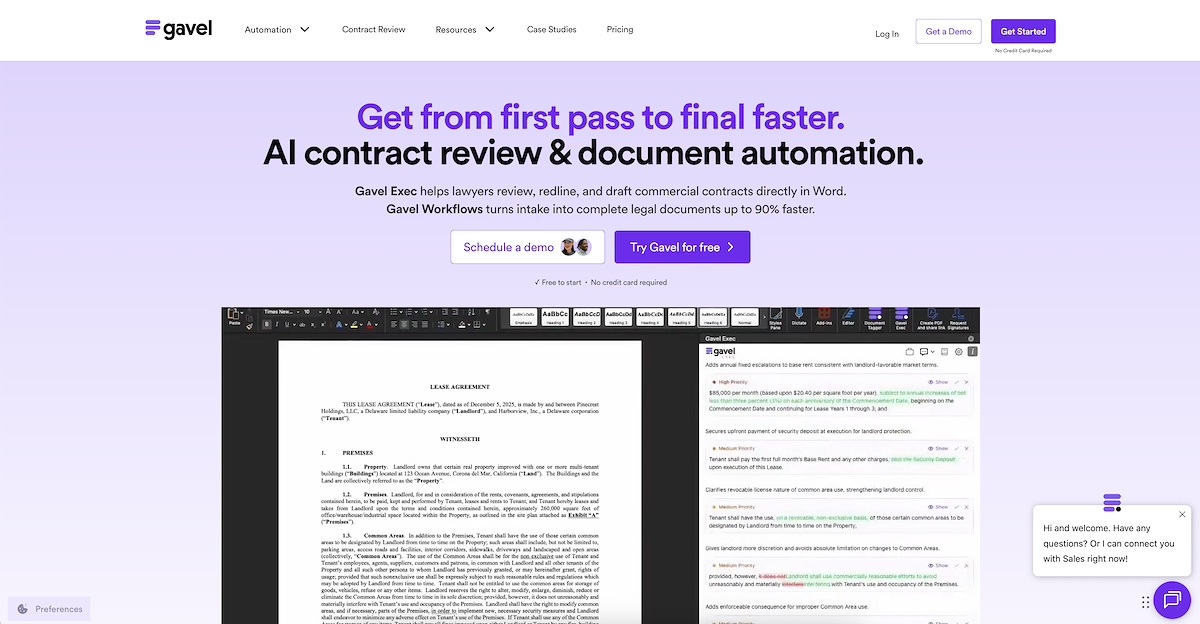
Gavel Features
Gavel’s functionality is centered on turning legal drafting into a systematic process through two main interfaces: a Word add-in and a web application.
- Word Add-In: A chat-based tool for drafting, redlining, and summarizing documents based on user prompts or predefined playbooks.
- Web Application: Creates structured questionnaires that automatically generate documents based on user or client inputs.
- Projects: Acts as a shared knowledge base for teams to store and reuse clause libraries, templates, and internal standards.
- Playbooks: Defines rule sets for specific contract types to ensure consistent review and drafting.
Gavel Pricing
Gavel offers a subscription model that is priced per user.
- Monthly Rate: Approximately $160 per user per month.
- Discounts: A 10% discount is available for teams with more than 10 users.
- Contracts: Does not require long-term contracts by default, but they are available for additional discounts.
Key Considerations about Gavel
Gavel is designed to systematize document production, making it a strong choice for practices with high volumes of standardized paperwork. However, its focus on rule-based automation makes it less suited for the dynamic review and negotiation of unique, third-party agreements.
The platform lacks the sophisticated AI required for complex deal analysis or the data-driven insights needed for high-stakes negotiations. In the Callidus vs Gavel debate, Gavel’s strength is in production, not in providing the analytical depth or agentic capabilities needed for multi-step projects that an AI agent can execute.
3. Spellbook, The Smarter Alternative
While the Callidus vs Gavel discussion highlights different approaches to legal work, Spellbook offers a more complete AI suite built specifically for contracts and commercial law. It integrates directly into Microsoft Word, helping over 4,000 legal teams at companies like Dropbox and Crocs draft and review agreements up to 10x faster and with greater precision.
Unlike either tool, Spellbook is the only contract AI grounded in real-time market data. Its Review feature analyzes agreements against thousands of similar contracts, giving lawyers data-driven answers to "What's market?" This allows teams to instantly benchmark clauses and negotiate with confidence, moving beyond subjective experience.
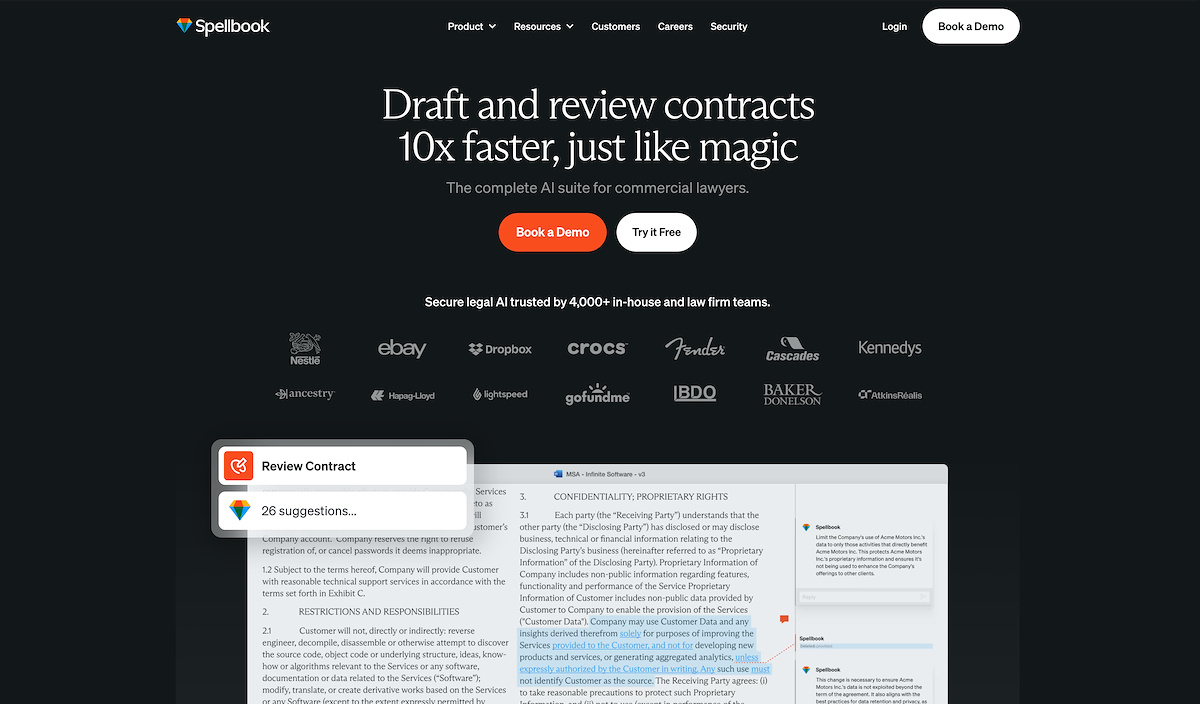
Spellbook Features
Review: Instantly analyzes contracts to suggest redlines and identify risks. It works with custom playbooks to apply your team’s standards, with all edits appearing as clean track changes in Word.
Draft: Generates new language, from specific clauses like limitation of liability to full agreements. It can also draw from your firm’s past contracts, adapting precedent to fit the context of the new document.
Ask: A contract-specific Q&A tool that lets you ask questions about the document you are working on. It provides answers with direct citations to the relevant text, helping you quickly verify information.
Compare to Market: Benchmarks contract terms against real-time data from thousands of similar agreements. This gives lawyers statistical evidence to support their negotiating positions on what is “market.”
Associate: An AI agent designed for multi-step projects. You can give it a single prompt to execute complex tasks across multiple documents, such as preparing a closing package from a term sheet or conducting due diligence.
Spellbook Pricing
Spellbook offers custom per-seat pricing based on team size and contract length, with quotes provided through the demo process.
- Annual subscriptions include all core features, onboarding, and support.
- Volume discounts are available for teams of 10 or more users.
Get started with a 7-day free trial to see how Spellbook can accelerate your contract workflows.
Why Commercial Lawyers Love Spellbook
Unlike generalist AI assistants or rigid automation tools, Spellbook is built specifically for the nuances of commercial law. While its deep integration is focused within Microsoft Word, this allows for a more powerful and reliable AI experience where lawyers already draft and negotiate. Commercial teams value its ability to provide data-driven answers to "What's market?" for any clause, moving beyond subjective guesswork. In the Callidus vs Gavel debate, Spellbook stands out by offering not just drafting assistance but true analytical depth for high-stakes negotiations, making it the preferred choice for sophisticated contract work.
[cta-1]
Gavel vs Callidus vs Spellbook: Key Differences
When evaluating Callidus vs Gavel, the primary distinction lies in their core approach: Gavel systematizes document production, while Callidus provides flexible in-document assistance. Spellbook offers a third approach, combining AI assistance with deep, data-driven contract intelligence.
Gavel is a document automation platform that excels at turning repeatable legal work into structured, questionnaire-based workflows. It is best suited for practices with high volumes of standardized documents, like estate planning or real estate. Its strength is in production, not the dynamic review of unique, third-party agreements.
Callidus operates as a generalist AI co-pilot inside Microsoft Word, supporting a broad range of tasks from drafting to legal research. While versatile, its open-ended assistance lacks the deep, rule-based logic of Gavel or the specialized contract intelligence of other tools. It provides functionality across many areas but less depth in specific automation workflows.
Spellbook provides a complete AI suite built specifically for commercial law, also inside Word. It moves beyond general assistance by grounding its AI in real-time market data. Its Compare to Market feature gives lawyers statistical answers to "What's market?" for any clause, a capability neither Gavel nor Callidus offers. With an AI agent for multi-step projects and a focus on verifiable outputs to avoid issues like AI-generated fake citations, Spellbook is designed for the precision required in sophisticated contract work.
Ultimately, the Callidus vs Gavel comparison highlights a choice between structured automation and general AI help. Spellbook presents a more focused alternative for commercial lawyers who need data-backed insights and advanced analytical tools for negotiation.
Which Option Is Right For Your Business?
For Practices with High-Volume, Standardized Documents
If your team primarily handles repeatable work like estate plans or real estate closings, Gavel is the right choice. Its platform is designed to turn documents into structured, questionnaire-based workflows, which promotes consistency and efficiency for high-volume production.
For In-House Teams Focused on Commercial Agreements
If your team manages a steady flow of commercial contracts and needs to work quickly without sacrificing precision, Spellbook is the better fit. It is built for commercial law and works inside Microsoft Word, fitting your existing process. It also provides analytical tools and practical guidance, like effective AI prompts for lawyers, to help you negotiate more effectively.
For Law Firms Handling Complex Negotiations
If your firm advises on high-stakes transactions where negotiation leverage and analytical depth are critical, Spellbook is the recommended tool. It offers specialized contract intelligence for terms like indemnification that generalist tools lack. Its ability to provide data-driven insights gives your team a clear advantage, supporting both speed and accuracy in negotiations.
The Bottom Line
Your choice in the Callidus vs Gavel discussion depends on your primary need. Gavel is for document production, while Callidus offers broad but shallow assistance. For teams focused on commercial contracts, Spellbook provides the specialized intelligence and data-backed insights needed for modern legal work.
Try Spellbook Free
While Callidus offers general assistance and Gavel focuses on document production, Spellbook provides specialized intelligence for commercial contracts, grounded in real-time market data.
This allows you to negotiate with greater speed and precision. Start a free trial today to see how Spellbook can support your team.
Frequently Asked Questions
Which AI models do Callidus and Gavel use?
Gavel is not primarily a generative AI tool; it operates on rule-based logic. You create templates and questionnaires, and the platform populates documents based on those predefined rules, making it predictable for standardized tasks.
Callidus functions more like a general AI assistant, using a large language model for drafting, summarizing, and research within Word. It partners with CourtListener to provide citation-backed answers for legal research, aiming for improved reliability. This distinction is important, as general AI requires careful oversight for accuracy, a lesson learned from cases where a lawyer used ChatGPT with poor results.
Is Callidus or Gavel better for transactional work?
The better tool depends on the type of transactional work. Gavel is built for high-volume, repeatable transactions where documents are highly standardized, such as real estate closings or estate planning. Its strength is in producing consistent documents at scale.
Callidus is positioned for more varied transactional tasks that happen within a document, like reviewing a third-party agreement or drafting a novel clause. However, it acts as a general co-pilot and lacks the deep, specialized intelligence for complex negotiations on specific terms, such as a non-competition clause.
How does Spellbook’s approach to contract AI differ from Callidus and Gavel?
Spellbook offers a distinct alternative by focusing exclusively on commercial contracts and combining AI assistance with data-driven intelligence. While Gavel automates document production and Callidus provides general drafting help, Spellbook is designed to improve the quality of review and negotiation.
Its key differentiator is the ability to analyze contract language against real-time market data from thousands of similar agreements. This gives lawyers objective evidence to support their positions on what is “market” for a specific clause. Because its AI is trained specifically for the nuances of commercial agreements, it provides more precise and reliable suggestions than a generalist tool, helping legal teams work faster without sacrificing accuracy.
[cta-2]
Our Research Methodology
This comparison is based on comprehensive research of publicly available information, including product websites, feature documentation, press releases, customer reviews, legal technology publications, and third-party analyses from sources like LawSites, Artificial Lawyer, and industry analysts.
Where pricing information is not publicly disclosed, we've included estimates based on available industry data and user reports. Information is current as of 2026 and may change as products evolve. We encourage readers to verify details directly with vendors and request demos to evaluate fit for their specific needs.
.png)
%20(1).png)

Thank you for your interest! Our team will reach out to further understand your use case.
Spellbook is the most complete AI suite for commercial legal work, trusted by more than 4,400 in-house teams and law firms worldwide.

SOC 2 Type II

HIPAA

GDPR
EU AI Act

HIPAA Compliant
