
Gavel vs Iqidis: Which Is the Top Pick in 2026?
.jpeg)


Choosing between Gavel vs Iqidis is a common decision for legal teams looking to adopt AI. Gavel focuses on structured document automation by turning legal knowledge into repeatable workflows, while Iqidis (now rebranded as Irys) offers a centralized "legal operating system" for managing entire matters. This article breaks down their features, pricing, and AI models to help you decide which approach is right for your practice.
Key Takeaways
Gavel is a document automation platform that creates legal documents from structured workflows, while Iqidis (now Irys) is a centralized legal operating system for managing entire matters.
The primary difference is their focus: Gavel is designed for document production and automation, while Iqidis is built to centralize matter management and multi-document analysis.
Spellbook offers a complete AI suite built for commercial law, trusted by over 4,000 legal teams to draft and review contracts 10x faster with greater precision, directly within Microsoft Word.
1. Gavel
Gavel is a document automation platform designed to turn legal work into structured, repeatable processes. It excels in document-heavy practice areas like estate planning, family law, and real estate, where it uses rule-based logic and questionnaires to generate documents.
Unlike Iqidis, which is built as a central system for managing entire matters, Gavel's primary focus is on document production. This makes it a tool for systematizing known workflows rather than a dynamic assistant for complex contract review and negotiation.
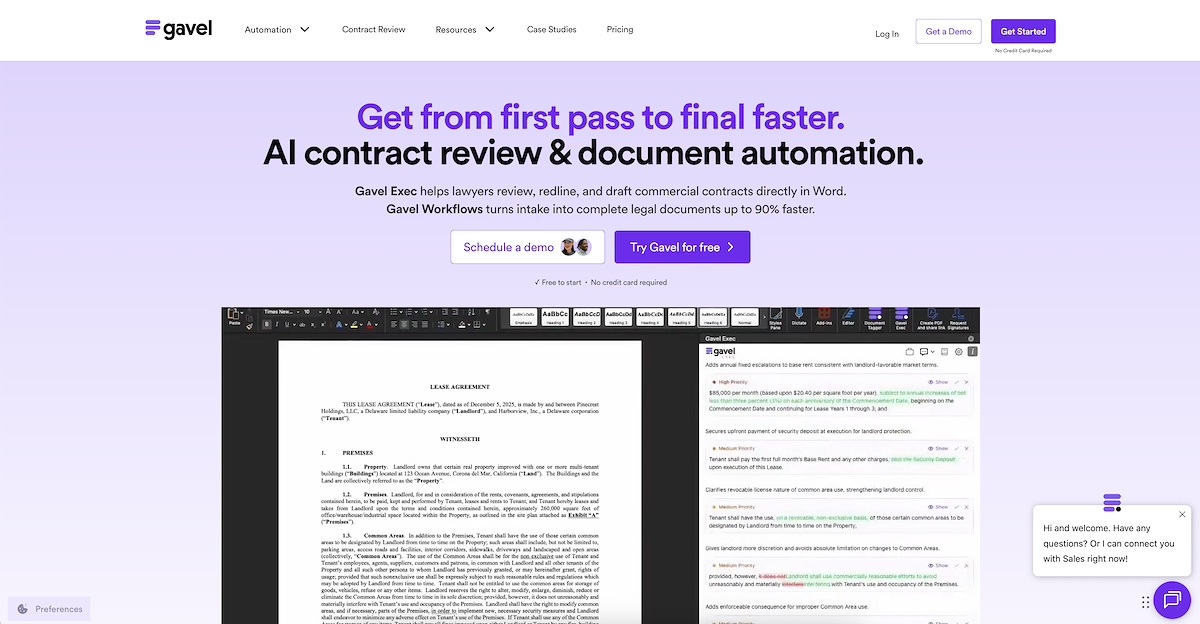
Gavel Features
Gavel’s platform is built around turning legal knowledge into repeatable workflows. Its capabilities are centered on document production rather than dynamic review.
A Microsoft Word add-in for drafting, redlining, and summarizing.
A web application for generating documents from structured questionnaires.
Rule-based logic to automate document assembly based on user inputs.
Playbooks that apply predefined standards to contracts.
“Projects” that function as shared knowledge bases for templates and clauses.
Gavel Pricing
Gavel’s pricing is positioned in the lower-to-mid range of the legal AI market, making it accessible for smaller teams.
Subscriptions are approximately $160 per user per month.
Discounts are offered for teams with more than 10 users.
Billing is typically monthly, without requiring long-term contracts.
Key Considerations about Gavel
When evaluating Gavel, it is important to recognize its primary focus. The platform excels at systematizing document creation, but it is less optimized for the complexities of contract negotiation and review.
Its foundation in rule-based logic can feel rigid compared to more dynamic AI tools. While Gavel uses AI, its core strength is automating known processes, not analyzing novel or complex agreements. This is a critical factor in the Gavel vs Iqidis decision for teams that handle varied transactional work.
Gavel also lacks features for data-driven negotiation. It cannot, for instance, benchmark a clause against current market standards. In contrast, tools like Spellbook offer features to compare terms against real-time data, giving lawyers a statistical edge in negotiations.
2. Iqidis
Iqidis (now rebranded as Irys) is a centralized “legal operating system” designed to manage entire matters from a single platform. It is built for legal teams that handle complex transactional work requiring multi-document analysis. Unlike Gavel, which focuses on automating the production of individual documents, Iqidis aims to bring all project files, analysis, and collaboration into a separate workspace. This approach requires teams to adopt a new central hub for their work, operating outside of familiar document editors like Microsoft Word.
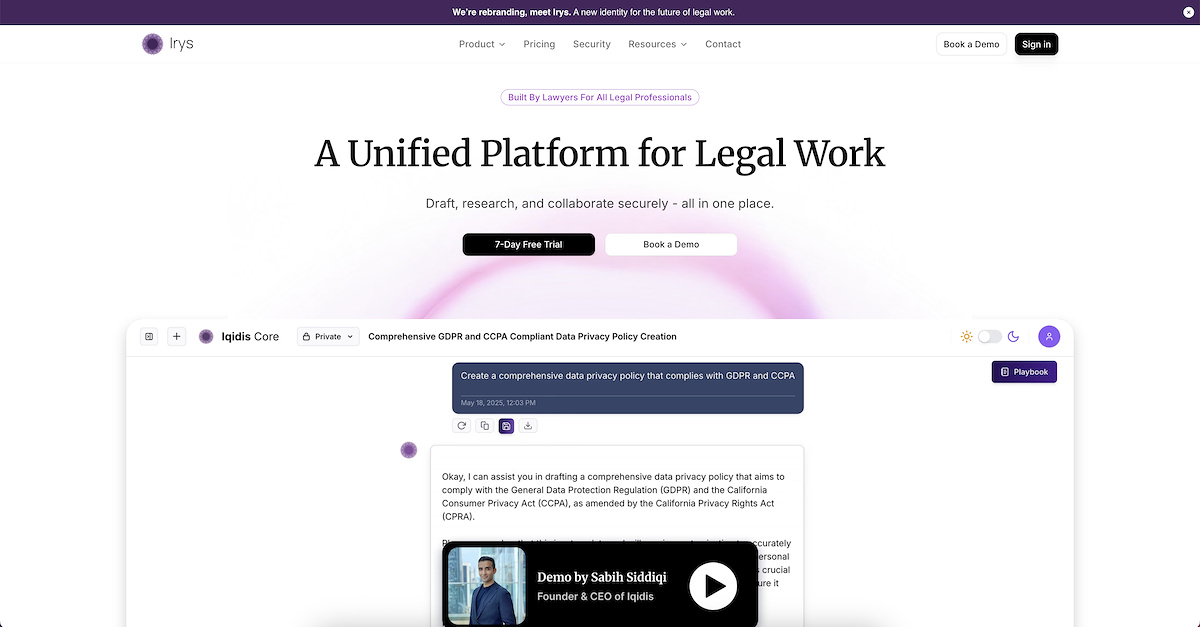
Iqidis Features
Iqidis is built as a central platform to manage entire legal matters, rather than focusing solely on document creation. Its features are designed to bring all aspects of a project into its own environment.
Matter Folders that group all documents, notes, and analysis for a project.
Multi-document analysis for reviewing large sets of files at once.
An AI assistant for summarizing, drafting, and answering questions about documents.
Precedent Finder for searching and tagging an organization’s historical contracts.
Iqidis Pricing
Iqidis uses an enterprise seat-based model, positioning it at the higher end of the market for legal AI tools.
Subscriptions range from $329 to $399 per user per month.
Contracts are billed on a semi-annual or annual basis.
Key Considerations about Iqidis
The primary consideration with Iqidis is its all-or-nothing approach. It is a separate platform, meaning legal teams must switch out of their existing tools and adopt a new central workspace for their matter management.
While a Microsoft Word add-in is planned, it is not yet available. This forces users to work within the Iqidis platform and then export documents, disrupting established drafting and redlining workflows.
As a newer platform, its security posture may also be a concern for some firms. While many established tools offer clear HIPAA compliance and SOC 2 certification, Iqidis’ public information is less detailed. For teams weighing Gavel vs Iqidis, this workflow disruption is a significant factor, as it requires a fundamental change in how lawyers operate, rather than augmenting their current process.
3. Spellbook, The Smarter Alternative
While Gavel focuses on document production and Iqidis on matter management, Spellbook offers a complete AI suite built for commercial law. It integrates directly into Microsoft Word, helping over 4,000 legal teams draft and review contracts with more speed and precision without switching context.
Unlike the other tools, Spellbook is the only contract AI grounded in real-time market data, analyzing terms against thousands of similar agreements to answer "What's market?" in any negotiation. It also includes an AI agent, Spellbook Associate, that can execute complex, multi-document tasks from a single instruction.
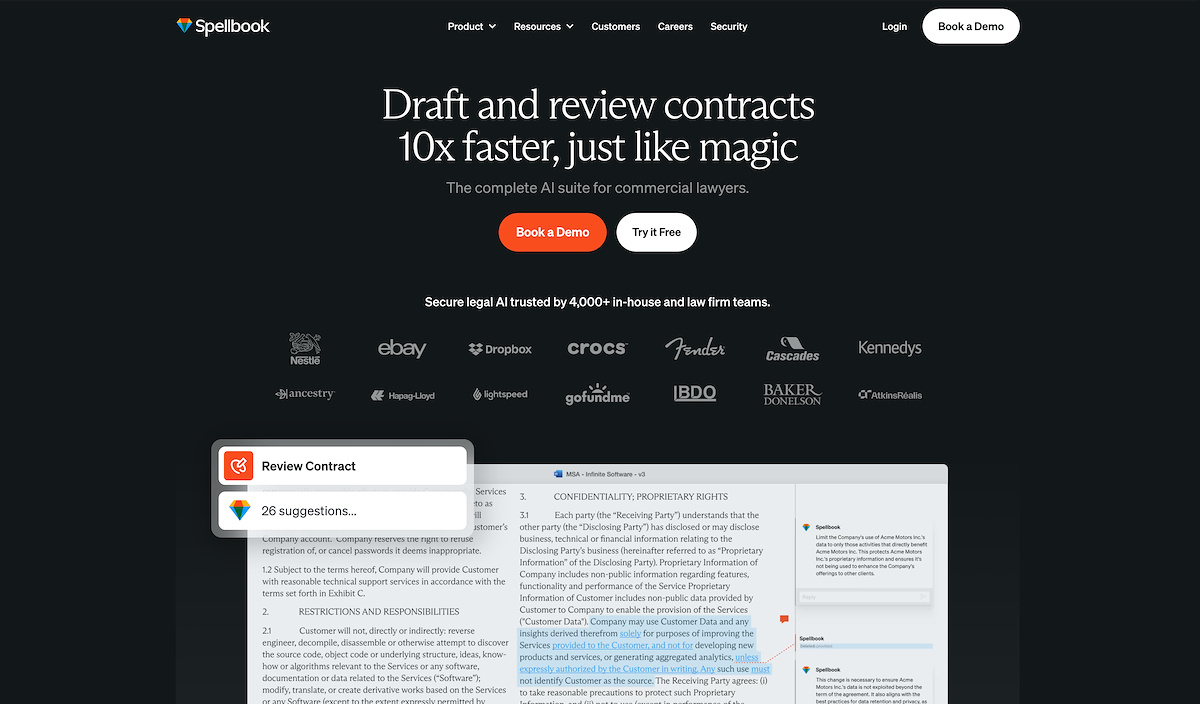
Spellbook Features
Spellbook’s features are designed to augment a lawyer’s existing workflow directly within Microsoft Word, focusing on speed, precision, and data-driven insights. This approach offers a distinct alternative in the Gavel vs Iqidis discussion, as it enhances current processes rather than requiring a switch to a new system.
Review: Instantly analyzes contracts, suggesting redlines and flagging risks. It uses AI to provide dynamic feedback, with all edits appearing as track changes under the lawyer’s name directly within Microsoft Word.
Draft: Generates new clauses or entire agreements from simple instructions. It can also search and insert language from a firm’s historical contracts, automatically adapting the text to match the current document’s style and defined terms.
Ask: A contract-specific Q&A tool that lets lawyers ask questions about an open document and receive answers with citations to the relevant language, all without leaving their document.
Compare to Market: Provides data-driven answers to "What's market?" by benchmarking contract terms against thousands of similar agreements. This gives lawyers a statistical basis for negotiations, a feature not found in Gavel or Iqidis.
Spellbook Associate: An AI agent that can execute complex, multi-document projects from a single prompt. It handles tasks like preparing a full document package from a term sheet or reviewing a data room for due diligence.
Spellbook Pricing
Spellbook offers custom per-seat pricing based on your team’s size and specific needs. Quotes are provided after a brief demo to ensure the plan fits your requirements.
Subscriptions are structured annually per user.
Volume discounts are available for teams with 10 or more users.
You can explore all features by starting a 7-day free trial.
Why Commercial Lawyers Love Spellbook
Unlike tools that either automate narrow workflows or require adopting a new operating system, Spellbook is built to augment a lawyer’s existing process.
Its deep integration is focused entirely within Microsoft Word, where most commercial lawyers already work. This enhances familiar workflows rather than forcing a switch to a separate platform.
Lawyers value its ability to provide data-driven negotiation points and flag risks with precision, directly within their document. This combination of speed and market intelligence is a key differentiator in the Gavel vs Iqidis comparison, as it provides a statistical advantage not found in the other tools.
[cta-1]
Iqidis vs Gavel vs Spellbook: Key Differences
The decision in the Gavel vs Iqidis debate often expands to include Spellbook, as each platform offers a distinct philosophy for legal AI. Gavel focuses on systematizing document production, Iqidis aims to centralize matter management in a separate system, and Spellbook is built to augment the existing workflows of commercial lawyers directly within Microsoft Word.
1. Gavel: For Document Production
Gavel excels at turning legal knowledge into repeatable document automation workflows. It uses rule-based logic and questionnaires to generate documents, making it a strong choice for practices with high volumes of standardized paperwork. Its primary focus on production, however, means it is less equipped for the dynamic analysis and negotiation required in complex transactional work.
2. Iqidis: For Centralized Matter Management
Iqidis (Irys) operates as a separate “legal operating system,” requiring legal teams to manage entire matters within its platform. Its strength lies in multi-document analysis and centralizing all project files in one place. This approach forces users out of familiar tools, disrupting established drafting and redlining processes that are central to many practices.
3. Spellbook: For Integrated Contract Work
Spellbook provides a complete AI suite for commercial law that integrates directly into Microsoft Word. It enhances a lawyer’s existing process, offering AI-powered drafting and review with speed and precision, eliminating context switching. Crucially, Spellbook is the only contract AI grounded in real-time market data, giving lawyers a data-driven edge in negotiations. With robust security, including HIPAA compliance, and an AI agent for complex tasks, it is designed for the realities of modern contract work.
Which Option Is Right For Your Business?
For Teams Focused on Document Assembly
Gavel is the right choice if your primary need is automating the creation of high-volume, standardized documents. It is built for practices that rely on repeatable templates and want a straightforward way to turn them into workflows.
For Teams Needing a Centralized Project Hub
Iqidis is designed for teams ready to adopt a new, separate platform for matter management. If your goal is to centralize all project documents and analysis in one place and you are willing to change your team's core workflow, it is a considerable option.
For Commercial Lawyers Focused on Efficiency
Spellbook is the best fit for most commercial and in-house legal teams. It works within your existing document editor, improving drafting and review speed and precision without disrupting your process. It also provides data to support negotiations, a key advantage in transactional work involving clauses like payment terms or indemnification.
The Bottom Line
Your final decision in the Gavel vs Iqidis comparison depends on your core need. Choose Gavel for document production, Iqidis for a new central operating system, and Spellbook for a powerful AI assistant that works where you do.
Try Spellbook Free
Spellbook stands apart by integrating directly into Microsoft Word, adding AI-powered drafting and data-driven review to your existing workflow. This approach improves both speed and precision without forcing you to switch platforms. You can experience it for yourself by starting a free trial today.
Frequently Asked Questions
What type of AI do Gavel and Iqidis use?
Gavel’s platform is built on rule-based logic. It excels at automating document assembly by following predefined pathways based on answers to a questionnaire. While it is an AI-powered tool, its strength is in systematizing known workflows, not in dynamic analysis of novel text.
Iqidis uses a large language model for its AI assistant, allowing it to perform tasks like summarizing documents and answering questions. This AI operates within the separate Iqidis platform, which is designed to be a central hub for matter files rather than an integrated part of the drafting process. The specifics of the AI for document analysis can vary greatly between tools.
How do Gavel and Iqidis handle data security?
Data security is a primary concern when adopting any new legal technology. Gavel is an established platform, but teams should perform their own due diligence regarding specific compliance needs like SOC 2 certification. For any tool, it is important to understand how your data is stored and protected.
As a newer platform, Iqidis has less public information available about its security certifications and protocols. Given the sensitivity of legal work, it is important to clarify a vendor’s security posture and whether their data handling practices align with your firm's requirements and general concerns about AI data privacy.
How does Spellbook's approach differ from Gavel and Iqidis for a practicing lawyer?
The key difference is the workflow. Gavel requires you to build or use a questionnaire to generate a document, and Iqidis requires you to upload documents to a separate platform for analysis. Both approaches take you out of your primary drafting environment.
Spellbook integrates directly into Microsoft Word, allowing you to use AI without changing how you work. You can draft new clauses, review a counterparty's edits, and analyze terms without leaving your document. This approach improves both speed and precision by augmenting your existing process, not replacing it. For example, you can get instant suggestions on a complex indemnification clause with all changes tracked directly in Word.
[cta-2]
Our Research Methodology
This comparison is based on comprehensive research of publicly available information, including product websites, feature documentation, press releases, customer reviews, legal technology publications, and third-party analyses from sources like LawSites, Artificial Lawyer, and industry analysts.
Where pricing information is not publicly disclosed, we've included estimates based on available industry data and user reports. Information is current as of 2026 and may change as products evolve. We encourage readers to verify details directly with vendors and request demos to evaluate fit for their specific needs.
.png)
%20(1).png)

Thank you for your interest! Our team will reach out to further understand your use case.
Spellbook is the most complete AI suite for commercial legal work, trusted by more than 4,400 in-house teams and law firms worldwide.

SOC 2 Type II

HIPAA

GDPR
EU AI Act

HIPAA Compliant
