
Harvey vs LegalOn: Which Is The Right Choice In 2026?
.jpeg)


Deciding on Harvey vs LegalOn requires understanding two distinct philosophies for legal AI. Harvey is built as a wide-ranging platform for legal operations and team collaboration, while LegalOn concentrates on structured, playbook-based contract review. This guide compares their product features, pricing models, and underlying technology to help you make an informed decision for your practice.
Key Takeaways
- Harvey is a broad legal AI platform for large-scale analysis and team collaboration, while LegalOn is a specialized tool focused on structured, playbook-based contract review.
- The core difference is their approach: Harvey provides a flexible, repository-based system for complex legal work, whereas LegalOn enforces consistency through a curated, rule-based review process.
- Spellbook offers a complete AI suite trusted by over 4,000 legal teams to draft and review contracts with greater speed and precision, negotiate with data-driven confidence, and automate complex tasks with an AI agent.
1. Harvey
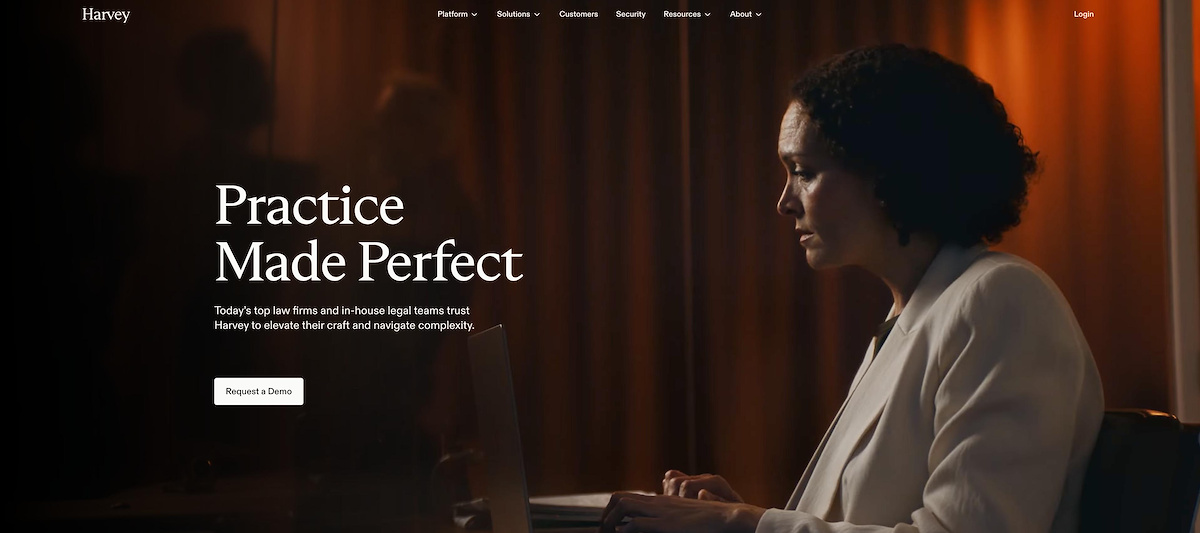
Harvey is a legal AI platform designed for large-scale analysis and team collaboration, serving enterprise and mid-market legal teams. Its core functions are built around repository-wide analysis, structured diligence, and configurable workflows, positioning it as a system for legal operations. In contrast to LegalOn's focused approach, Harvey provides a more flexible platform. This flexibility, however, can create considerable setup and management overhead, making it a less direct solution for teams prioritizing simple, Word-native contract redlining.
Harvey Features
- Repository-Scale Analysis: Uses a "Vault" to analyze repositories of up to 100,000 documents for large-scale diligence and review.
- Configurable Workflows: Allows teams to build and deploy standardized, multi-step processes for recurring legal tasks.
- Team Collaboration: Features shared workspaces with permission controls and human verification tools to support coordinated review.
- Microsoft Word Add-in: Provides in-document editing capabilities, though the platform's core functions are in its web-based environment.
Harvey Pricing
- Enterprise-Focused: Indicative pricing starts at approximately $40,000 annually for a team of 10 users.
- Custom Quotes: Final pricing is negotiated based on team size, features, and contract length.
- Pilot Program: The standard evaluation process involves a structured, two-week pilot with formal onboarding.
Key Considerations about Harvey
While powerful for large-scale projects, Harvey’s broad scope can be a drawback for teams focused on contract execution speed. Its flexibility requires considerable setup and management, making it a less direct solution for practices that prioritize simple, Word-native redlining.
The platform is designed for complex, collaborative legal operations, which may be excessive for teams that just need to draft and review agreements faster. Furthermore, its analysis is limited to a firm's internal documents, without offering the advantage of real-time market data to support negotiations. This makes the Harvey vs LegalOn decision critical for teams needing to balance operational scale with drafting efficiency.
2. LegalOn
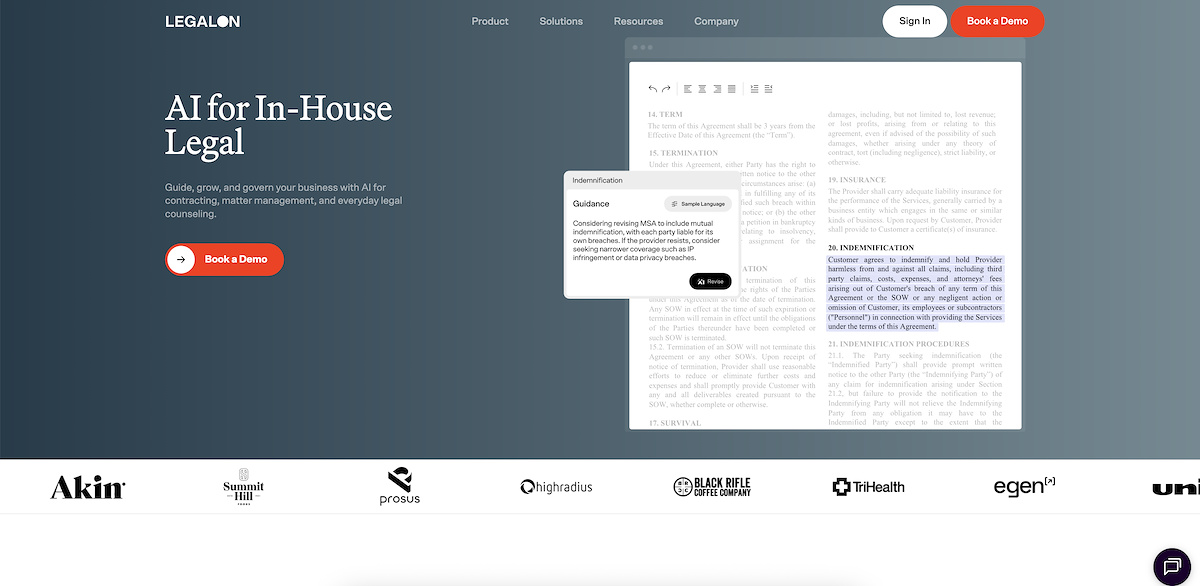
LegalOn offers a specialized contract review platform centered on a playbook-driven approach to enforce consistency and risk control. It is designed primarily for in-house legal teams managing high volumes of commercial agreements like MSAs, NDAs, and sales contracts. Unlike Harvey’s broad, flexible system for legal operations, LegalOn provides a more rigid, rule-based process. This narrow focus on playbook enforcement makes it a specialized tool for standardization, but less adaptable for complex drafting or negotiation tasks that require more than just rule-based review.
LegalOn Features
- Playbook-Driven Review: Applies structured, attorney-authored playbooks to contracts directly within Microsoft Word.
- Conceptual Issue Detection: Identifies risks and gaps based on legal concepts, not just clause matching.
- Prioritized Alerts: Flags issues as low, medium, or high risk to focus reviewer attention.
- AI Assistant: Provides support for ad-hoc drafting, summarization, and Q&A on tasks outside of playbooks.
- Web Application: Includes tools for intake, matter management, and a template library to manage review workflows.
LegalOn Pricing
- Per-Seat, Per-Module: Pricing is based on the number of users and selected features.
- Individual Licenses: Start at approximately $3,500 per user annually for limited modules.
- Enterprise Pricing: A full-featured plan for five users is approximately $40,000 annually.
Key Considerations about LegalOn
LegalOn’s greatest strength is its rigid, playbook-driven approach, which enforces consistency for high-volume, standardized agreements. However, this rigidity can be a significant drawback for teams that need to draft complex or novel contracts that fall outside of predefined rules.
The platform’s analysis is based on its own curated content and a user’s internal standards. It does not provide insights based on real-time market data, which can limit a lawyer’s leverage in negotiations. For teams weighing Harvey vs LegalOn, it is important to note that LegalOn is a specialized review tool, not a broad platform for drafting and complex legal work.
3. Spellbook, The Smarter Alternative
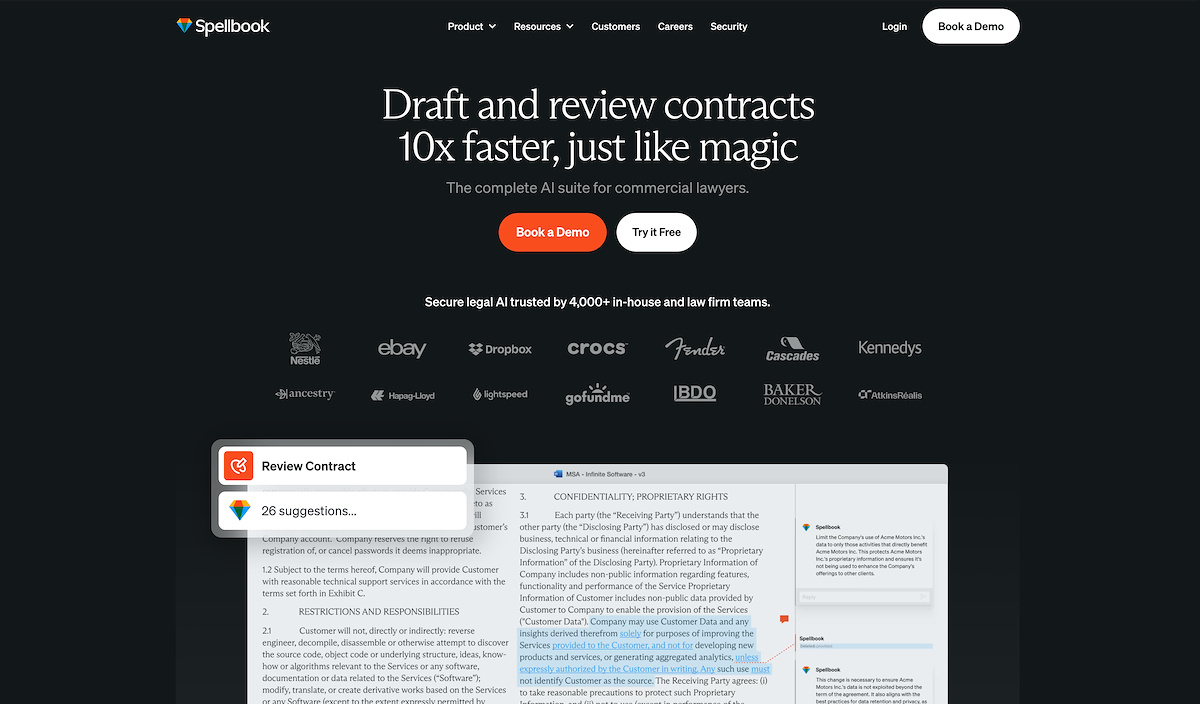
For teams weighing the options between Harvey and LegalOn, Spellbook offers a complete AI suite built specifically for contracts and commercial law. It works directly within Microsoft Word, helping more than 4,000 legal teams at companies like Dropbox and Crocs draft and review contracts with greater speed and precision.
Unlike systems limited to internal documents or curated playbooks, Spellbook is the only contract AI grounded in real-time market data. The Review feature analyzes agreements against live benchmarks from thousands of similar contracts, providing data-driven answers to "What's market?" during negotiations.
Spellbook Features
- Review: Instantly analyzes entire contracts within Microsoft Word, suggesting redlines and identifying risks. Unlike tools that require switching to a separate web application, Spellbook presents all edits as track changes, keeping the lawyer in full control of the document.
- Draft: Generates new language, from single clauses to entire agreements, that automatically matches the document's existing style and defined terms. It also provides access to a library of standard legal provisions, such as for indemnification, and can learn from a firm's own historical contracts.
- Ask: Functions as a contract-specific Q&A tool. Lawyers can ask questions about obligations, terms, or risks directly within Word and receive answers with citations pointing to the relevant contract language for verification.
- Compare to Market: Provides data-driven negotiation leverage by benchmarking contract terms against thousands of similar, anonymized agreements. This feature offers a significant advantage over systems like Harvey and LegalOn, which are limited to analyzing a firm's internal documents or pre-set playbooks.
- Associate: An AI agent that executes complex, multi-document projects from a single plain-language instruction. It can review entire data rooms, prepare disclosure schedules, or update terms across multiple files, automating work that would otherwise require extensive manual effort.
Spellbook Pricing
- Spellbook offers custom per-seat pricing based on team size and feature needs, with volume discounts available.
- All core features, including Review, Draft, and Compare to Market, are part of the standard annual subscription.
See how Spellbook can improve your contract workflows. Get started with a 7-day free trial.
Why Commercial Lawyers Love Spellbook
Unlike platforms requiring extensive setup or rigid, pre-set playbooks, Spellbook is designed for immediate impact. It provides a powerful balance of drafting flexibility and structured AI review, directly addressing the core limitations of both Harvey and LegalOn.
While Spellbook focuses its power within Microsoft Word to keep lawyers in their primary workflow, it uniquely enhances this experience with real-time market data. This gives lawyers data-driven leverage in negotiations that systems limited to internal documents cannot offer.
The result is a tool that helps commercial lawyers increase both speed and precision without the overhead of complex configurations or the constraints of rule-based systems.
[cta-1]
LegalOn vs Harvey vs Spellbook: Key Differences
The choice between Harvey, LegalOn, and Spellbook comes down to three different approaches to legal AI. The Harvey vs LegalOn decision often forces a choice between a broad operations platform and a rigid review tool, while Spellbook offers a focused alternative for contract work.
1. Harvey: The Legal Operations Platform
Harvey is built for large-scale legal operations. Its strength lies in analyzing entire document repositories and managing complex, collaborative workflows. However, this power requires considerable setup and is centered in a web application, not Microsoft Word. Its analysis is also limited to a firm’s internal documents, offering no external market context.
2. LegalOn: The Playbook Enforcement Tool
LegalOn specializes in enforcing consistency through a structured, playbook-driven review process. It excels at standardizing high volumes of routine agreements. This rigidity becomes a limitation for complex drafting or negotiations that fall outside its predefined rules. Like Harvey, it lacks insights from real-time market data.
3. Spellbook: The Complete AI Suite for Contracts
Spellbook provides a complete AI suite built for commercial law, integrating directly into Microsoft Word to help legal teams work with greater speed and precision. It balances drafting flexibility with powerful AI review, but its key differentiator is its grounding in real-time market data. This allows lawyers to benchmark terms against thousands of similar agreements, providing data-driven answers to "What's market?" in any negotiation. With a strong security posture, including HIPAA compliance, and trusted by over 4,000 legal teams, Spellbook is designed for immediate impact within existing workflows.
Which Option Is Right For Your Business?
For Large Enterprise Legal Operations
Harvey is the logical choice for teams managing massive document repositories and complex, multi-departmental projects. Its strength is in large-scale analysis and creating structured, collaborative workflows, making it ideal for legal operations at an enterprise level.
For In-House Teams Focused on Commercial Contracts
Spellbook is the best fit for most in-house teams that need to draft and review agreements quickly and accurately. It works directly within Microsoft Word, avoiding workflow disruption. It also provides the drafting flexibility and data-driven review needed for effective negotiations on common agreements, from NDAs to limitation of liability clauses.
For Agile Law Firms and Transactional Lawyers
Lawyers at smaller firms or in specialized transactional practices will find Spellbook provides the most immediate value. It delivers advanced AI assistance for drafting and review without the high overhead or rigid structure of other platforms, increasing efficiency and work quality from day one.
The Bottom Line
Your decision depends on your primary need. Harvey is built for large-scale legal operations, while LegalOn is for teams that require strict playbook enforcement above all else. For the majority of commercial lawyers, Spellbook offers the most practical path to working faster and with greater precision, combining drafting, review, and negotiation support directly within the workflow you already use.
Try Spellbook Free
While Harvey is built for large-scale operations and LegalOn for rigid rule enforcement, Spellbook offers a practical alternative that integrates directly into Microsoft Word. It helps you work with greater speed and precision, and you can try it free to see how real-time market data provides a negotiating edge.
Frequently Asked Questions
How do Harvey and LegalOn handle different types of legal documents?
Harvey is designed as a broad platform capable of analyzing a wide variety of documents at a large scale. Its repository-wide analysis is suited for tasks like due diligence or internal investigations where teams must review thousands of mixed document types.
LegalOn, in contrast, is highly specialized. It focuses on reviewing specific, high-volume commercial agreements like NDAs and MSAs where a standardized playbook can be applied for consistency.
What is the implementation and training process like for these platforms?
Harvey typically requires a more involved implementation process, including a structured pilot program and formal onboarding. This is because its value comes from configuring workflows and organizing document repositories, which demands initial setup and team training.
LegalOn's implementation is centered on its playbooks. Teams either adopt LegalOn's pre-built playbooks or work to codify their own standards into the system, which also requires an upfront investment of time and resources.
Where does Spellbook fit in the Harvey vs LegalOn comparison?
Spellbook offers a focused alternative that addresses the primary limitations of both Harvey and LegalOn for contract work. It avoids Harvey's complex setup and LegalOn's rigid, rule-based constraints by integrating powerful AI tools directly into Microsoft Word.
Unlike the other two platforms, Spellbook provides drafting flexibility for novel agreements and enhances negotiations with real-time market data. This allows lawyers to work with greater speed and precision on everything from standard confidentiality clauses to complex agreements, without leaving their primary workflow. The question of whether lawyers can use AI is settled, and Spellbook provides a secure and practical way to do so.
[cta-2]
Our Research Methodology
This comparison is based on comprehensive research of publicly available information, including product websites, feature documentation, press releases, customer reviews, legal technology publications, and third-party analyses from sources like LawSites, Artificial Lawyer, and industry analysts.
Where pricing information is not publicly disclosed, we've included estimates based on available industry data and user reports. Information is current as of 2026 and may change as products evolve. We encourage readers to verify details directly with vendors and request demos to evaluate fit for their specific needs.
.png)
%20(1).png)


Thank you for your interest! Our team will reach out to further understand your use case.
Spellbook is the most complete AI suite for commercial legal work, trusted by more than 4,400 in-house teams and law firms worldwide.

SOC 2 Type II

HIPAA

GDPR

EU AI Act

HIPAA Compliant
