
Iqidis vs CoCounsel: Which Is The Top Pick in 2026?
.jpeg)


This Iqidis vs CoCounsel review compares two distinct approaches to legal AI for transactional work. Iqidis (now rebranded as Irys) is building a centralized legal operating system, while CoCounsel offers AI workflows grounded in the Thomson Reuters research ecosystem. To help you decide which is right for your team, we will compare their product features, pricing, and AI architecture.
Key Takeaways
Iqidis (now Irys) is a centralized legal operating system for managing matters, while CoCounsel is an AI workflow platform grounded in the Thomson Reuters research ecosystem.
The main difference lies in their approach: Iqidis focuses on creating a centralized platform to manage the entire legal workflow, while CoCounsel’s strength is its integration with proprietary legal content for research-backed outputs.
Spellbook is the leading AI suite built for commercial law, trusted by over 4,000 in-house and law firm teams to draft and review contracts with greater speed and precision, all within Microsoft Word.
1. Iqidis
Iqidis (Irys) is positioned as a centralized “legal operating system,” designed to manage entire legal projects within a single platform. It organizes work into matter-specific folders, allowing teams to analyze large sets of documents in a shared workspace. Unlike CoCounsel, which is grounded in the Thomson Reuters research ecosystem, Iqidis focuses on building a proprietary platform that processes documents before applying AI. This approach is intended for teams managing complex, multi-document workflows, though it requires working within the Irys platform rather than a familiar Word environment.
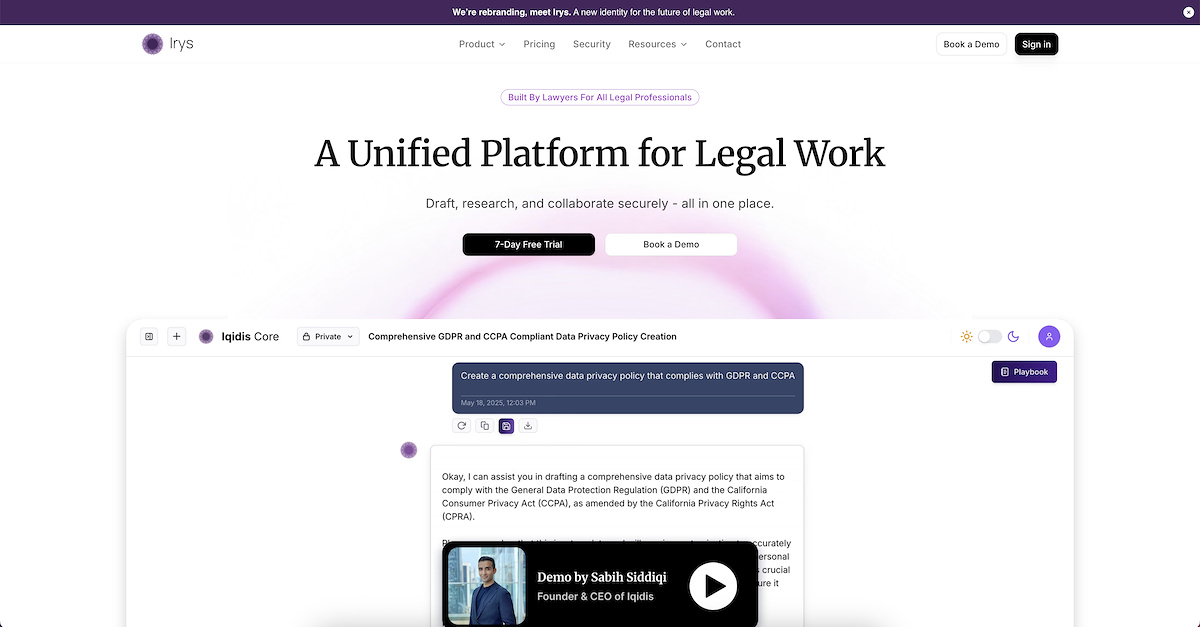
Iqidis Features
Matter Folders to organize documents and analysis by project.
Multi-document analysis for reviewing large document sets together.
An AI assistant for summarizing, drafting, and redlining.
Collaboration tools for sharing with team members and clients (roadmap).
Precedent Finder for searching historical contracts (roadmap).
Iqidis Pricing
Enterprise pricing ranges from $329 to $399 per user, per month.
Contracts are billed on a semi-annual or annual basis.
The company has indicated that pricing is expected to increase.
Key Considerations about Iqidis
Iqidis requires legal teams to adopt its centralized platform, shifting work out of familiar environments like Microsoft Word. This contrasts with tools designed to work directly within existing drafting workflows.
Additionally, several key features, including a Word add-in and an in-platform drafting editor, are part of the future roadmap and not yet available. As a newer entrant in the legal AI space, the platform is still building out its core functionality and market presence.
Prospective users should also verify the platform’s security posture. While its website mentions SOC 2 compliance, this is a critical point to confirm during evaluation, especially for teams handling sensitive data like protected health information.
2. CoCounsel
CoCounsel is an AI legal workflow platform from Thomson Reuters that pairs AI tools with its proprietary research ecosystem. It is designed for legal teams who need assistance with drafting, redlining, and analysis, with the option to ground outputs in Westlaw and Practical Law.
Unlike the platform-centric approach of Iqidis, CoCounsel’s core value is its integration with this research content. This positions it for teams that prioritize citation-backed answers, but also makes its full functionality dependent on the broader Thomson Reuters ecosystem.
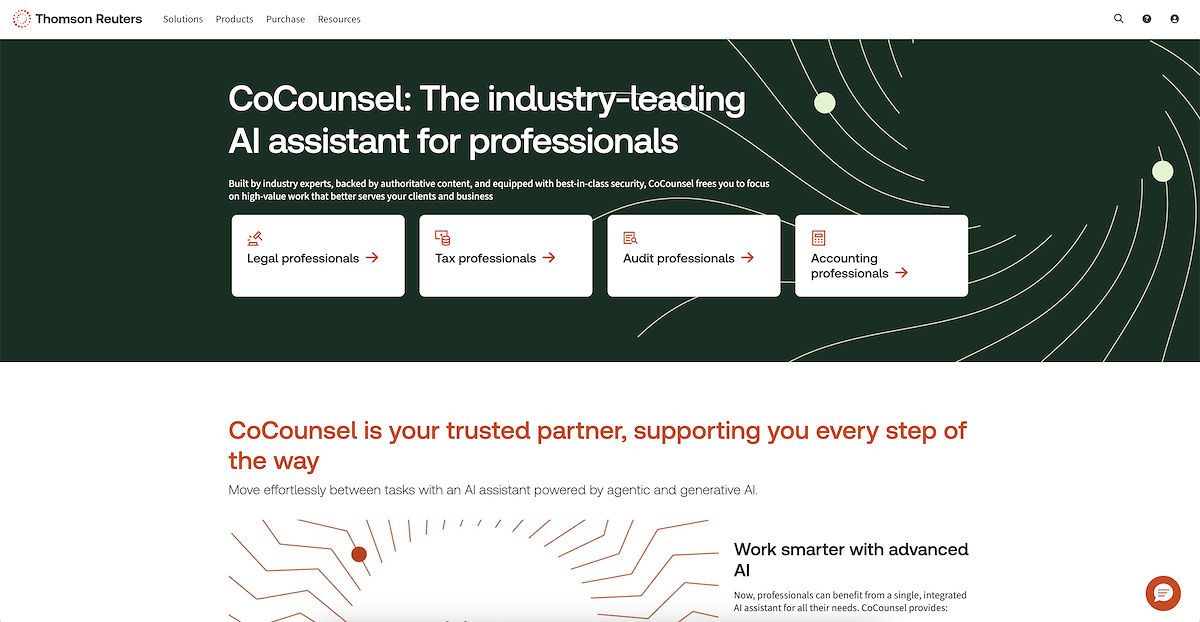
CoCounsel Features
AI-assisted drafting, redlining, and summarization.
Playbook creation and enforcement for standardized review.
Multi-document analysis for reviewing large document sets.
A standalone portal for document storage and team collaboration.
Optional integration with Westlaw and Practical Law for research-backed answers.
A Microsoft Word add-in for in-document review.
CoCounsel Pricing
Pricing is on a per-user, per-month basis, billed annually.
Multiple tiers are available, with costs increasing based on access to Westlaw and Practical Law content.
Core functionality starts at a premium price point.
A 30-day trial is available for evaluation.
Key Considerations about CoCounsel
CoCounsel’s full potential is tied to the expensive Thomson Reuters ecosystem. Teams not subscribing to Westlaw or Practical Law may find the tool’s value diminished, as it lacks grounding in real-time market data for negotiation.
The platform's focus on research-backed accuracy, while important for avoiding fake citations, can result in slower performance. This may not suit teams prioritizing both speed and precision in transactional work.
Additionally, its architecture is split between the Word add-in and a separate web portal, which can fragment the user workflow. This makes the Iqidis vs CoCounsel decision complex for teams that need a single, unified environment for contract work.
3. Spellbook, The Smarter Alternative
For teams weighing the Iqidis vs CoCounsel platforms, Spellbook offers a smarter alternative. It is a complete AI suite for commercial law that integrates directly into Microsoft Word, helping over 4,000 legal teams draft and review contracts with greater speed and precision. This approach avoids the context switching of separate platforms.
Spellbook is also the only contract AI grounded in real-time market data. The Review feature analyzes contracts against live benchmarks from thousands of similar agreements, giving lawyers data-driven answers to "What's market?" in every negotiation. This provides a distinct advantage for transactional work.
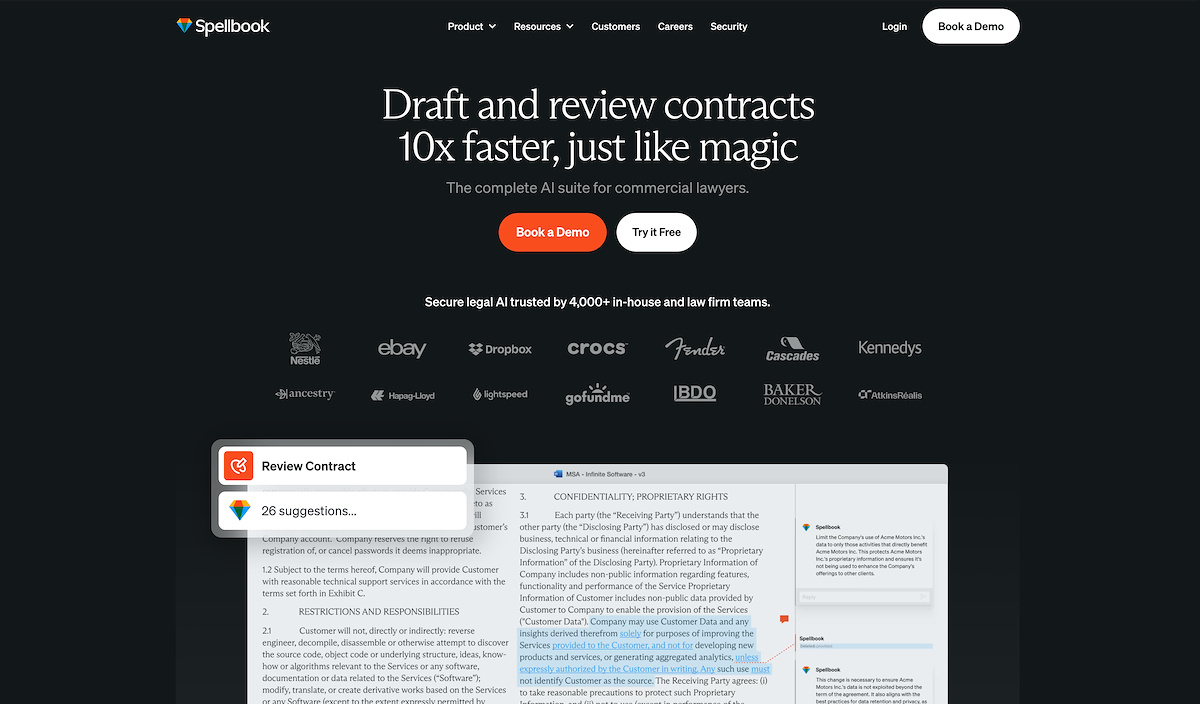
Spellbook Features
Review: Instantly analyzes entire contracts within Microsoft Word, providing AI-generated redlines and identifying risks. Unlike platforms that require moving between applications, all edits appear as track changes, keeping the lawyer in control of the final work product.
Draft: Generates new clauses or entire agreements from simple instructions. It can also find and adapt language from a firm’s historical contracts, ensuring that new drafts are consistent with past work and preferred positions on terms like indemnification or limitation of liability.
Ask: A contract-specific Q&A tool that lets lawyers ask questions about a document directly in Word. It provides answers with citations to the relevant contract language, supporting quick validation without leaving the document.
Compare to Market: Benchmarks contract terms against real-time data from thousands of similar agreements. This gives lawyers a data-driven answer to "What's market?" for key negotiation points, a distinct approach compared to relying on static legal research databases.
Associate: An AI agent that executes complex, multi-document projects from a single prompt. It can cross-reference files, prepare document packages, and review data rooms, handling work that would typically be assigned to a junior associate.
Playbooks and Preference Learning: Spellbook allows teams to enforce standardized review with custom playbooks. The platform also learns from a user's edits over time, adapting future suggestions to match individual and team preferences for a more personalized experience.
Spellbook Pricing
Spellbook uses a custom per-seat pricing model, with quotes tailored to your team’s size and needs.
Subscriptions are billed annually per user.
Volume discounts are available for larger teams.
You can evaluate the platform’s full capabilities by starting a free 7-day trial.
Why Commercial Lawyers Love Spellbook
Unlike standalone platforms that can fragment legal workflows, Spellbook is designed to operate entirely within Microsoft Word.
This keeps lawyers in a familiar environment, allowing them to draft and review without context switching.
Its ability to benchmark terms against real-time market data provides a practical edge in negotiations that research-based tools cannot match.
While the platform is focused on the Word environment, this dedication ensures a workflow optimized for both speed and precision, right where transactional work happens.
[cta-1]
CoCounsel vs Iqidis vs Spellbook: Key Differences
The choice in the Iqidis vs CoCounsel vs Spellbook debate hinges on three distinct philosophies for legal AI: the centralized operating system, the research-integrated ecosystem, and the Word-native commercial suite. Each platform offers a different approach to workflow, data grounding, and overall focus.
1. Workflow and Integration
Iqidis (Irys) operates as a centralized platform, requiring legal teams to manage matters within its proprietary workspace. This approach keeps all documents and analysis in one place but shifts work out of the familiar Microsoft Word environment.
CoCounsel uses a hybrid model, splitting work between a Microsoft Word add-in and a separate web portal. This can fragment the user experience, requiring lawyers to switch between applications to access its full capabilities.
Spellbook is built to function entirely within Microsoft Word. This Word-native design eliminates context switching and allows lawyers to draft, review, and negotiate where they already work, combining speed with precision.
2. Data Grounding and AI Architecture
Iqidis focuses on building its own processing stack and knowledge graph before applying AI. Key features like a precedent finder are part of its future roadmap.
CoCounsel grounds its outputs in the Thomson Reuters research ecosystem, including Westlaw and Practical Law. This is valuable for research-backed answers but relies on static content, not live market trends for negotiation.
Spellbook is the only contract AI grounded in real-time market data. Its Review feature benchmarks contract language against thousands of similar agreements, providing data-driven answers to "What's market?" in negotiations.
3. Platform Focus and Security
Iqidis is a newer platform building out its core functionality. Its focus is on creating an all-in-one legal operating system, though its security posture requires verification during evaluation.
CoCounsel is focused on research-backed accuracy, which is its main value proposition. However, its full potential is tied to an expensive subscription to the broader Thomson Reuters ecosystem.
Spellbook is a complete AI suite built specifically for commercial law. Trusted by over 4,000 legal teams, it is enterprise-ready with SOC 2 Type II and HIPAA compliance, offering a mature and secure solution for transactional work.
Which Option Is Right For Your Business?
Your choice in the Iqidis vs CoCounsel debate depends entirely on your team’s primary needs and existing workflows.
For Teams Prioritizing Research-Backed Accuracy
CoCounsel is the logical choice for firms where work is deeply tied to legal research. Its strength lies in its connection to a vast library of established legal content, making it suitable for teams that require citation-backed answers above all else.
For Commercial Teams Focused on Transactional Work
Spellbook is the ideal fit for most in-house and law firm teams handling commercial contracts. It operates entirely within Microsoft Word, which supports faster, more precise drafting and review without workflow interruptions. Its focus on real-world contract data gives lawyers a practical advantage in negotiations.
For Teams Building a New Centralized Workflow
Iqidis (Irys) is best for teams looking to adopt a new, all-in-one platform for project management. If your goal is to move away from traditional tools and consolidate work into a single, project-centric workspace, its platform-first approach is designed for that purpose.
The Bottom Line
While CoCounsel serves research-heavy needs and Iqidis offers a new operating model, Spellbook provides the most direct path to improving efficiency for commercial law. By working within Word and providing market-aware insights, it addresses the core challenges of transactional lawyers without requiring them to change how they work.
Try Spellbook Free
While Iqidis offers a centralized platform and CoCounsel provides research-backed answers, Spellbook delivers a practical advantage for transactional work by operating directly within Microsoft Word. It combines real-time market data with AI-powered review, giving you both speed and precision where you need it most. Experience the difference for yourself by starting a free 7-day trial today.
Frequently Asked Questions
Which AI models power Iqidis, CoCounsel, and Spellbook?
CoCounsel is built on a version of GPT-4. The specific AI models used by Iqidis are not publicly detailed.
Spellbook takes a multi-model approach, using a combination of leading large language models (LLMs) from providers like OpenAI and Anthropic. This allows the platform to select the best AI for each specific task, such as using one model for drafting and another for legal document analysis. This flexibility helps deliver more precise and contextually appropriate results.
How do these platforms handle data security and client confidentiality?
Data security is a primary concern for all legal AI tools. CoCounsel is part of the Thomson Reuters ecosystem, which has established security protocols. Iqidis states it is SOC 2 compliant, a detail that teams should confirm during their evaluation process.
Spellbook provides enterprise-grade security with SOC 2 Type II certification and is also designed to be HIPAA compliant. It uses zero-retention models, meaning your confidential data is never used for training, addressing common questions like whether AI is private.
How does Spellbook specifically compare to Iqidis and CoCounsel for commercial contract work?
While Iqidis requires moving work to a separate platform and CoCounsel splits its workflow between Word and a web portal, Spellbook is designed to operate entirely within Microsoft Word. This native integration is a key differentiator for commercial lawyers, as it allows for faster drafting and review without the friction of switching between applications.
Furthermore, Spellbook’s AI is grounded in real-time market data, not static legal research databases. When negotiating a contract, you can benchmark terms like payment terms against thousands of similar, recent agreements. This gives lawyers a practical, data-driven edge that is specifically tailored to the demands of transactional work.
[cta-2]
Our Research Methodology
This comparison is based on comprehensive research of publicly available information, including product websites, feature documentation, press releases, customer reviews, legal technology publications, and third-party analyses from sources like LawSites, Artificial Lawyer, and industry analysts.
Where pricing information is not publicly disclosed, we've included estimates based on available industry data and user reports. Information is current as of 2026 and may change as products evolve. We encourage readers to verify details directly with vendors and request demos to evaluate fit for their specific needs.
.png)
%20(1).png)


Thank you for your interest! Our team will reach out to further understand your use case.
Spellbook is the most complete AI suite for commercial legal work, trusted by more than 4,400 in-house teams and law firms worldwide.

SOC 2 Type II

HIPAA

GDPR
EU AI Act

HIPAA Compliant
