
LegalOn vs Gavel: Which Is The Top Pick in 2026?
.jpeg)


When comparing LegalOn vs Gavel, you're looking at two different approaches to legal work: structured contract review versus systematic document automation. LegalOn uses curated playbooks to standardize negotiation, while Gavel uses rule-based logic to accelerate document production. We'll examine their core products, pricing, and AI architecture to help you determine which tool best suits your needs.
Key Takeaways
LegalOn is a contract review tool that uses curated playbooks for negotiation support, while Gavel is a document automation platform that uses rule-based logic to generate new documents.
The main difference is their focus: LegalOn standardizes the review of existing contracts for risk control, while Gavel systematizes the creation of new documents for production efficiency.
Spellbook provides a complete AI suite that integrates both drafting and review. Trusted by over 4,000 legal teams, it helps lawyers accelerate contract workflows with greater precision, offering unique features like real-time market data for negotiation.
1. LegalOn
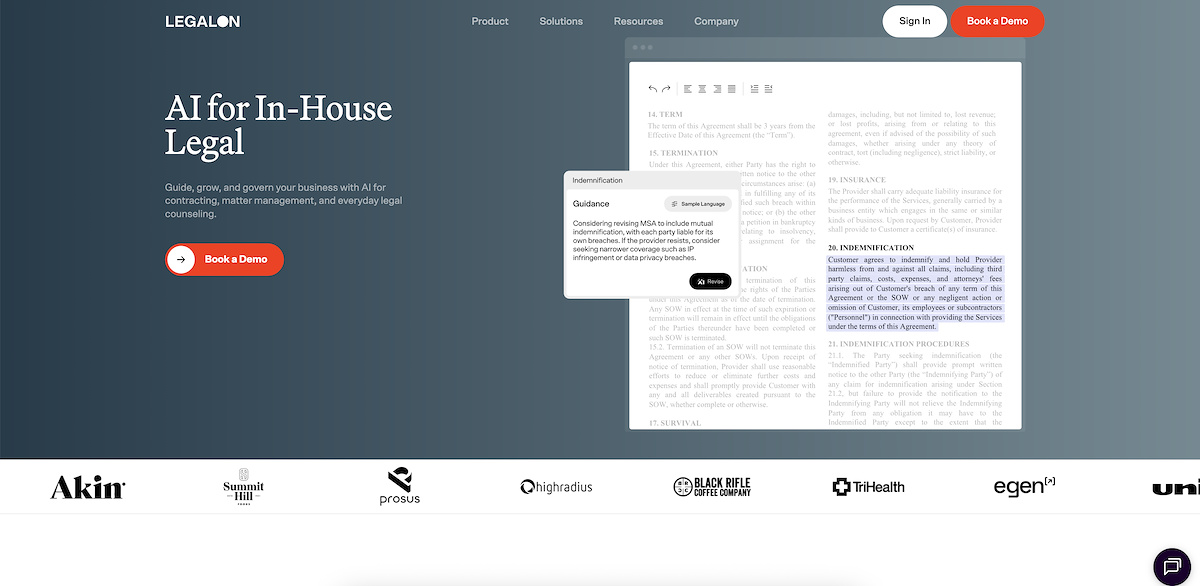
LegalOn is a contract review platform that uses curated playbooks to support negotiation and redlining. The platform is built for in-house legal teams managing recurring commercial agreements, such as MSAs, NDAs, and sales contracts. Its focus is on reviewing existing agreements for risk and consistency, which differs from Gavel’s approach of automating the creation of new documents. This positions LegalOn as a specialized tool for review, rather than a broader workflow solution.
LegalOn Features
Playbook-driven review inside Microsoft Word.
Risk identification for non-standard or missing clauses.
Attorney-authored guidance explaining each issue.
A web application for basic intake and matter tracking.
An AI assistant for ad-hoc drafting and summarization.
LegalOn Pricing
Pricing is on a per-seat, per-module basis.
Individual plans with limited features start around $3,500 annually.
Team pricing is custom, with a five-user plan costing approximately $40,000 per year.
Key Considerations about LegalOn
LegalOn is a specialized review tool, not an end-to-end platform. It focuses narrowly on analyzing existing contracts, which means teams may need separate tools for drafting, knowledge management, and other legal operations.
The platform's analysis is grounded in its own curated playbooks. This approach can enforce consistency but lacks the flexibility of systems that learn from a firm’s own historical contracts or provide real-time market data for negotiation.
It is best suited for teams whose primary goal is to standardize the review of high-volume, repeatable agreements according to a predefined set of rules.
2. Gavel
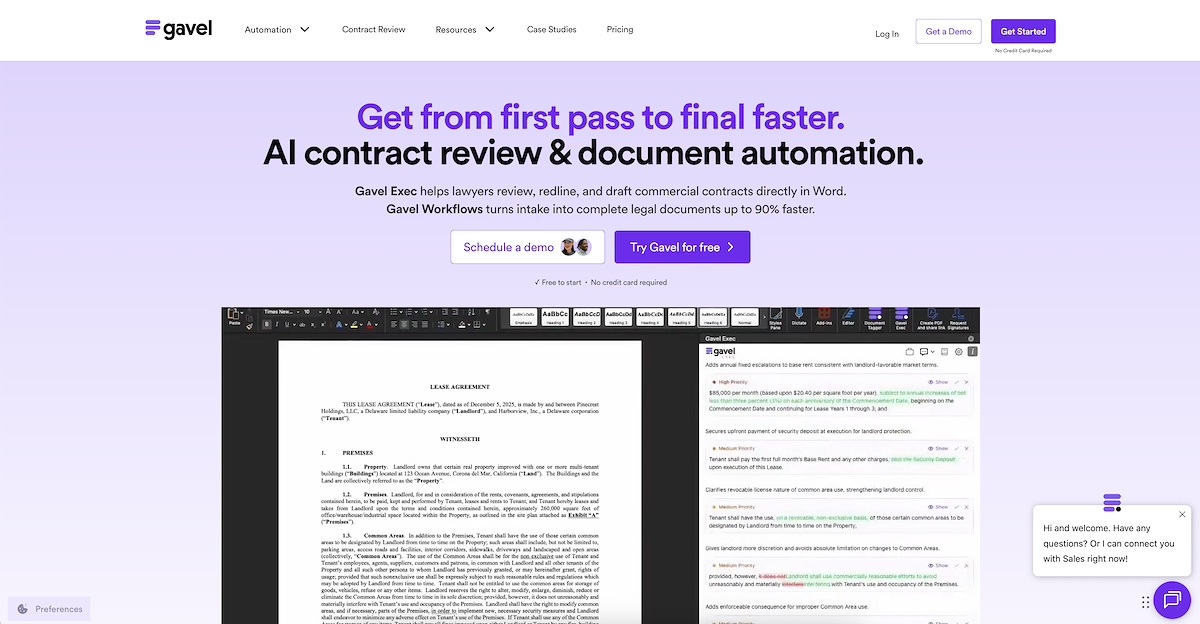
Gavel is a document automation platform that uses rule-based logic and questionnaires to generate new legal documents. It is designed for teams in document-heavy practice areas like real estate or estate planning who need to produce standardized documents at scale. Unlike LegalOn, which focuses on reviewing existing third-party contracts for risk, Gavel is built to systematize the creation of new documents from a firm's own templates and knowledge bases. This makes it more of a production tool for standardized outputs rather than a dynamic tool for negotiation or complex review scenarios.
Gavel Features
A Word add-in for AI-assisted drafting, redlining, and summarization.
A web application for generating documents from structured questionnaires.
Rule-based logic to automate the assembly of new documents.
Playbooks for applying and enforcing standard contract rules.
A "Projects" feature for creating shared knowledge bases and clause libraries.
Gavel Pricing
Pricing is approximately $160 per user per month.
Discounts are offered for teams with more than 10 users.
Billed monthly with no long-term contract required by default.
Key Considerations about Gavel
Gavel is primarily a document production system, not a dynamic negotiation tool. Its main strength lies in systematizing the creation of new documents from a firm’s own templates and rule-based logic, which is a key point of difference in the LegalOn vs Gavel comparison.
This focus makes it less suited for reviewing complex, third-party contracts where the primary goal is risk analysis. The platform is not designed for data-driven negotiation and lacks features like access to real-time market data, which limits a lawyer's ability to benchmark terms against current standards. It is best for teams whose main objective is production efficiency for standardized outputs.
3. Spellbook, The Smarter Alternative
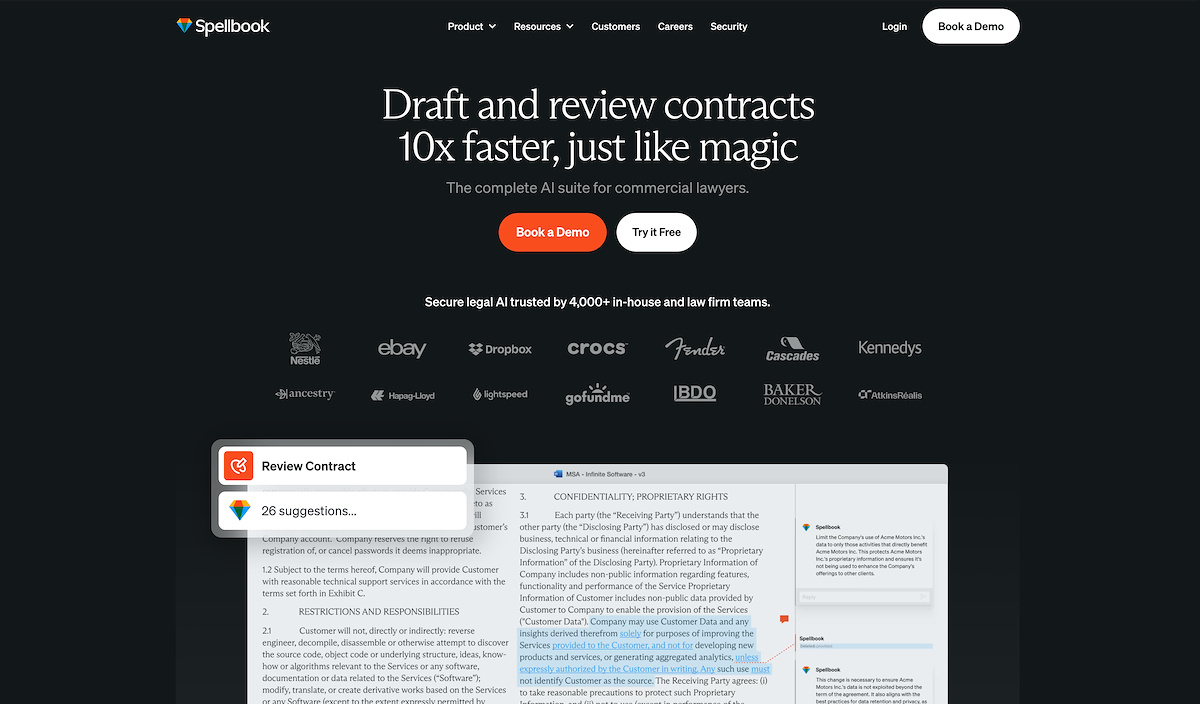
While the LegalOn vs Gavel discussion highlights a choice between contract review and document automation, Spellbook offers a complete AI suite for contracts and commercial law. It integrates directly into Microsoft Word, helping over 4,000 legal teams at companies like Dropbox and Crocs draft and review agreements 10x faster and with greater precision, without switching between applications.
What truly sets Spellbook apart is that it's the only contract AI grounded in real-time market data. Its Review feature analyzes contracts against live benchmarks from thousands of similar agreements. This gives lawyers data-driven answers to "What's market?" in any negotiation, a capability not found in the other platforms.
Spellbook Features
Review: Analyzes contracts to identify risks and suggest redlines directly in Microsoft Word. The suggestions appear as track changes, giving lawyers full control to accept, reject, or modify them.
Draft: Generates new clauses or entire agreements from simple instructions. It can also search a firm’s past contracts to find and adapt precedent language, ensuring consistency with the current document’s style and defined terms.
Ask: Functions as a contract-specific Q&A tool. Lawyers can ask questions about an open agreement and receive answers with citations pointing to the relevant contract language for quick verification.
Compare to Market: Benchmarks contract terms against real-time data from thousands of similar agreements. This feature provides statistical, data-driven answers to "What's market?" during negotiations, a capability that goes beyond static playbooks.
Associate: An AI agent that handles multi-document projects from a single instruction. It can perform tasks like reviewing a data room, updating terms across multiple files, or preparing a full document package, automating work that typically requires significant manual effort.
Spellbook Pricing
Spellbook offers custom per-seat pricing based on team size and requirements, with all quotes provided through a demo. Standard plans include:
All core features, including Review, Draft, Ask, and the Associate AI agent.
Onboarding, training, and ongoing support.
You can get started with a free trial to test the full platform.
Why Commercial Lawyers Love Spellbook
Unlike single-purpose tools for either review or automation, Spellbook integrates both drafting and review into a single platform. While it operates exclusively within Microsoft Word to keep legal workflows focused, this allows it to combine risk analysis with production efficiency.
This unified approach gives lawyers a significant advantage. It provides data-driven answers to "What's market?" and helps generate precise language for critical clauses like limitation of liability. Spellbook is best for teams who need a complete system for the entire contract lifecycle, not just one piece of it.
[cta-1]
Gavel vs LegalOn vs Spellbook: Key Differences
The core difference in the LegalOn vs Gavel debate is their focus: LegalOn standardizes the review of existing contracts, while Gavel systematizes the creation of new ones.
1. LegalOn: Standardized Review
LegalOn is a specialized review tool that uses curated, attorney-authored playbooks to analyze existing contracts. Its primary function is to enforce consistency and control risk according to a predefined set of rules, making it best for teams focused on standardizing the review of high-volume agreements.
2. Gavel: Systematized Production
Gavel is a document automation platform that uses rule-based logic to generate new documents from templates and questionnaires. Its strength lies in production efficiency, helping teams create standardized outputs at scale. It is not designed for the dynamic analysis of third-party contracts.
3. Spellbook: Integrated Drafting and Review
Spellbook provides a complete AI suite that unifies both drafting and review into a single Microsoft Word add-in. This integrated approach allows over 4,000 legal teams to draft and review contracts with greater speed and precision, without switching applications.
What truly sets Spellbook apart is its use of real-time market data. The platform analyzes agreements against thousands of similar contracts, providing data-driven answers to "What's market?" This capability offers a distinct advantage in negotiations that static playbooks or production-focused tools cannot match. Furthermore, Spellbook is SOC 2 Type II certified and HIPAA compliant, meeting key enterprise security requirements.
Which Option Is Right For Your Business?
For Teams Focused on Document Production
If your primary need is to generate a high volume of standardized documents from your own templates, Gavel is the most direct fit. It is built for production efficiency, using rule-based logic to automate document assembly. Its straightforward pricing also makes it predictable for teams scaling their output.
For Teams Prioritizing Standardized Review
LegalOn is designed for teams whose main goal is to enforce consistency when reviewing incoming contracts. Its playbook-driven approach is effective for controlling risk according to a predefined set of rules. This specialization makes it a strong choice for standardizing review workflows.
For Teams Needing an Integrated Workflow
For legal teams that handle the entire contract lifecycle, from drafting new agreements to reviewing third-party paper, Spellbook is the superior choice. It combines drafting and review within Microsoft Word, eliminating the need for separate tools. This integrated approach supports both speed and precision across all contract work.
The Bottom Line
Ultimately, your choice depends on your primary workflow. Gavel excels at document production, while LegalOn is built for standardized review. For teams that need a single, integrated system for the entire contract lifecycle, Spellbook offers a more powerful alternative that combines drafting, review, and data-driven negotiation support.
Try Spellbook Free
While LegalOn focuses on review and Gavel on production, Spellbook integrates both into a single platform for the entire contract lifecycle. It provides data-driven negotiation support and drafting assistance directly within Microsoft Word. See how it works for your team by starting a free trial.
Frequently Asked Questions
Which tool is better for custom or complex agreements?
Gavel is designed for generating documents from pre-approved templates, making it less suitable for unique or heavily negotiated agreements that deviate from standard forms. Its strength is in production, not adaptation.
LegalOn offers more flexibility for reviewing third-party paper but is constrained by its playbook-driven system. If a contract contains terms outside the scope of its curated playbooks, its guidance may be limited. For truly bespoke drafting, lawyers might find using specific AI prompts for lawyers in a more adaptable system to be more effective.
What is the implementation process like for these platforms?
Gavel is typically faster to implement, as its model is built around users creating their own document workflows. Its monthly billing and self-serve nature allow teams to get started quickly with minimal upfront commitment.
LegalOn usually requires a more involved onboarding process. Implementation involves working with their team to customize playbooks and train users on the review system, which reflects its focus on creating a standardized process across a legal department.
How does Spellbook compare to using LegalOn and Gavel together?
Using LegalOn for review and Gavel for drafting would create a fragmented workflow, forcing lawyers to switch between different systems and contexts. This separation can lead to inefficiencies and inconsistencies between the documents you create and the third-party paper you review.
Spellbook avoids this by integrating both drafting and review into a single Microsoft Word add-in. This unified approach allows teams to analyze incoming contracts and generate new language within the same environment. It combines the production efficiency of a document automation tool with the analytical power of a review platform, while adding data-driven insights for clauses like indemnification that neither of the other tools provides.
[cta-2]
Our Research Methodology
This comparison is based on comprehensive research of publicly available information, including product websites, feature documentation, press releases, customer reviews, legal technology publications, and third-party analyses from sources like LawSites, Artificial Lawyer, and industry analysts.
Where pricing information is not publicly disclosed, we've included estimates based on available industry data and user reports. Information is current as of 2026 and may change as products evolve. We encourage readers to verify details directly with vendors and request demos to evaluate fit for their specific needs.
.png)
%20(1).png)


Thank you for your interest! Our team will reach out to further understand your use case.
Spellbook is the most complete AI suite for commercial legal work, trusted by more than 4,400 in-house teams and law firms worldwide.

SOC 2 Type II

HIPAA

GDPR

EU AI Act

HIPAA Compliant
