
5 Best Legora Alternatives for 2026
.jpeg)

Finding the right Legora alternatives can be challenging, especially if you need a tool that's more focused on contract drafting and review speed versus large-scale portfolio analysis. Legora is powerful for standardized review across many documents, but it can feel rigid for teams that prioritize workflow flexibility and data-driven insights on individual contracts. To help you decide, we'll break down the top platforms, comparing their core products, pricing, and unique features.
Key Takeaways
- While Legora excels at large-scale portfolio review, many teams need an alternative that offers more flexibility and speed for drafting, reviewing, and negotiating individual contracts.
- This guide analyzes companies like Legora—including Spellbook, LegalOn, Gavel, GC AI, and Iqidis (Irys)—by comparing their core products, pricing models, and key features to help you find the right fit.
- Spellbook stands out as a leading Legora alternative, trusted by over 4,000 legal teams to draft and review contracts with greater speed and precision, negotiate with data-driven confidence, and automate complex workflows—all within Microsoft Word.
[cta-1]
1. Spellbook: Top Legora Alternative
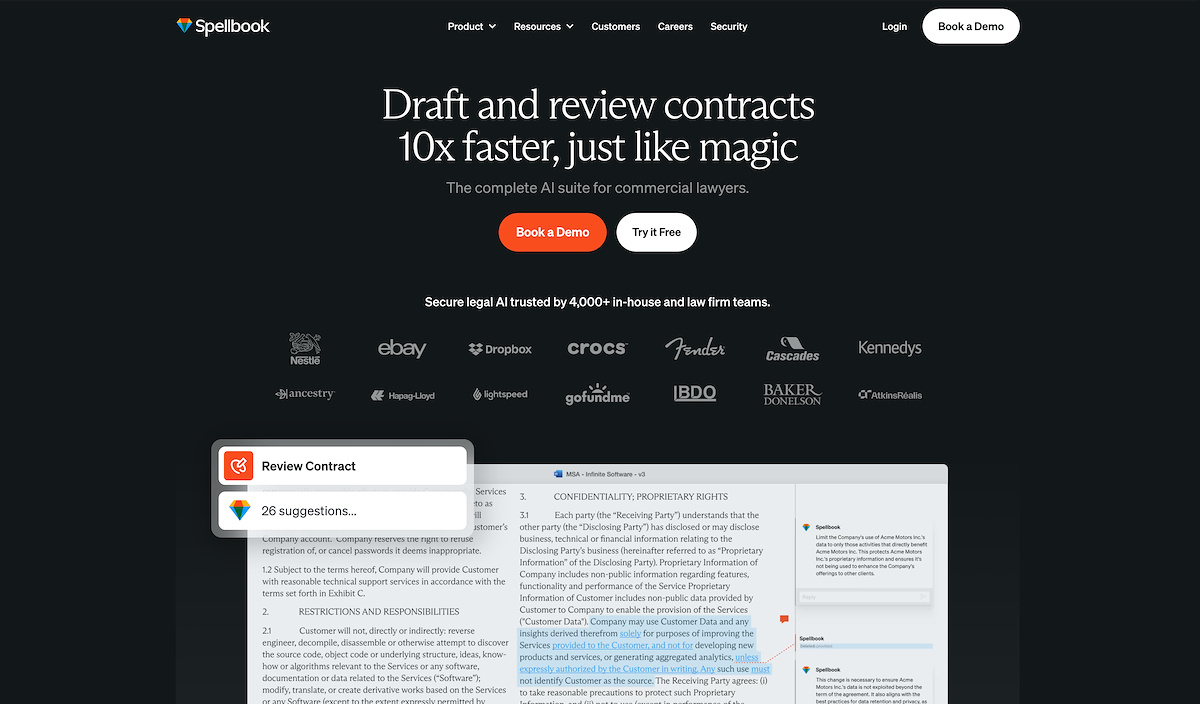
Spellbook is the most popular AI suite for commercial lawyers. It helps legal teams draft and review contracts 10x faster, with greater precision—right in Microsoft Word. Trusted by over 4,000 legal teams at companies like Dropbox, Fender, and Crocs, it is designed to handle high-volume transactional work, from commercial agreements to M&A diligence.
Unlike all-in-one legal platforms, Spellbook is tailored for contracts and commercial law. It is also the only contract review tool grounded in real-time market data. By operating entirely within Microsoft Word, it allows commercial lawyers to accelerate their existing workflows instead of forcing them to adopt a new interface.
Spellbook Features
- Review: Spellbook’s Review function provides instant, document-wide analysis with AI-generated redlines that appear as track changes. It flags risks and suggests improvements, allowing you to maintain authorship while reviewing contracts. This focus on individual document velocity makes it a strong Legora alternative for teams that prioritize drafting and redlining speed over large-scale portfolio analysis.
- Draft: This feature offers clause-level and full-document generation. You can draft new clauses from scratch or pull from a library of standard provisions, such as for indemnification or confidentiality. Spellbook can also index your firm’s historical contracts to find and reuse precedent, automatically adapting the language to fit the current agreement. This drafting sophistication is tailored for active negotiation, whereas Legora is more oriented toward review and data extraction.
- Ask: Functioning as a contract-specific Q&A tool, Ask lets you pose questions about obligations, terms, or other details directly within Microsoft Word. The tool provides answers with citations to the relevant contract language, supporting quick validation. This in-workflow functionality helps you get immediate answers without switching contexts.
- Compare to Market: A key differentiator, this feature allows you to compare contract terms against real-time market data from thousands of similar agreements. You can check if a term is standard with a single click, using benchmarks to support your negotiation position. Unlike platforms that rely on static, predefined playbooks, Spellbook provides data-driven insights grounded in statistical evidence, making it a unique alternative to Legora.
- Associate: Spellbook Associate is an AI agent that executes multi-document, multi-step projects from a single instruction. It can cross-reference document sets, update terms across multiple files, and prepare full document packages. While Legora is built for extracting structured data across thousands of documents, Associate is designed to handle complex transactional workflows, similar to delegating a project to a junior associate.
- Security and Compliance: Spellbook is SOC 2 Type II certified and compliant with GDPR, CCPA, and HIPAA. It operates on a zero-data-retention policy, ensuring customer documents are not stored or used for model training.
Spellbook's AI Models & Architecture
Spellbook uses a multi-model approach, selecting from top OpenAI and Anthropic models for optimal performance depending on the task.
It uses retrieval-augmented generation (RAG) to ground outputs in your team's precedents, definitions, and playbooks and enriches them with real-time market data.
This "Market Grounding" approach ensures suggestions are relevant and defensible, a key difference from platforms focused solely on static playbook checks.
The system also improves over time through Preference Learning, adapting to your team's specific contract review style and making it a strong Legora alternative.
Spellbook's Security and Compliance
- Certifications and Compliance: Spellbook is SOC 2 Type II certified and compliant with GDPR, CCPA, and HIPAA, supporting teams in regulated industries.
- Zero Data Retention: The platform operates on a strict zero-data-retention policy. Customer documents are never stored or used to train AI models.
- Data Security: All data is encrypted in transit and at rest. Enterprise features like SSO and role-based access controls provide additional layers of security for managing team access.
Spellbook Pricing
Spellbook uses a custom per-seat pricing model, with quotes tailored to your team’s size and feature requirements. Key details include:
- Annual subscriptions with volume discounts for teams of 10 or more.
- All core features, onboarding, and support are included.
You can test the full platform with a 7-day free trial.
Other Alternatives to Legora
For teams seeking a different approach, several other platforms serve as a viable alternative to Legora. Each offers distinct features for contract management, catering to different legal workflows and priorities.
2. LegalOn
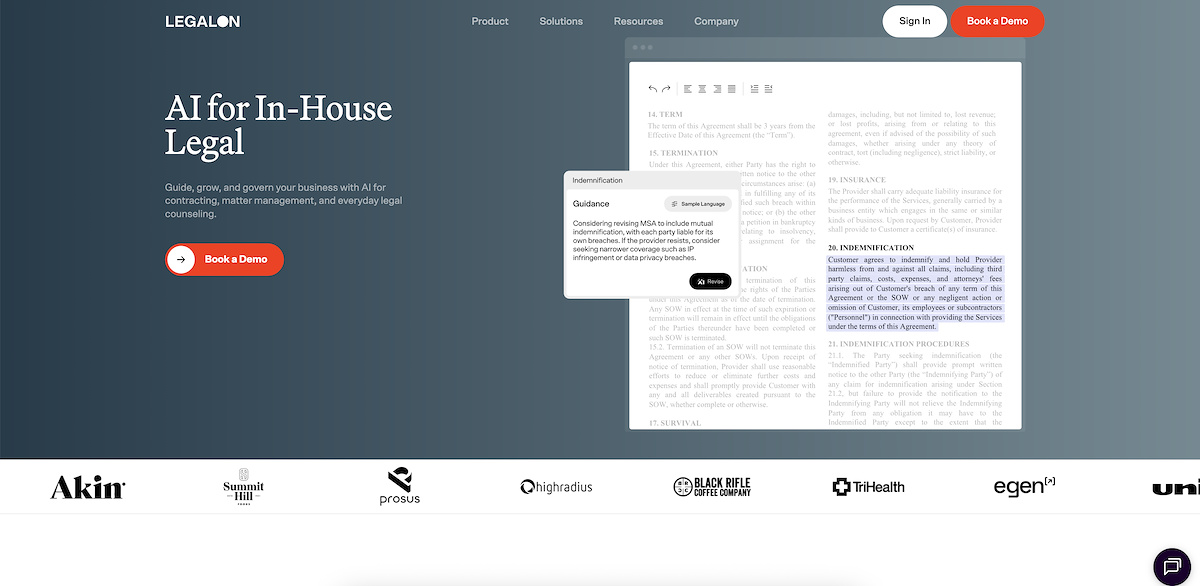
LegalOn is a contract review tool that helps in-house legal teams with negotiation and redlining for standard commercial contracts. It relies on curated, attorney-authored playbooks to enforce consistency.
While this provides structure, it differs from Legora’s large-scale data extraction capabilities and can be less flexible for teams that prioritize drafting speed and adaptability over rigid, playbook-driven review.
LegalOn Features
- Playbook Review: Uses curated playbooks in MS Word to identify risks and non-standard language.
- Attorney-Authored Guidance: Provides context and sample clauses for flagged issues.
- AI Assistant: Supports drafting, summarization, and Q&A for tasks outside of playbooks.
- Web App: Manages contract intake, matter tracking, and templates.
LegalOn Pricing
LegalOn uses a per-seat, per-module pricing model, with costs varying by the number of users and features enabled. Indicative pricing includes:
- Individual licenses starting at approximately $3,500 per user, per year.
- Custom quotes for teams, with a five-user plan costing around $40,000 annually.
3. Gavel
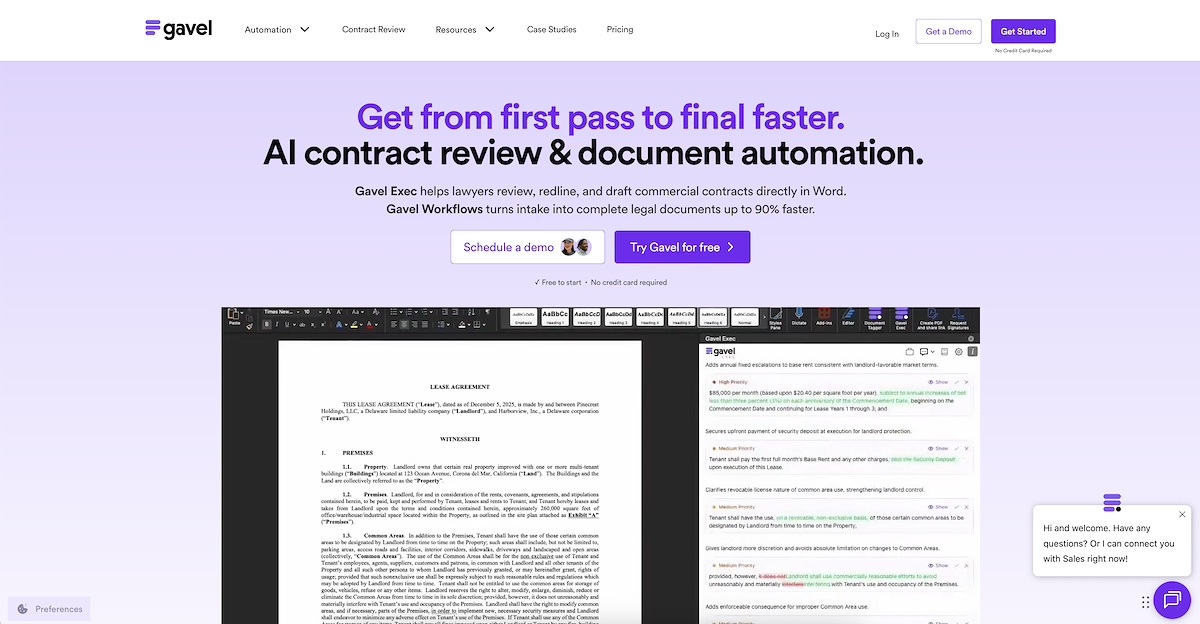
Gavel is a document automation platform that generates legal documents using structured inputs and rule-based logic. It is designed for practices with highly repeatable workflows, such as estate planning or real estate. Unlike Legora’s focus on large-scale portfolio review, Gavel is more of a document production system than a contract review engine, limiting its utility for teams that primarily negotiate third-party paper.
Gavel Features
- A Word add-in with a chat interface for drafting, redlining, and summarizing.
- A web application that generates documents from questionnaires and logic-based rules.
- Playbooks that define and apply standards to contracts during review.
- Shared “Projects” that function as knowledge bases for templates and clauses.
Gavel Pricing
- Gavel is priced at approximately $160 per user per month, billed monthly.
- A 10% discount is offered for teams of 10 or more users.
- Long-term contracts are not required, but multi-year agreements are available.
4. GC AI
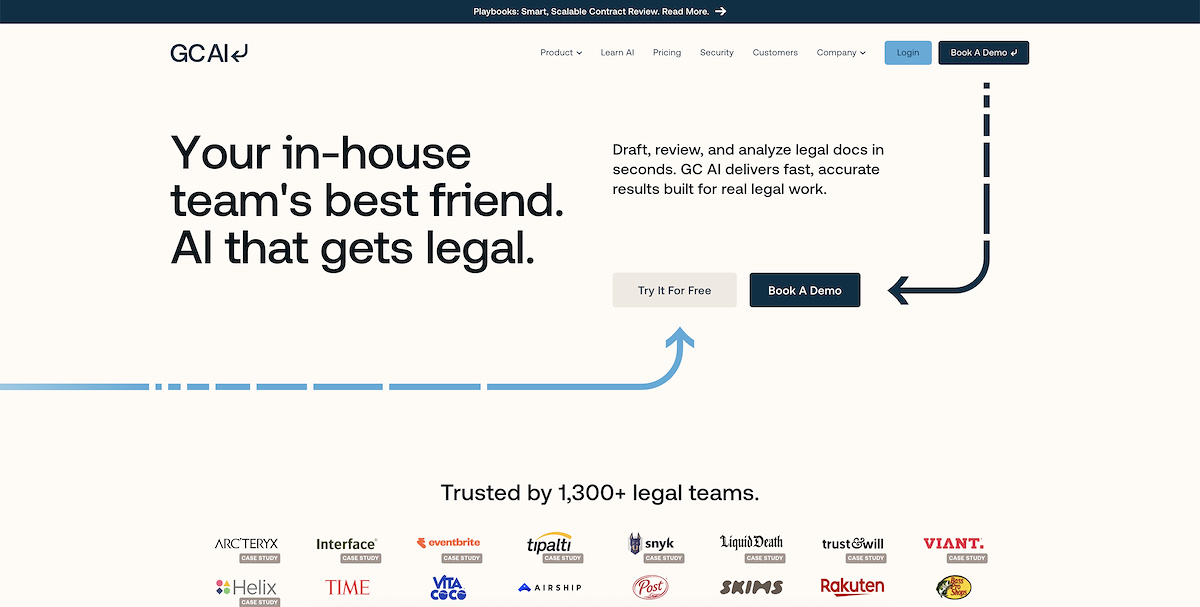
GC AI is a legal AI platform for in-house teams, combining a web application for research and a separate Word add-in for contract review. As an alternative to Legora, it shifts focus from large-scale data extraction to broader research and analysis. This split between two interfaces can create a disjointed workflow for teams that want to manage all tasks within a single environment.
GC AI Features
- A web application for research and analysis with citations.
- A Word add-in for contract review and redlining.
- Playbooks for standardized review based on internal precedent.
- Shared prompts and knowledge bases for team collaboration.
GC AI Pricing
- Solo Seat: $5,000 per user per year.
- Team Tier: $7,000 per user per year, which includes SSO and collaboration tools.
- Volume discounts are offered for teams of 10 or more users.
5. Iqidis
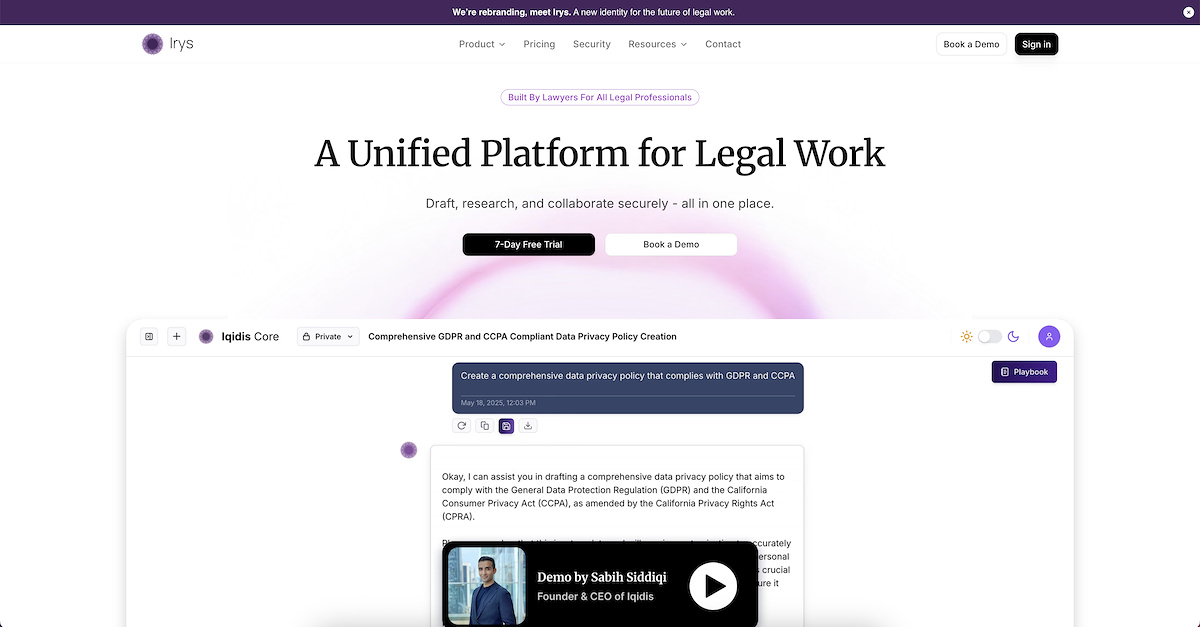
Iqidis (Irys) positions itself as a “legal operating system” that centralizes document analysis, collaboration, and matter management into a single platform. It is designed for teams managing multiple concurrent projects, particularly for transactional and vendor-contract workflows. Unlike Legora’s focus on large-scale data extraction across portfolios, Iqidis aims to provide a matter-centric workspace, making it a different type of Legora alternative.
Iqidis Features
- Matter Folders to organize documents, notes, and analysis by project.
- Multi-document analysis for reviewing large sets of files at once.
- An AI assistant for summarizing, drafting, and redlining agreements.
- A Precedent Finder for searching and retrieving historical documents.
- Collaboration tools for sharing work with internal and external teams.
Iqidis Pricing
- Iqidis offers enterprise seat-based pricing, ranging from $329 to $399 per user per month.
- Billing is structured on a semi-annual or annual contract basis.
How To Choose The Best Legora Alternative
Choosing the right tool depends on your team's specific needs, from drafting speed to negotiation support. When evaluating Legora alternatives, consider these key factors to find the best fit for your workflow.
1. Integration with Existing Workflows
A platform that forces you to switch between applications can disrupt your focus and slow down your work. The most effective tools integrate directly into your existing environment, like Microsoft Word, allowing you to accelerate tasks without changing how you operate.
2. Access to Real-Time Market Data
While internal playbooks are useful for consistency, they can become outdated and lack external validation. A tool that provides data-driven insights from thousands of recent, similar agreements gives you a significant advantage in negotiations, allowing you to ground your positions in statistical evidence.
3. Focus on Drafting and Review Velocity
Many legal teams prioritize speeding up the lifecycle of individual contracts over large-scale portfolio analysis. Look for a tool designed to accelerate drafting, redlining, and review for day-to-day agreements. Features that generate clauses, suggest instant redlines, and answer questions within the document are essential for improving transactional speed.
Try Spellbook Free
Spellbook stands out by integrating directly into Microsoft Word, allowing you to review contracts and negotiate with insights from real-time market data without switching applications.
See how over 4,000 legal teams accelerate their work by starting a free 7-day trial today.
Frequently Asked Questions
What is the main difference between Legora and tools focused on contract drafting?
Legora is built for large-scale portfolio analysis and is considered an all-in-one legal platform. It excels at extracting structured data from thousands of documents to identify trends and risks across a business.
In contrast, many Legora alternatives are designed to accelerate the lifecycle of individual contracts. They focus on drafting, redlining, and negotiation speed, often operating within a lawyer's existing workflow, such as in Microsoft Word. The choice depends on whether your primary need is high-level portfolio intelligence or day-to-day transactional velocity.
How do AI playbooks in these tools compare to traditional legal playbooks?
AI-powered playbooks, used by tools like LegalOn and GC AI, automate the process of checking contracts against a firm's predefined standards. They flag non-compliant language and suggest approved alternatives, enforcing consistency at scale.
This differs from traditional, static playbooks by actively guiding the review process within the document. Some platforms go a step further by grounding suggestions not just in internal rules but also in real-time market data, offering a more dynamic benchmark for negotiations.
Are AI contract tools secure for handling confidential client information?
Reputable legal AI providers prioritize security. Look for platforms with SOC 2 Type II certification, which confirms they follow strict security and availability protocols.
It is also important to check their data retention policies. Many leading tools, including Spellbook, operate on a zero-data-retention basis, meaning your documents are not stored or used to train their AI models. Features like end-to-end encryption and SSO provide additional security layers, but you should always confirm a provider's specific approach to data privacy.
How does Spellbook specifically differ from Legora for a transactional lawyer?
For a transactional lawyer, the key difference is workflow and focus. Legora is a separate platform designed for analyzing large contract portfolios, which is useful for high-level risk management but requires you to work outside your primary drafting environment.
Spellbook, on the other hand, is an add-in that works directly within Microsoft Word. It is built to speed up the tasks you do every day: drafting new language, reviewing third-party paper, and negotiating terms. Instead of extracting data for portfolio-level reports, Spellbook provides in-document tools like AI-powered redlines and market data comparisons to help you close individual deals faster.
[cta-2]
Our Research Methodology
This comparison is based on comprehensive research of publicly available information, including product websites, feature documentation, press releases, customer reviews, legal technology publications, and third-party analyses from sources like LawSites, Artificial Lawyer, and industry analysts.
Where pricing information is not publicly disclosed, we've included estimates based on available industry data and user reports. Information is current as of 2026 and may change as products evolve. We encourage readers to verify details directly with vendors and request demos to evaluate fit for their specific needs.
Lawyer-built prompts to help you draft, review, and negotiate contracts faster—with any LLM.
Get the latest news, trends, and tactics in legal Al—straight to your inbox.
Thank you for your interest! Our team will reach out to further understand your use case.
Spellbook is the most complete AI suite for commercial legal work, trusted by more than 4,000 in-house teams and law firms worldwide.

SOC 2 Type II

HIPAA

GDPR

EU AI Act

HIPAA Compliant
