
LexisNexis vs LegalOn: Which Is The Top Pick in 2026?
.jpeg)


Deciding between LexisNexis vs LegalOn requires a close look at two different philosophies for legal AI. LexisNexis integrates generative AI into its vast legal research ecosystem for citation-backed answers, while LegalOn offers a specialized contract review tool focused on playbook-driven consistency.
To help you choose, this guide breaks down their core features, pricing models, and underlying technology, giving you the practical details needed to find the right fit for your team.
Key Takeaways
- LexisNexis is a broad legal research platform that uses generative AI to provide citation-backed answers from its proprietary content library. LegalOn is a specialized contract review tool focused on applying pre-defined company playbooks to ensure consistency in commercial agreements.
- The core difference is scope and function. LexisNexis is built for research-to-drafting workflows grounded in authoritative legal content. LegalOn is designed for standardized, playbook-driven contract review and redlining inside Microsoft Word.
- As a more complete alternative, Spellbook is a legal AI suite trusted by over 4,000 in-house and law firm teams to draft, review, and negotiate contracts with greater speed and precision. It operates entirely within Microsoft Word and is the only platform that offers data-driven negotiation insights through its Compare to Market feature, which benchmarks agreements against thousands of real-world contracts.
1. LexisNexis
LexisNexis integrates generative AI into its extensive legal research platform, offering citation-backed answers grounded in its proprietary content library. It is built for legal teams that need an integrated research-to-drafting workflow within a single ecosystem. Unlike more focused tools, LexisNexis is a broad legal information environment rather than a dedicated contract review solution. This approach means some core contract functions, such as redlining, are handled through a separate plug-in, creating a less unified experience for pure contract work.
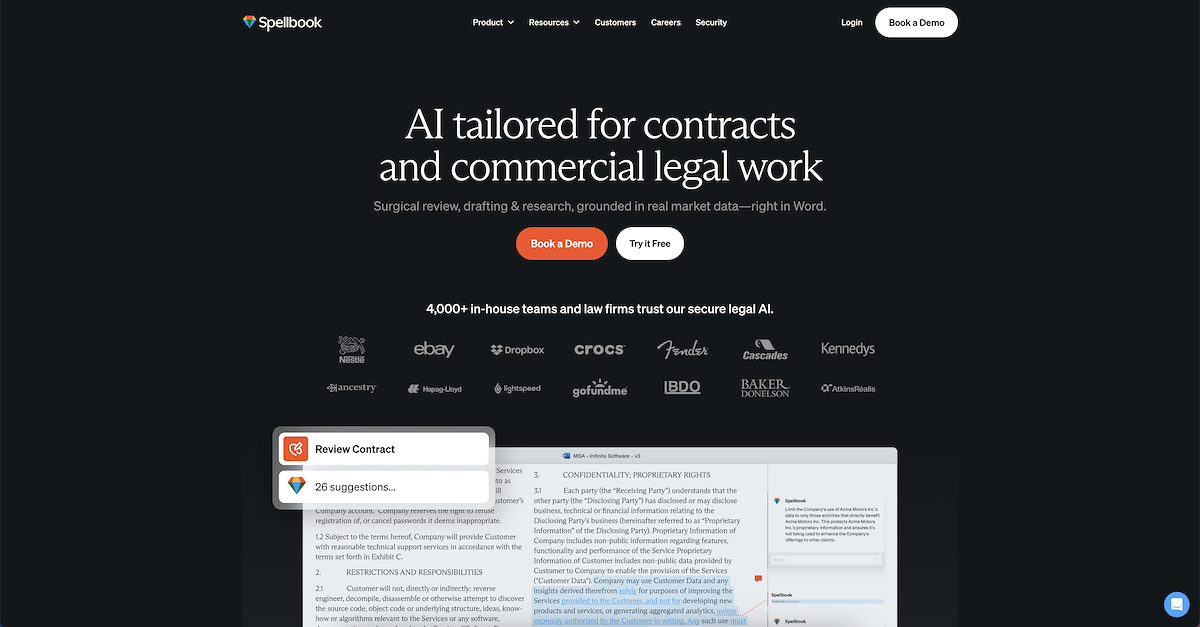
LexisNexis Features
- Legal Q&A with citation-backed answers from proprietary content.
- Drafting and summarization of legal documents.
- Document analysis through upload-and-query workflows.
- M&A benchmarking against SEC filings and Practical Guidance.
- A separate Word plug-in (Create+) for clause-level redlining.
LexisNexis Pricing
- Seat-based annual subscriptions with volume discounts.
- Promotional pricing and multi-year contracts are available.
- The Create+ Word plug-in for redlining is an additional cost.
- Training and support are included in the subscription.
Key Considerations about LexisNexis
A key point to consider is that core contract functions are not fully integrated. Redlining, for example, requires a separate Word plug-in, which can create a fragmented process for teams focused on contract review.
Additionally, the platform currently lacks native playbook functionality, a feature many teams rely on for standardized review. While on the roadmap, its absence makes LexisNexis less suited for enforcing consistent, policy-driven contract reviews today.
Ultimately, LexisNexis is built as a broad legal information and research ecosystem. It is not a specialized tool for high-volume contract work, which may be a drawback for teams needing a dedicated contract automation and review solution.
2. LegalOn
LegalOn offers a specialized contract review platform designed for playbook-driven consistency and risk control. It is built primarily for in-house legal teams managing recurring commercial agreements like MSAs, NDAs, and sales contracts. Where LexisNexis integrates AI into a vast legal research ecosystem, LegalOn provides a more focused tool for applying pre-defined company policies to commercial agreements. This playbook-centric model prioritizes standardized review over the generative drafting and broader research functions found in more extensive platforms.
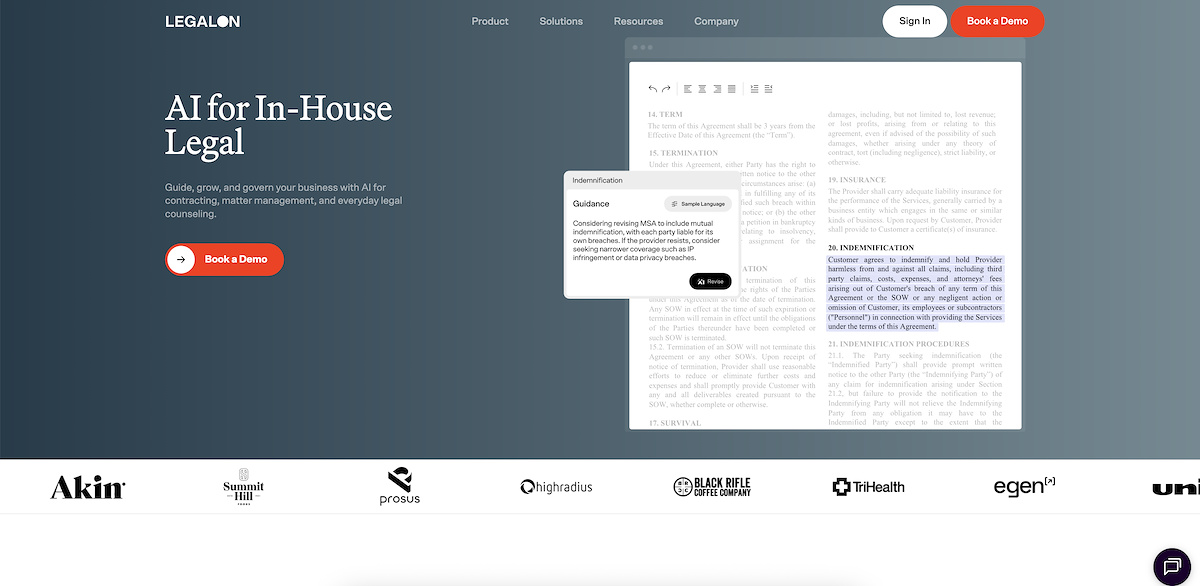
LegalOn Features
- Playbook-driven contract review inside Microsoft Word.
- Attorney-authored guidance and sample language for identified issues.
- Risk prioritization with low, medium, and high alerts.
- An AI assistant for ad hoc drafting, summarization, and Q&A.
- A web application for contract intake and matter tracking.
LegalOn Pricing
- Pricing is on a per-seat, per-module basis.
- Individual licenses for core features start around $3,500 per year.
- Team pricing is customized based on user count and selected modules, with five-user enterprise plans starting around $40,000 annually.
Key Considerations about LegalOn
LegalOn is intentionally focused on contract review, which means it is not an end-to-end legal platform. It lacks the broad research functions of LexisNexis and is not designed for full lifecycle management.
The platform’s main strength is applying pre-defined company policies with consistency. It excels at enforcing known standards for clauses like limitation of liability or indemnification.
However, this playbook-centric model is less suited for teams that need dynamic, data-driven insights to inform their negotiation strategy. For legal teams comparing LexisNexis vs LegalOn, it is important to note that LegalOn is built for enforcing existing standards, not for discovering what is market standard in real time.
3. Spellbook, The Smarter Alternative
For teams looking for a more complete alternative, Spellbook is an AI suite built specifically for contracts and commercial law. It integrates directly into Microsoft Word, helping over 4,000 legal teams draft and review agreements with greater speed and precision, all without switching applications.
Where Spellbook stands apart in the LexisNexis vs LegalOn debate is its use of real-time market data. It is the only contract AI that analyzes agreements against live benchmarks from thousands of similar deals, giving lawyers data-driven answers to "What's market?" through its Compare to Market feature.
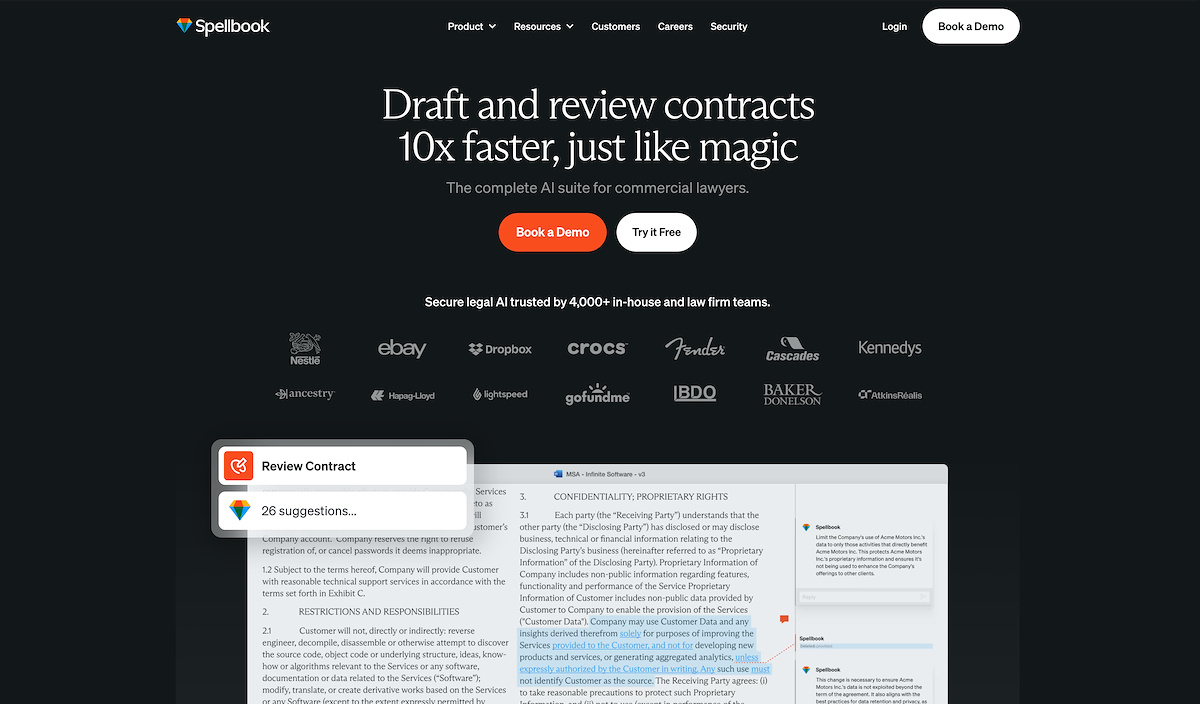
Spellbook Features
- Review: Instantly analyzes entire contracts to flag risks, suggest redlines, and identify missing clauses. It combines AI-driven analysis with customizable playbooks for both consistency and intelligent issue spotting.
- Draft: Generates new clauses or entire agreements from simple instructions. It can also find and adapt language from your firm’s past contracts, ensuring all new text matches the document’s existing style and defined terms.
- Ask: A contract-specific Q&A tool that lets you ask questions about an open document and get answers with citations to the relevant language, all without leaving Microsoft Word.
- Compare to Market: Provides data-driven answers to "What's market?" by benchmarking contract terms against thousands of similar, real-world agreements. This feature offers a statistical edge in negotiations that is absent in systems reliant on static guidance or internal playbooks alone.
- Associate: An AI agent that handles multi-document projects from a single prompt. It can perform tasks like due diligence review across a data room or updating terms across multiple files, functioning like a junior associate to handle complex, time-consuming work.
- Playbooks and Preference Learning: Enforce firm-specific standards with customizable playbooks, while the AfI also learns from your edits over time. This creates a system that adapts to your individual drafting style and risk tolerance, becoming more personalized with use.
Spellbook Pricing
- Spellbook offers custom per-seat pricing on an annual basis, with quotes tailored to your team's size and needs.
- Volume discounts are available for larger teams, and all plans include every feature, plus onboarding and support.
Get started with a free trial to see how Spellbook can accelerate your contract workflows.
Why Commercial Lawyers Love Spellbook
Unlike broad research platforms or narrow playbook tools, Spellbook is built as a complete contract AI suite. While it operates exclusively within Microsoft Word to keep workflows focused, its primary advantage is providing data-driven negotiation insights that the other tools lack.
Instead of relying on static guidance or internal policies alone, Spellbook benchmarks clauses against thousands of real-world agreements. This gives lawyers a statistical edge, answering "What's market?" with live data, not just pre-approved language.
This focus on real-time market intelligence, combined with powerful drafting and review tools, allows teams to work with greater speed and precision. It’s designed for lawyers who need to move beyond simple rule enforcement and negotiate with confidence backed by data.
[cta-1]
LegalOn vs LexisNexis vs Spellbook: Key Differences
When evaluating LexisNexis vs LegalOn, the core differences lie in their fundamental approach to legal AI. Each platform is built for a distinct purpose, which in turn shapes its features, workflow, and ideal user.
1. LexisNexis: The Research Ecosystem
LexisNexis integrates generative AI into its vast legal research platform. Its primary function is to provide citation-backed answers grounded in its proprietary content library. It is built for legal teams that need an integrated research-to-drafting workflow, but it is not a specialized contract review tool. Core contract functions like redlining require a separate plug-in, creating a less unified experience.
2. LegalOn: The Playbook Enforcer
LegalOn offers a specialized contract review platform designed for playbook-driven consistency. It excels at applying pre-defined company policies to commercial agreements like MSAs and NDAs. This playbook-centric model prioritizes standardized review and risk control over the generative drafting and broader research functions found in more extensive platforms. It is built to enforce known standards, not discover new ones.
3. Spellbook: The Complete Contract AI Suite
Spellbook is a more complete alternative, operating as an AI suite built specifically for contracts and commercial law. It integrates directly into Microsoft Word, helping legal teams draft and review agreements with greater speed and precision. It combines customizable playbooks with intelligent, AI-driven analysis.
The key differentiator in the LexisNexis vs LegalOn discussion is Spellbook’s use of real-time market data. It is the only platform that analyzes agreements against live benchmarks from thousands of similar deals. This gives lawyers data-driven answers to "What's market?" through its Compare to Market feature, offering a statistical edge that systems reliant on static guidance or internal playbooks alone cannot match.
Which Option Is Right For Your Business?
For Teams Prioritizing Legal Research
LexisNexis is the right choice if your workflow is built around deep legal research. It excels at providing citation-backed answers from its vast content library, making it ideal for teams that move from research to drafting within a single ecosystem.
For Teams Focused on Strict Policy Enforcement
LegalOn is best suited for in-house teams managing high volumes of routine contracts. Its playbook-driven model is designed to enforce company policies with consistency, making it a strong option for risk control in standardized agreements.
For Modern Transactional Teams
Spellbook is the best fit for most commercial lawyers and agile teams who need to draft and negotiate contracts efficiently. It works directly within Microsoft Word, eliminating the need to switch applications. More importantly, it provides data-driven insights that give lawyers a statistical advantage in negotiations, combining speed with precision.
Ultimately, your choice depends on your primary workflow. LexisNexis serves the researcher, LegalOn serves the policy enforcer, and Spellbook serves the deal-focused commercial lawyer who needs a complete and intelligent contract drafting and review tool.
Try Spellbook Free
Spellbook moves beyond the limits of research platforms and playbook enforcers by providing real-time market data for your negotiations. This gives your team a statistical advantage, helping you draft and review contracts with greater speed and accuracy. Start your free trial to experience it today.
Frequently Asked Questions
Do both LexisNexis and LegalOn work within Microsoft Word?
LegalOn is designed to operate primarily as a Microsoft Word add-in, allowing teams to run playbook-based reviews directly within their documents. This creates a focused workflow for contract analysis.
LexisNexis also offers a Word plug-in, called Create+, but it is a separate, add-on product. The core generative AI features for research and Q&A exist within the main LexisNexis platform, meaning users may need to switch between the web application and Word for a complete workflow.
Which platform is better for handling non-standard or highly negotiated agreements?
For non-standard agreements, LegalOn's playbook-centric model may be less effective. It is built to apply pre-defined rules and flags deviations from known standards, which is ideal for routine contracts but less helpful for novel or highly negotiated terms where no playbook exists.
LexisNexis can assist with research and drafting for complex agreements by drawing from its large content library. However, it does not provide dynamic negotiation guidance or benchmark terms against market standards. It provides information, but the strategic application for clauses like indemnification is left to the lawyer.
How does Spellbook fit in as an alternative to LexisNexis and LegalOn?
Spellbook serves as a dedicated contract AI suite that combines features relevant to both platforms. It operates entirely within Microsoft Word and supports customizable playbooks for policy enforcement, similar to LegalOn. It also offers advanced AI drafting and review capabilities for any type of agreement.
The main distinction is that Spellbook provides data-driven negotiation insights. While LexisNexis offers static legal research and LegalOn enforces internal policies, Spellbook benchmarks contract language against thousands of real-world agreements. This gives lawyers a statistical understanding of what is "market," helping them negotiate with greater speed and precision. It is a practical tool for lawyers who use AI for legal work and need to move beyond simple rule enforcement to gain a data-backed advantage.
[cta-2]
Our Research Methodology
This comparison is based on comprehensive research of publicly available information, including product websites, feature documentation, press releases, customer reviews, legal technology publications, and third-party analyses from sources like LawSites, Artificial Lawyer, and industry analysts.
Where pricing information is not publicly disclosed, we've included estimates based on available industry data and user reports. Information is current as of 2026 and may change as products evolve. We encourage readers to verify details directly with vendors and request demos to evaluate fit for their specific needs.
.png)
%20(1).png)


Thank you for your interest! Our team will reach out to further understand your use case.
Spellbook is the most complete AI suite for commercial legal work, trusted by more than 4,400 in-house teams and law firms worldwide.

SOC 2 Type II

HIPAA

GDPR

EU AI Act

HIPAA Compliant
