
Regulatory Compliance AI: How Your Legal Team Can Automate Governance in 2026
.jpeg)


Legal teams know how to manage regulatory risk. Keeping up with the volume is where things break down.
The EU AI Act, GDPR, CCPA, ISO 42001, state-level AI laws - each framework demands its own controls, evidence, and reporting cadences. Manual tracking methods that worked five years ago now create the gaps they were meant to prevent.
This is where AI compliance tools change the equation. Instead of reacting to audit findings, teams can monitor controls continuously, flag regulatory changes as they publish, and surface contract-level gaps before they become enforcement problems.
Here's what legal teams need to know about regulatory compliance AI in 2026.
Key Takeaways
- AI compliance tools automate evidence collection, risk scoring, and regulatory monitoring across multiple frameworks simultaneously.
- Generative AI adoption is accelerating across business functions, with risk and compliance among the top areas where organizations are deploying these tools.
- Legal teams using AI report significant reductions in audit cycle times, freeing resources for higher-value compliance work.
[cta-1]
What Is Regulatory Compliance AI?
Regulatory compliance AI refers to systems built on artificial intelligence, machine learning, natural language processing, and predictive analytics that automate regulatory monitoring, risk assessment, and compliance workflows. Unlike rule-based systems requiring manual updates, AI-powered tools adapt and learn from new data, identifying patterns across large document sets.
These systems track regulatory changes across jurisdictions in real time, automatically collect evidence for audits, and score risks based on historical patterns. They monitor internal policies for compliance gaps, detect anomalies indicating fraud, support cybersecurity monitoring, and enable responsible AI use. The key difference from general-purpose AI: compliance AI is trained on legal and regulatory data and produces auditable outputs that withstand regulatory scrutiny.
For lawyers, this means moving beyond simple document automation into systems that understand the compliance implications of contract language, data handling practices, and operational processes.
Key Regulations Driving AI Compliance Adoption
Several regulatory frameworks are pushing organizations toward AI-powered compliance solutions:
- EU AI Act: The first comprehensive AI legislation globally. High-risk AI provisions take effect in August 2026, requiring organizations to implement risk assessments, documentation, and human oversight for AI systems used in high-stakes decisions.
- ISO/IEC 42001:2023: The first international standard for AI management systems, providing a framework for responsible AI governance, AI development practices, and lifecycle management.
- NIST AI Risk Management Framework: The US framework for developing trustworthy AI with guidance on governance, risk mapping, and continuous monitoring.
- GDPR, CCPA, and PIPEDA: Data privacy regulations that increasingly intersect with AI compliance requirements, particularly around automated decision-making and AI data privacy obligations.
- State-Level AI Laws: Colorado's SB24-205 and other US states are enacting AI-specific requirements, creating a patchwork of compliance obligations for organizations operating across jurisdictions.
Why Traditional Compliance Methods Fail
Manual compliance processes rely on spreadsheets, scattered evidence, and point-in-time audits that cannot keep pace with the regulatory landscape. Your compliance team spends 40-60% of their time on document review alone. The regulatory overlap compounds this: GDPR, CCPA, the EU AI Act, ISO 42001, and NIST AI RMF each demand different controls and reporting cadences. Maintaining AI legal compliance across multiple frameworks manually creates gaps and audit failures. Without automated regulatory compliance review, teams struggle to keep pace.
The cost of non-compliance is rising. European regulators have issued substantial fines against major AI companies for GDPR violations, with enforcement actions targeting organizations across multiple jurisdictions. For your legal team, these enforcement actions signal that regulators are watching AI deployments closely and that manual compliance tracking creates unacceptable regulatory risk and potential reputational damage.
Core Applications of AI in Regulatory Compliance
AI compliance tools address specific pain points across the compliance lifecycle, helping legal and compliance teams streamline operations and reduce manual workload.
Automated Evidence Collection and Control Mapping
AI systems gather logs, access records, and system events automatically, eliminating manual evidence hunts. Using natural language processing, these tools map evidence to framework requirements (ISO 27001, SOC 2, HIPAA) and identify gaps.
Real-Time Regulatory Monitoring
AI-powered monitoring tracks regulatory changes across jurisdictions, parsing legislative updates and enforcement actions as they publish. You receive alerts before enforcement deadlines, enabling proactive compliance and effective change management.
Predictive Risk Scoring
Machine learning algorithms analyze anomalies, policy deviations, access patterns, and historical incident data to score risk across your organization, supporting use cases from fraud detection to policy violation identification. Instead of discovering compliance issues during audits, you can flag problems proactively and implement mitigation strategies before they escalate, reducing audit findings and remediation costs while demonstrating mature risk management to regulators and stakeholders.
Contract-Level Compliance
AI reviews contracts against regulatory requirements, flagging missing clauses, non-compliant language, and gaps in data protection provisions. Spellbook benchmarks contracts against thousands of regulatory standards, identifying compliance risks directly within Microsoft Word where lawyers draft and negotiate.
Top AI Compliance Tools Comparison
Different tools serve different compliance needs. The following comparison shows the leading AI compliance software by primary use case:
Spellbook
Spellbook works directly inside Microsoft Word, enabling transactional lawyers and in-house counsel to run contract-level compliance checks without switching platforms. The AI reviews agreements against regulatory standards including GDPR, CCPA, and PIPEDA, flagging missing clauses and suggesting compliant language. Zero data retention and SOC 2 Type II certification address enterprise security requirements.
Drata
Drata offers an AI-native continuous trust platform for GRC automation. The platform automates evidence collection, control testing, and vendor risk assessments through its VRM Agent. Key capabilities include test failure insights with resolution guidance, no-code custom control tests, and a Trust Library search that accelerates audit preparation. Drata supports frameworks including SOC 2, ISO 27001, HIPAA, and GDPR.
Compliance.ai (Archer)
Compliance.ai, now part of Archer, specializes in regulatory change management for financial services enterprises. The platform uses expert-in-the-loop machine learning to monitor regulatory updates across jurisdictions, automatically identify obligations, and map changes to internal controls and policies. Features include a searchable regulatory library, automated task assignment for compliance activities, and certified audit reports with automatic evidence capture.
Luminance
Luminance provides Legal-Grade AI for compliance teams managing contract portfolios. The platform automatically categorizes counterparties, runs sanction list checks, analyzes media exposure, and applies jurisdiction-specific regulations like DORA and CCPA. Automated workflows route contracts between legal, compliance, and business users, with real-time dashboards monitoring ongoing risk exposure across active relationships.
Scrut
Scrut targets startups and mid-market companies with an AI-powered GRC platform supporting emerging frameworks. The platform achieved ISO 42001 certification and provides dedicated support for EU AI Act compliance, NIST AI RMF, and traditional standards like SOC 2 and GDPR. Scrut automates risk-to-control mapping, policy gap assessments, and evidence gathering for audit preparation.
For compliance lawyers, choose based on whether your primary need is contract-level compliance, continuous control monitoring, or regulatory change management.
[cta-2]
How to Evaluate AI Compliance Software
Selecting the right AI compliance software requires evaluating how well each tool aligns with your regulatory environment, existing workflows, and security requirements. Use these criteria to assess fit:
- Security certifications: Look for SOC 2 Type II, ISO 27001, and zero data retention policies. Customer data should never be used to train AI models.
- Framework coverage: Verify support for relevant standards. GDPR, CCPA, EU AI Act, ISO 42001, NIST AI RMF, and industry-specific requirements should be covered based on your compliance obligations.
- Integration: The tool should work with existing workflows. Microsoft Word integration matters for legal teams; DMS and CLM integrations matter for enterprise deployments.
- Explainability: AI decisions must be auditable. Outputs should include citations, reasoning trails, and traceable logic that can withstand regulatory scrutiny.
- Scalability: The platform should handle growing document volumes and multi-jurisdictional operations without degrading performance.
For detailed guidance on selection criteria, see how to choose AI contract analysis software.
Why Spellbook for Compliance
Spellbook delivers contract-level compliance directly inside Microsoft Word, eliminating platform switching. The AI reviews agreements against thousands of regulatory standards, flagging GDPR, CCPA, and PIPEDA gaps with suggested fixes.
Key compliance capabilities include:
- Compare to Market: Benchmark contract terms against real-time market data to identify whether provisions fall within standard compliance expectations.
- Automated risk detection: Identify missing data protection clauses, non-compliant indemnification terms, and regulatory gaps during drafting, not after signature.
- Zero data retention: SOC 2 Type II certified with HIPAA compliance. Customer documents are never stored or used to train AI models.
When it comes to compliance-focused legal work, Spellbook outperforms manual review in both speed and accuracy.
Transform Your Compliance Workflow Today
Regulatory compliance AI helps legal teams automate evidence collection, monitor frameworks like the EU AI Act and GDPR, and reduce audit cycles by up to 70%. From automated risk assessments to contract-level compliance checks, these tools address the growing complexity that manual processes cannot handle.
Spellbook brings contract compliance automation directly into Microsoft Word, benchmarking agreements against thousands of regulatory standards with zero data retention and SOC 2 Type II certification. The platform eliminates manual review delays while protecting client confidentiality through enterprise-grade security.
Your next audit doesn't have to be a scramble. Try Spellbook free for 7 days.
Frequently Asked Questions
Can AI Replace Compliance Teams?
No. AI automates evidence collection, regulatory monitoring, and risk scoring, but human oversight remains critical. Legal interpretation, ethical judgment, and strategic decision-making require compliance professionals. AI handles the volume and velocity of compliance tasks; humans handle the judgment calls.
What Industries Benefit Most from AI Compliance Tools?
Financial services, healthcare, legal, and insurance sectors see immediate ROI from AI compliance tools. Legal teams handling contracts with GDPR, CCPA, or industry-specific requirements benefit from automated clause review. Organizations operating across multiple jurisdictions gain from real-time regulatory monitoring.
How Does Spellbook Handle Contract Compliance?
Spellbook reviews contracts against thousands of regulatory and industry standards directly in Microsoft Word, flagging missing clauses and suggesting compliant alternatives. Zero data retention ensures client confidentiality, and SOC 2 Type II certification validates enterprise-grade security.
[cta-3]
.png)
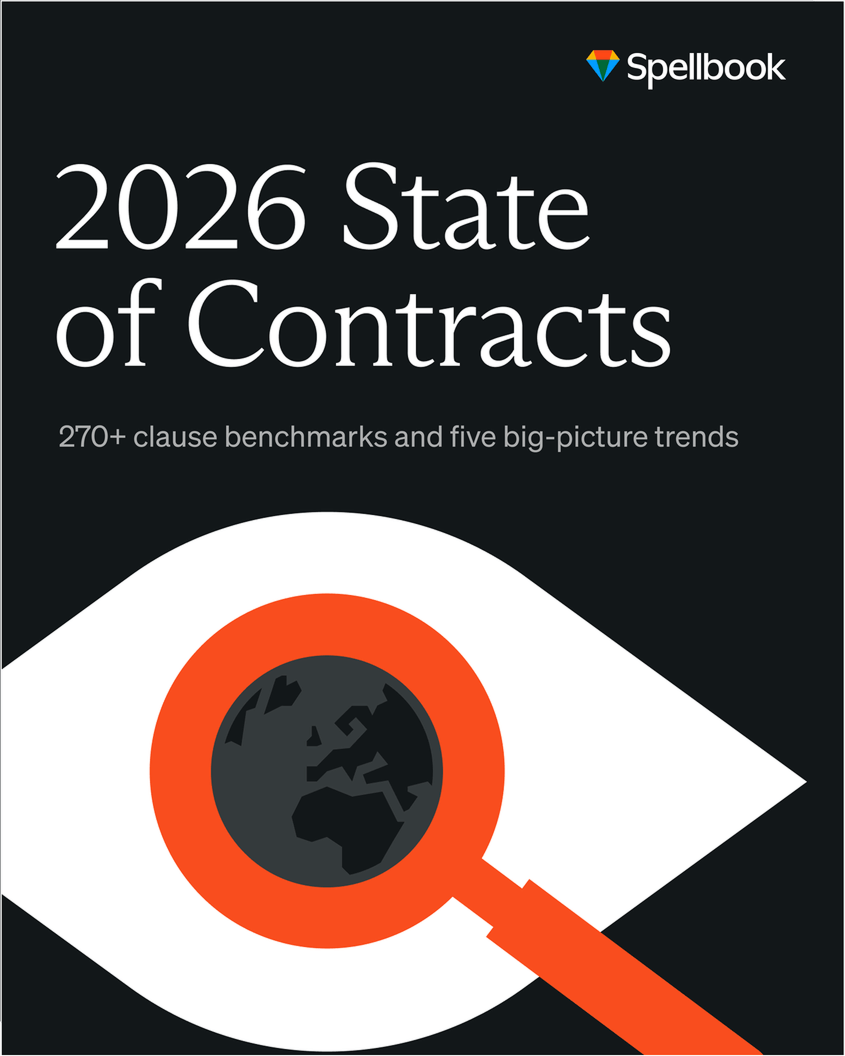
Get 270+ clause benchmarks across 13 agreement types. Plus, read our full analysis on the future of data-driven negotiation.
.png)
Join 4,000+ law firms and in-house teams using Spellbook, the most complete legal AI suite, to automate contract review and reduce risk directly in Microsoft Word.


Thank you for your interest! Our team will reach out to further understand your use case.
Spellbook is the most complete AI suite for commercial legal work, trusted by more than 4,400 in-house teams and law firms worldwide.

SOC 2 Type II
HIPAA
GDPR
EU AI Act

HIPAA Compliant
