
Harvey vs Callidus: Which Is the Top Pick in 2026?
.jpeg)


Choosing the right legal AI platform in the Harvey vs Callidus debate requires a close look at how each tool approaches legal work. Harvey is positioned as a collaborative platform for large-scale legal operations, while Callidus (StrongSuit) offers a flexible, Word-native co-pilot with a unique legal research integration. To help you decide, we will compare their core features, AI architecture, and pricing models.
Key Takeaways
- Harvey is built as a collaborative platform for large-scale legal analysis, while Callidus functions as a versatile co-pilot within Microsoft Word, notable for its integrated legal research capabilities.
- The main distinction is their approach to legal work. Harvey is designed for collaborative, large-scale analysis across entire document sets, while Callidus offers a flexible, all-in-one co-pilot experience within Microsoft Word that includes drafting, negotiation, and research tools.
- Spellbook is the most complete AI suite for commercial law, trusted by over 4,000 legal teams to draft and review contracts with greater speed and precision. It is the only platform grounded in real-time market data, giving lawyers data-driven answers to "What's market?" in any negotiation.
1. Harvey
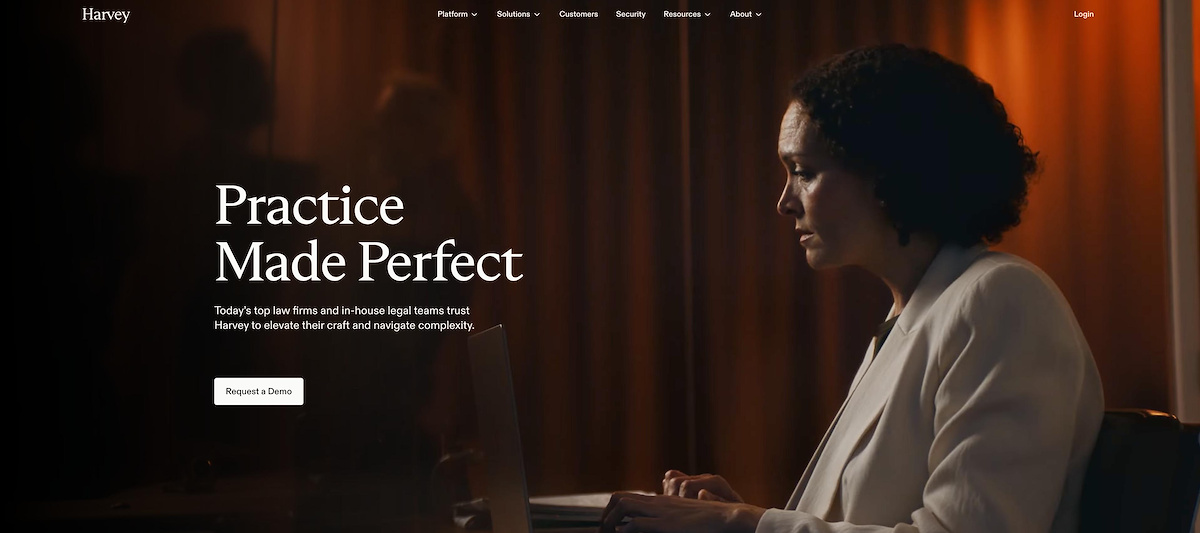
Harvey is a legal AI platform designed for large-scale legal operations, serving enterprise law firms and in-house teams. It focuses on collaborative, multi-document analysis for complex transactional work like M&A diligence. Unlike tools that function as a co-pilot within Microsoft Word, Harvey operates as a broader infrastructure for legal analysis. This platform-based approach can be powerful for team-wide projects but may introduce considerable setup and management overhead for legal professionals who need a more direct tool for day-to-day contract drafting and review.
Harvey Features
Harvey is built as a platform for legal operations, focusing on team-based analysis of large document sets. Its main components are designed for scale and collaboration.
- Vault: A central repository for analyzing up to 100,000 documents with structured data extraction.
- Workflows: Configurable, multi-step processes to standardize tasks like diligence and document generation.
- Collaboration: Tools for human verification, team-wide editing, and permission controls.
- Word Add-in: An add-in for in-document drafting and editing, though the platform's focus is broader.
Harvey Pricing
Harvey's pricing reflects its enterprise focus, with custom quotes based on team size and contract terms. Indicative pricing suggests a significant investment.
- Approximately $40,000 annually for a 10-user team.
- Around $70,000 to $75,000 annually for 20 users.
- Final pricing is negotiated through a formal sales process.
Key Considerations about Harvey
When evaluating Harvey, it is important to understand its architectural focus. The platform is designed as a broad infrastructure for legal operations, which can introduce considerable setup and management overhead. This is especially true for teams whose primary need is to accelerate day-to-day contract drafting and review directly within Microsoft Word.
Its strengths are in large-scale, collaborative diligence projects. It is less differentiated for teams that require simple, one-click redlining or immediate drafting assistance. The platform is also priced at the higher end of the market, and its evaluation process involves a structured two-week pilot, which may be a hurdle for teams looking for a faster implementation.
2. Callidus
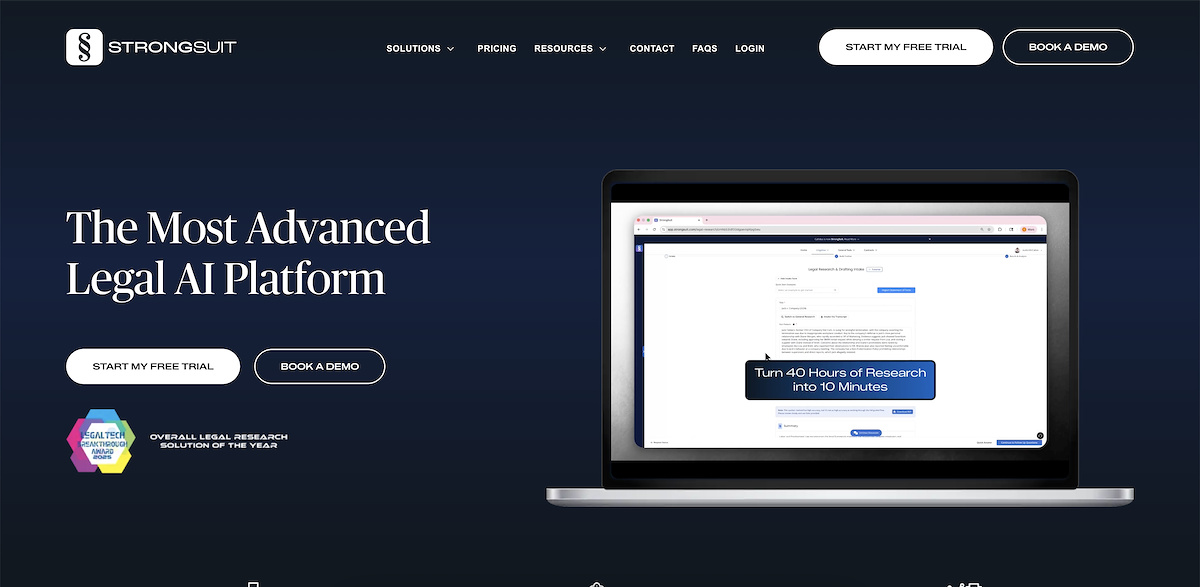
Callidus (StrongSuit) is positioned as a flexible AI co-pilot that operates within Microsoft Word. It aims to provide a generalist toolset for legal teams, combining contract review, drafting, and legal Q&A into a single add-in. This approach makes it a key part of the Harvey vs Callidus discussion for teams wanting a single, versatile tool. Unlike Harvey’s focus on large-scale, collaborative analysis, Callidus offers a more direct assistant for day-to-day tasks. While this provides broad functionality, its generalist nature may lack the specialized depth required for complex transactional work.
Callidus Features
Callidus provides a generalist toolset within a Microsoft Word add-in, organized across several functional modules.
- Negotiate: Analyzes contracts against uploaded playbooks and provides structured markup.
- Draft: Generates new clauses with contextual awareness of the document.
- Compare Contracts: Aligns a third-party document against an internal template.
- Legal Research: Offers citation-backed legal Q&A through an exclusive partnership with CourtListener.
Callidus Pricing
Callidus uses a flat-rate pricing model that aims for simplicity, though this is subject to change.
- $3,000 per user, per year.
- Includes unlimited usage, onboarding, and support.
- Discounts are available for larger teams.
- The company is undergoing a rebrand, and pricing is expected to increase.
Key Considerations about Callidus
When weighing Harvey vs Callidus, it is important to note that Callidus is a newer entrant and some of its features are still evolving. Its playbook functionality, for instance, does not yet offer the automatic fallback logic found in more mature platforms.
While its partnership with CourtListener provides a unique legal research capability for retrieving case law, the platform lacks access to real-time market data. This limits its utility for lawyers who need data-driven benchmarks to answer "What's market?" during negotiations.
Finally, the company is in the middle of a full rebrand and product redesign. For teams seeking a stable, long-term solution, this could signal a lack of established product-market fit and potential future disruption.
3. Spellbook, The Smarter Alternative
Spellbook is the most complete AI suite built specifically for contracts and commercial law. It integrates directly into Microsoft Word, where lawyers already work—eliminating context switching—and helps more than 4,000 legal teams at companies like Dropbox, Fender, and Crocs draft and review contracts 10x faster and with greater precision.
What truly distinguishes Spellbook is that it is the only contract AI grounded in real-time market data. The Review feature analyzes contracts against live benchmarks from thousands of similar agreements, giving lawyers data-driven answers to "What's market?" in every negotiation and helping to eliminate legal busywork.
Spellbook Features
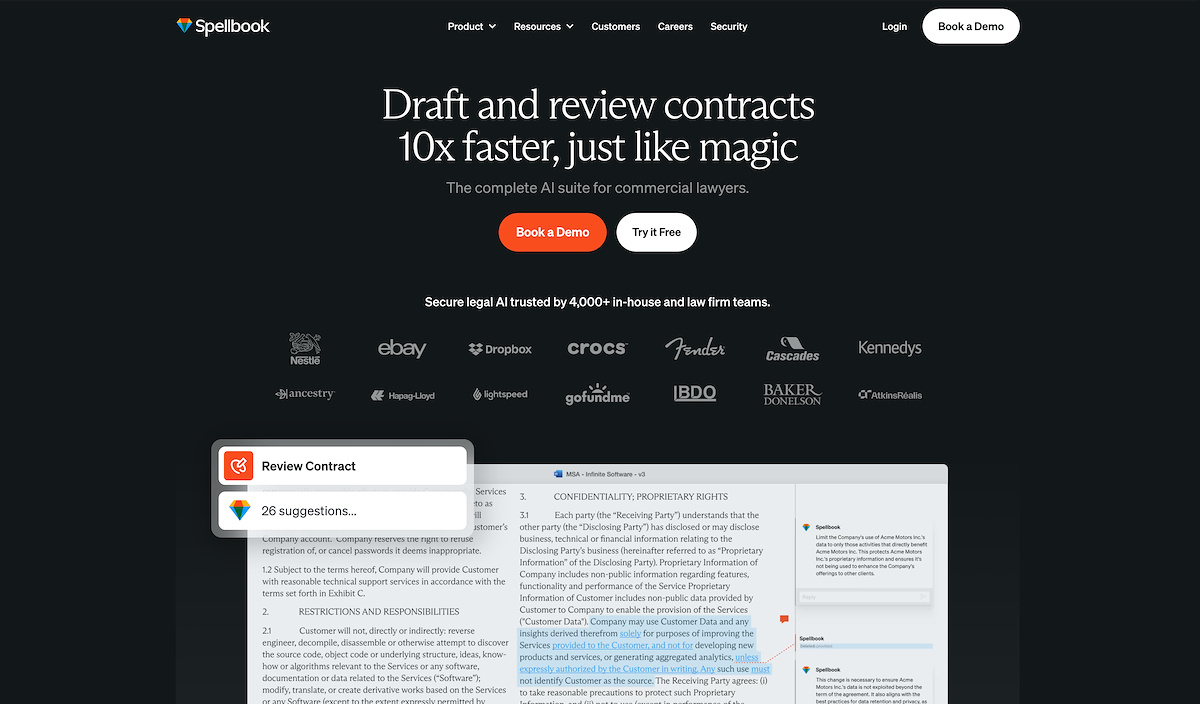
Spellbook is designed around the core workflows of commercial lawyers, with a feature set that prioritizes speed, precision, and data-driven negotiation directly within Microsoft Word. This focus on practical, in-document assistance offers a distinct alternative in the Harvey vs Callidus evaluation.
- Review: This feature provides an instant, document-wide analysis with AI-generated redlines and risk identification. Edits appear as track changes, maintaining the lawyer's authorship. It also integrates with customizable playbooks that include user-defined fallback language, offering more structured guidance than some generalist tools.
- Draft: Spellbook offers intelligent drafting assistance for generating anything from a single clause to a full agreement. Its Smart Clause Drafting capability can index a firm’s historical contracts, allowing lawyers to find and reuse precedent language that is automatically adapted to the style and defined terms of the current document.
- Ask: This functions as a contract-specific Q&A tool inside Word. Lawyers can ask questions about obligations, terms, or other details and receive answers with citations pointing directly to the relevant language in the document, supporting quick verification.
- Compare to Market: A key differentiator, this feature allows lawyers to benchmark contract terms against real-time market data from thousands of similar agreements. It provides data-driven answers to "What's market?" with breakdowns by industry and jurisdiction, a capability not found in platforms that lack access to this type of statistical data.
- Associate: This AI agent can execute multi-document, multi-step projects from a single prompt. It can cross-reference entire document sets, prepare document packages from term sheets, and perform diligence reviews, offering powerful workflow automation without the heavy infrastructure of a separate platform.
- Preference Learning: Spellbook observes the edits a lawyer makes and adapts its future suggestions to match individual and team-level preferences for style and risk. This creates a personalized feedback loop, making the tool more accurate and aligned with a user's approach over time.
Spellbook Pricing
Spellbook offers custom pricing on a per-seat, annual basis, with quotes tailored to your team's size and needs. All subscriptions include:
- The full suite of features, from Review to Associate
- Complete onboarding, training, and support
- Volume discounts for larger teams
You can start a free 7-day trial to experience the platform firsthand.
Why Commercial Lawyers Love Spellbook
Unlike broad infrastructure platforms or generalist co-pilots, Spellbook is built specifically for the core workflows of commercial lawyers. While its deep integration is exclusive to Microsoft Word, this focus allows it to provide exceptional speed and precision directly where lawyers already work.
Its ability to benchmark terms against real-time market data gives lawyers data-driven confidence in negotiations. The platform’s design prioritizes practical utility, automating routine tasks so lawyers can focus on high-value work. This is a key consideration for any team evaluating the Harvey vs Callidus options.
[cta-1]
Callidus vs Harvey vs Spellbook: Key Differences
The choice in the Harvey vs Callidus debate often comes down to a team’s core needs and preferred workflow. Harvey is built as a broad infrastructure for legal operations, Callidus acts as a generalist co-pilot, and Spellbook offers a specialized suite for commercial law. Here is a breakdown of their key differences.
1. Harvey
- Core Focus: Large-scale legal operations and collaborative analysis across large document sets.
- Primary Environment: A separate platform with a Word add-in as a secondary component.
- Key Differentiator: Its "Vault" for analyzing up to 100,000 documents and configurable team workflows.
2. Callidus (StrongSuit)
- Core Focus: A generalist AI co-pilot for a variety of day-to-day legal tasks.
- Primary Environment: Microsoft Word add-in.
- Key Differentiator: An all-in-one toolset with an exclusive legal research partnership with CourtListener.
3. Spellbook
- Core Focus: A specialized AI suite for commercial contract drafting, review, and negotiation.
- Primary Environment: Microsoft Word add-in, designed to eliminate context switching.
- Key Differentiator: The only platform grounded in real-time market data, providing data-driven answers to "What's market?"
Ultimately, the decision rests on your team's primary function. Harvey provides a powerful infrastructure for large-scale, collaborative projects. Callidus offers a flexible assistant for varied tasks.
Spellbook, however, is the most complete AI suite built specifically for the workflows of commercial lawyers. It combines speed and precision within Microsoft Word and is the only platform that grounds negotiations in real-time market data. Its focus on security, including HIPAA compliance, and a clear product roadmap make it a stable and powerful choice for the 4,000+ legal teams that trust it. This makes it a compelling alternative in the Harvey vs Callidus comparison for teams focused on contract work.
Which Option Is Right For Your Business?
For Large Law Firms Focused on M&A Diligence
Harvey is the logical choice for enterprise firms managing complex, multi-document projects. Its platform is built for large-scale analysis and team collaboration, making it suitable for intensive transactional work like M&A diligence.
For Teams Needing a Generalist Co-Pilot
Callidus may appeal to teams looking for a single tool to handle a wide range of legal tasks. Its all-in-one approach combines drafting, review, and legal research into one Word add-in, and its straightforward pricing is a plus for budget predictability.
For Commercial and Corporate Lawyers
Spellbook is the ideal fit for most commercial lawyers and in-house teams whose work centers on contracts. It is designed specifically for contract drafting and review, operating entirely within Word to increase both speed and accuracy. Its focus on providing market data for negotiations gives lawyers a distinct advantage, making it a stable and powerful choice.
The Bottom Line
Your final decision in the Harvey vs Callidus debate depends on your primary use case. Harvey excels at massive-scale projects, while Callidus offers a generalist toolset. For the majority of lawyers focused on commercial contracts, Spellbook provides the most direct path to faster, more precise work.
Try Spellbook Free
While Harvey and Callidus each address different aspects of legal work, Spellbook is built specifically for commercial lawyers who need both speed and precision for contract review in Microsoft Word. It is the only platform that provides real-time market data, giving you a data-driven edge in negotiations. You can start a free 7-day trial to see how it fits your workflow.
Frequently Asked Questions
What AI models do Harvey and Callidus use?
Harvey was developed in partnership with OpenAI and is powered by their most advanced models, including GPT-4. This allows it to perform sophisticated analysis and generation of legal text. The platform's architecture channels this power toward large-scale, multi-document workflows rather than focusing on the immediate, conversational interaction of a co-pilot.
Callidus also uses large language models to power its features, though it does not publicly emphasize a specific partnership in the same way Harvey does. Its AI is applied across its modules for drafting, negotiation, and legal research. The experience is designed to be a direct assistant within Microsoft Word, responding to user commands for specific tasks.
How do Harvey and Callidus handle data security and client confidentiality?
Data security is a primary concern when evaluating legal AI. Harvey targets enterprise clients and offers security protocols to match, including options for private cloud deployments to ensure client data remains isolated. Its architecture is built to manage sensitive information for high-stakes work like M&A diligence.
Callidus states that it adheres to industry-standard security practices to protect user data. However, as a newer and evolving platform, its specific security features and data handling policies are not as publicly detailed. Legal teams should conduct a thorough security review to understand how their data is processed and stored, which is a critical step when using any AI tool where it is important to confirm if the data is private.
How does Spellbook’s “Compare to Market” feature provide an advantage over Harvey and Callidus?
Spellbook’s “Compare to Market” feature is a key differentiator that directly addresses a common challenge in negotiations: knowing what is standard. The tool benchmarks contract clauses against a dynamic database of tens of thousands of recent, similar agreements, providing statistical data on how common specific terms are by jurisdiction and industry.
Neither Harvey nor Callidus offers this capability. Harvey’s analysis is powerful but limited to the documents uploaded by the user; it can find issues within your dataset but cannot benchmark it against the broader market. Callidus can check a contract against a firm’s internal playbook but lacks access to external, real-time market data. This leaves lawyers to rely on experience or manual research to argue what is "market." Spellbook replaces this guesswork with data, giving lawyers a clear, evidence-based advantage in negotiations.
[cta-2]
Our Research Methodology
This comparison is based on comprehensive research of publicly available information, including product websites, feature documentation, press releases, customer reviews, legal technology publications, and third-party analyses from sources like LawSites, Artificial Lawyer, and industry analysts.
Where pricing information is not publicly disclosed, we've included estimates based on available industry data and user reports. Information is current as of 2026 and may change as products evolve. We encourage readers to verify details directly with vendors and request demos to evaluate fit for their specific needs.
.png)
%20(1).png)


Thank you for your interest! Our team will reach out to further understand your use case.
Spellbook is the most complete AI suite for commercial legal work, trusted by more than 4,400 in-house teams and law firms worldwide.

SOC 2 Type II

HIPAA

GDPR
EU AI Act

HIPAA Compliant
