
Harvey vs ChatGPT: Which Is The Top Pick in 2026?
.jpeg)


Deciding between Harvey vs ChatGPT for legal work means choosing between a specialized legal AI platform and a powerful, general-purpose AI assistant. To help you make the right choice, we will compare their features, pricing, and core capabilities. This analysis will help you understand which tool is the best fit for your team's specific needs, especially for contract-heavy workflows where workflow integration and data-driven insights are critical.
Key Takeaways
- Harvey is a legal AI platform built for complex analysis and collaborative workflows across large document sets. ChatGPT is a general-purpose AI assistant that can help with a wide range of tasks, including initial legal drafting and summarization.
- The core difference lies in their specialization. Harvey offers a structured environment for legal teams with features for diligence and standardized processes. ChatGPT provides broad, flexible capabilities but lacks the legal-specific grounding, workflow integrations, and data security features required for sensitive legal work.
- Spellbook presents a more focused tool for commercial law, trusted by over 4,000 legal teams to draft and review contracts with greater speed and precision. It operates directly within Microsoft Word and provides data-driven negotiation insights by comparing contracts against thousands of real-world agreements.
[cta-3]
1. Harvey
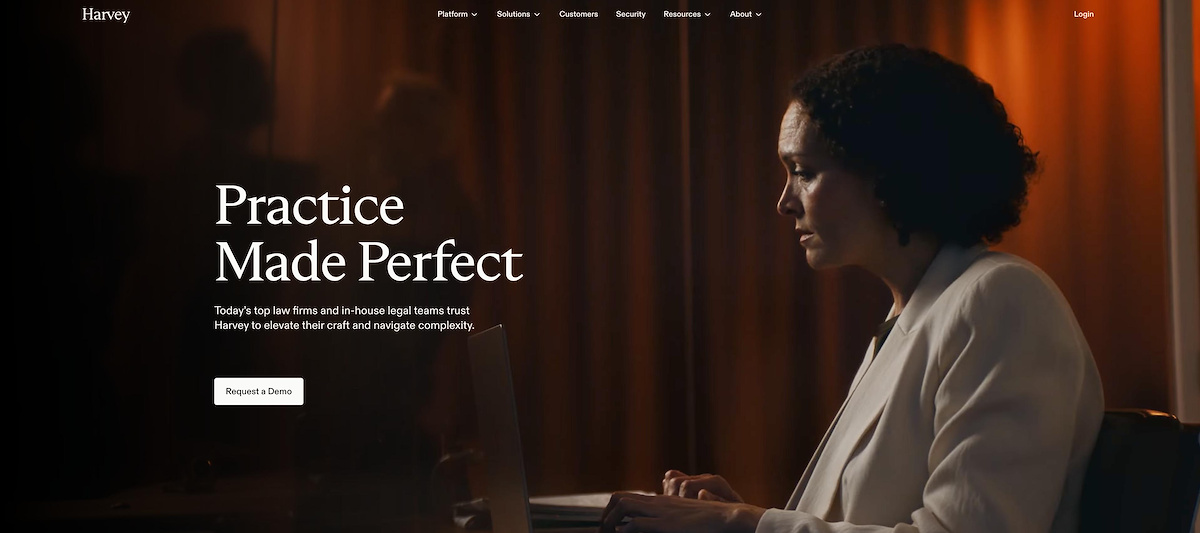
Harvey is a legal AI platform designed for large legal teams at enterprises and law firms. It focuses on complex, multi-document workflows like M&A diligence and large-scale contract review. Unlike a general assistant like ChatGPT, Harvey provides a structured environment with features for collaboration and process standardization. However, it is architected as a broad legal operations platform, which may introduce unnecessary complexity for teams focused primarily on day-to-day contract drafting and redlining. This makes the Harvey vs ChatGPT decision one of scale versus flexibility.
Harvey Features
Harvey is designed as a broad legal operations platform. Its capabilities are centered on managing complex, multi-document projects for large teams.
- Vault: A repository for analyzing up to 100,000 documents at once, using a spreadsheet-like interface for structured data extraction.
- Workflows: Configurable, multi-step processes to standardize tasks like diligence or large-scale reviews across teams.
- Collaboration Tools: Features that support team-based review, including verification of AI outputs and user permissions.
- Word Add-in: Provides some in-document editing, but most core features exist in a separate web platform.
Harvey Pricing
Harvey’s pricing reflects its focus on enterprise customers. The model is not designed for individual users or small teams seeking a simple subscription.
- Annual, per-seat subscriptions with custom quotes.
- Indicative pricing starts around $40,000 per year for a team of 10.
- A structured, two-week pilot is typically required for evaluation before purchase.
Key Considerations about Harvey
While powerful for its intended use, Harvey’s architecture introduces trade-offs that are important to understand. The platform is built for large-scale legal operations, which can add unnecessary complexity for teams focused on day-to-day contract drafting and redlining.
Because its core features like Vault and Workflows exist outside of Microsoft Word, it requires lawyers to switch contexts, disrupting established drafting habits. Its focus is on analyzing a firm's internal documents, not providing external, data-driven negotiation insights from real-time market benchmarks.
Finally, the high cost and mandatory pilot program create a significant barrier to entry. This makes the Harvey vs ChatGPT decision difficult for teams needing an accessible tool they can adopt quickly.
2. ChatGPT
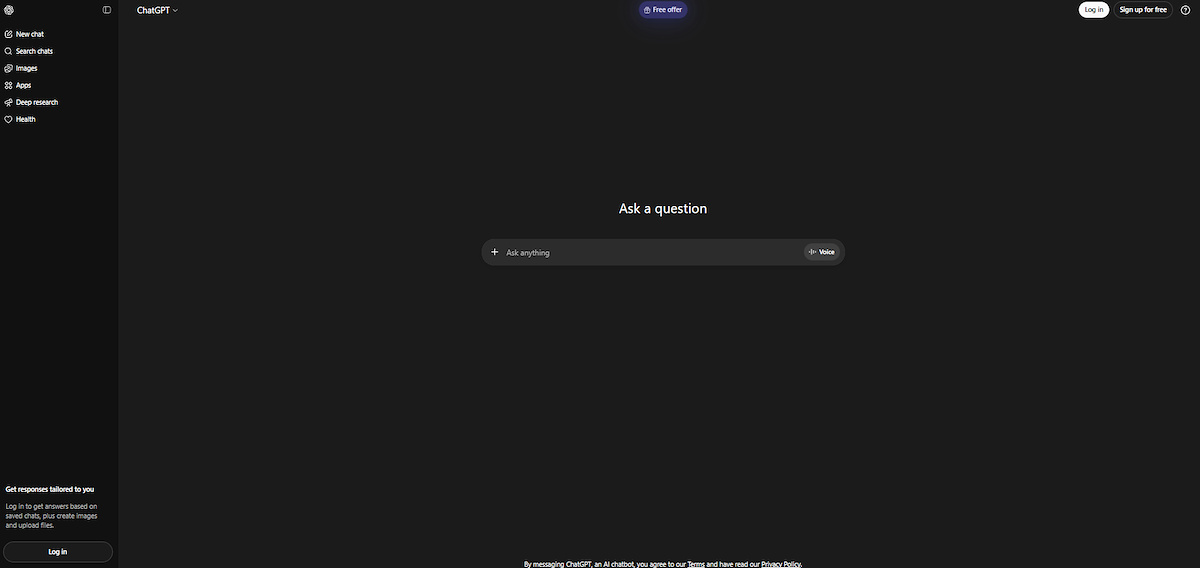
ChatGPT is a general-purpose AI assistant from OpenAI, known for its ability to handle a wide range of tasks like drafting initial contract language and summarizing documents. Unlike Harvey's specialized legal environment, ChatGPT offers broad, flexible capabilities. However, this flexibility comes at a cost. The platform is not grounded in verified legal databases, which introduces risks like hallucinated citations and lacks the specific workflow tools required for professional contract review.
ChatGPT Features
As a general-purpose tool, ChatGPT can assist with a wide range of text-based tasks. For legal professionals, its most common applications include:
- Generating initial contract drafts and individual clauses.
- Summarizing long documents or correspondence.
- Drafting professional communications, such as client emails.
- Explaining complex legal language in simple terms.
- Adapting standard templates to fit specific scenarios.
ChatGPT Pricing
OpenAI offers several tiers, but only the business-focused plans provide the necessary data privacy controls for legal work.
- Plus: $20 per user, per month for individual use.
- Business: $25 per user, per month (billed annually) for teams.
- Enterprise: Custom pricing for large organizations requiring advanced security and administrative controls.
Key Considerations about ChatGPT
While powerful, ChatGPT’s general-purpose design creates significant limitations for professional legal work. These gaps are central to the Harvey vs ChatGPT debate, as they highlight the difference between a general tool and a specialized platform. For instance, ChatGPT does not integrate into Microsoft Word, forcing lawyers to copy and paste text, which disrupts drafting and version control.
The platform has no features for building or applying playbooks, making it impossible to enforce firm-specific standards consistently. Furthermore, ChatGPT does not learn from a user's edits or preferences, so it cannot adapt to your team's drafting style or risk tolerance over time. This lack of institutional learning is a critical gap for legal teams, raising questions about whether it's legal for lawyers to rely on it for substantive work.
3. Spellbook, The Smarter Alternative
For teams weighing the Harvey vs ChatGPT decision, Spellbook offers a smarter alternative. It is the most complete AI suite built specifically for contracts and commercial law, trusted by over 4,000 legal teams at companies like Dropbox, Fender, and Crocs. Spellbook integrates directly into Microsoft Word, helping lawyers draft and review contracts with greater speed and precision while eliminating context switching.
Unlike other tools, Spellbook is grounded in real-time market data. The Review feature provides data-driven answers to "What's market?" by analyzing contracts against thousands of similar agreements. This gives legal teams a practical advantage in negotiations that general-purpose or broad legal platforms cannot match.
Spellbook Features
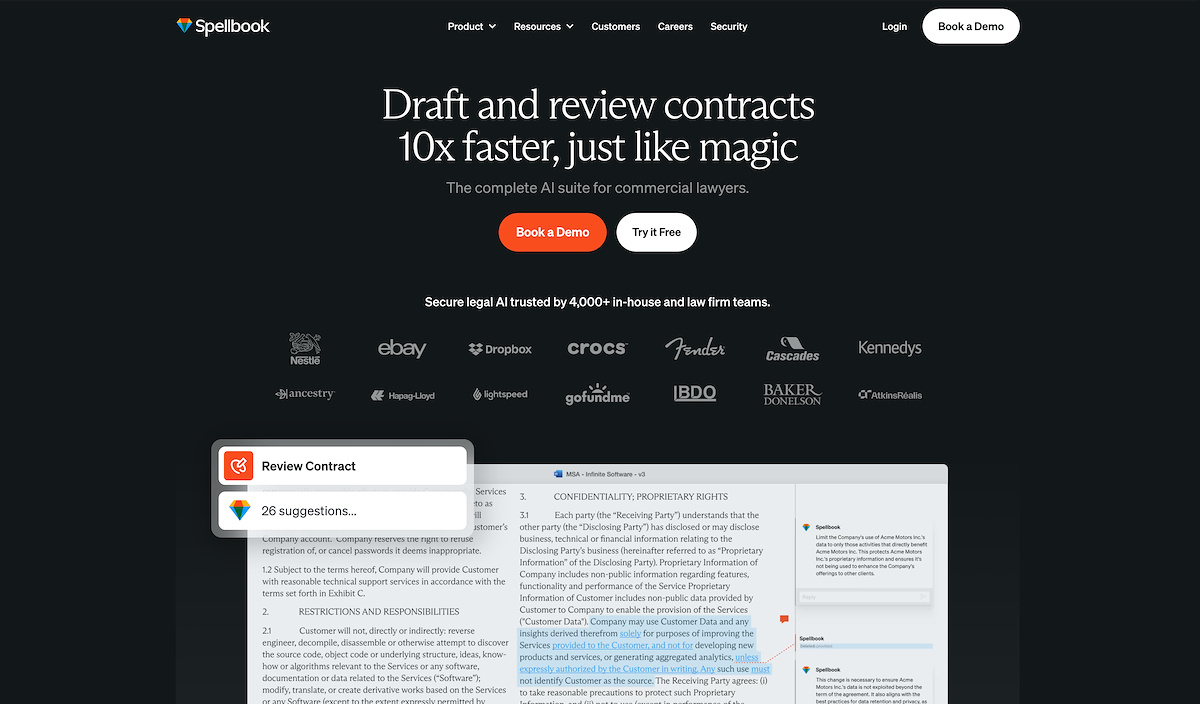
Spellbook’s features are designed to assist with the entire contract lifecycle, operating directly within Microsoft Word to maintain your workflow.
- Review: Instantly analyzes an entire document to identify risks and suggest redlines. Suggestions appear as track changes, giving you full control. It can also check for missing protective language, such as key limitation of liability clauses, and applies firm-specific standards through customizable playbooks.
- Draft: Generates new clauses or entire agreements from a simple instruction. It can also draw from your firm’s own precedent documents to find and adapt language, automatically matching the style and defined terms of the current contract.
- Ask: Functions as a contract-specific Q&A tool. You can ask questions about obligations or terms directly in Word, and it provides answers with citations to the relevant contract language, helping to verify information quickly.
- Compare to Market: Benchmarks contract terms against real-time data from thousands of similar, anonymized agreements. This feature provides data-driven answers to "What's market?" and highlights which terms are favorable or unfavorable, helping you focus your negotiation efforts.
- Associate: An AI agent that handles multi-document, multi-step projects from a single prompt. It can execute complex tasks like preparing a full document package from a term sheet or reviewing a data room for due diligence.
Spellbook Pricing
Spellbook offers custom per-seat pricing based on team size and needs. All plans are billed annually and include:
- Access to all features, including Review, Draft, and Associate.
- Volume discounts for larger teams.
- Full onboarding, training, and ongoing support.
You can explore all of Spellbook’s capabilities with a 7-day free trial.
Why Commercial Lawyers Love Spellbook
Unlike broad legal platforms or general AI assistants, Spellbook is built exclusively for the day-to-day work of commercial lawyers.
It operates entirely within Microsoft Word, eliminating the need to switch between applications when drafting or redlining. While this focus means it operates only within Word, it allows for a deep integration that keeps legal teams in their primary workflow.
Its ability to benchmark contracts against real-time market data gives lawyers a practical negotiation advantage that other tools lack. This focus on practical, in-workflow support is why it's a preferred choice for teams who find the Harvey vs ChatGPT comparison leads them to a more specialized tool.
[cta-1]
ChatGPT vs Harvey vs Spellbook: Key Differences
The Harvey vs ChatGPT debate often overlooks a third category of tool: the specialized contract assistant. The choice between these three options comes down to a trade-off between scale, flexibility, and specialization. Each tool is designed for a different primary purpose, which shapes its features, workflow, and ideal user.
1. ChatGPT: The Generalist
- ChatGPT is a powerful, general-purpose AI that excels at a wide range of text-based tasks, from drafting initial language to summarizing documents.
- However, its flexibility is also its main limitation for legal work. It lacks integration with Microsoft Word, has no features for applying firm-specific playbooks, and is not grounded in verified legal or market data, creating risks of inaccurate outputs.
2. Harvey: The Enterprise Platform
- Harvey is a legal AI platform built for large-scale, multi-document analysis, such as M&A diligence. It provides a structured environment for collaboration and standardizing complex processes across large teams.
- Its core features, like Vault and Workflows, exist in a separate web platform, forcing lawyers out of their primary drafting environment. This architecture is powerful for massive projects but adds complexity and cost for day-to-day contract work.
3. Spellbook: The Contract Specialist
- Spellbook is the most complete AI suite built specifically for contracts and commercial law. It operates entirely within Microsoft Word, helping legal teams draft and review contracts with greater speed and precision without context switching.
- Unlike the others, Spellbook is the only contract AI grounded in real-time market data. Its Review feature analyzes agreements against live benchmarks, providing data-driven answers to "What's market?" during negotiations. This specialized, in-workflow approach is why over 4,000 legal teams trust Spellbook for their contract work.
Which Option Is Right For Your Business?
For In-House Teams Focused on Commercial Contracts
Spellbook is the ideal choice. It integrates directly into Microsoft Word, allowing your team to work faster without changing established habits. Its specialization in contract law provides more relevant and reliable assistance than a general-purpose AI.
For Large Law Firms Managing Complex Diligence
Harvey is the better fit. The platform is designed to analyze thousands of documents for large-scale projects like M&A due diligence. It offers a structured environment for standardizing review processes across large teams where budget is secondary to scale.
For Boutique Firms and Corporate Counsel
Spellbook provides the strongest advantage. It operates entirely within your existing drafting workflow, making it easy to adopt. Its focus on commercial agreements provides data-driven context that helps you negotiate more effectively.
The Bottom Line
Your choice depends on your core business needs. Harvey is built for massive legal projects, while ChatGPT can assist with simple, preliminary tasks. For the day-to-day work of drafting, reviewing, and negotiating contracts, Spellbook provides the most specialized and practical tool, which is why it's the smarter choice in the Harvey vs ChatGPT debate for most commercial lawyers.
Try Spellbook Free
For teams seeking a practical tool beyond the Harvey vs ChatGPT options, Spellbook provides a specialized advantage for day-to-day contract work. It operates entirely within Microsoft Word and uses real-time market data to give you a data-driven edge in negotiations. See how Spellbook can improve your contract workflow by starting a free trial today.
Frequently Asked Questions
How do Harvey, ChatGPT, and Spellbook handle data security and client confidentiality?
Data security is a critical factor when choosing an AI tool. While ChatGPT's business and enterprise tiers prevent OpenAI from training on your data, it is a general-purpose tool and lacks specific legal compliance features. You remain responsible for ensuring its use aligns with your professional obligations regarding client data.
Harvey is built for enterprise law firms and includes security protocols designed for sensitive legal information, operating as a closed system for a firm's internal documents. Spellbook is also designed with legal security at its core, is SOC 2 Type II certified, and helps teams manage specific obligations like confidentiality clauses within agreements.
What AI models do Harvey and ChatGPT use?
Both tools are built on large language models from OpenAI. ChatGPT uses the latest general models, like GPT-4, which gives it broad capabilities but no inherent legal expertise. This means its outputs require careful review by a qualified lawyer.
The key difference in the Harvey AI vs ChatGPT comparison is that Harvey uses a version of OpenAI's models that has been fine-tuned on a massive dataset of legal documents. This gives its outputs a legal-specific context that ChatGPT lacks. Similarly, Spellbook uses a combination of leading models fine-tuned specifically for transactional law, allowing for more nuanced legal document analysis.
Where does Spellbook fit in if I'm deciding between Harvey and ChatGPT?
Spellbook is the specialized alternative for legal teams whose primary work is contract drafting, review, and negotiation. While Harvey is built for large-scale diligence projects and ChatGPT is a general assistant, Spellbook focuses on the day-to-day workflow of commercial lawyers.
It operates entirely within Microsoft Word, so you never have to leave your document. Its features are built to improve both the speed and precision of your work, from identifying missing indemnification clauses to benchmarking terms against market data. For most commercial teams, Spellbook offers a more direct and practical path to improving their contract process than either Harvey or ChatGPT.
[cta-2]
Our Research Methodology
This comparison is based on comprehensive research of publicly available information, including product websites, feature documentation, press releases, customer reviews, legal technology publications, and third-party analyses from sources like LawSites, Artificial Lawyer, and industry analysts.
Where pricing information is not publicly disclosed, we've included estimates based on available industry data and user reports. Information is current as of 2026 and may change as products evolve. We encourage readers to verify details directly with vendors and request demos to evaluate fit for their specific needs.
.png)
%20(1).png)
.png)
Tools built for in-house teams. Get buy-in, compare platforms, and make AI stick.

Thank you for your interest! Our team will reach out to further understand your use case.
Spellbook is the most complete AI suite for commercial legal work, trusted by more than 4,400 in-house teams and law firms worldwide.

SOC 2 Type II

HIPAA

GDPR
EU AI Act

HIPAA Compliant
